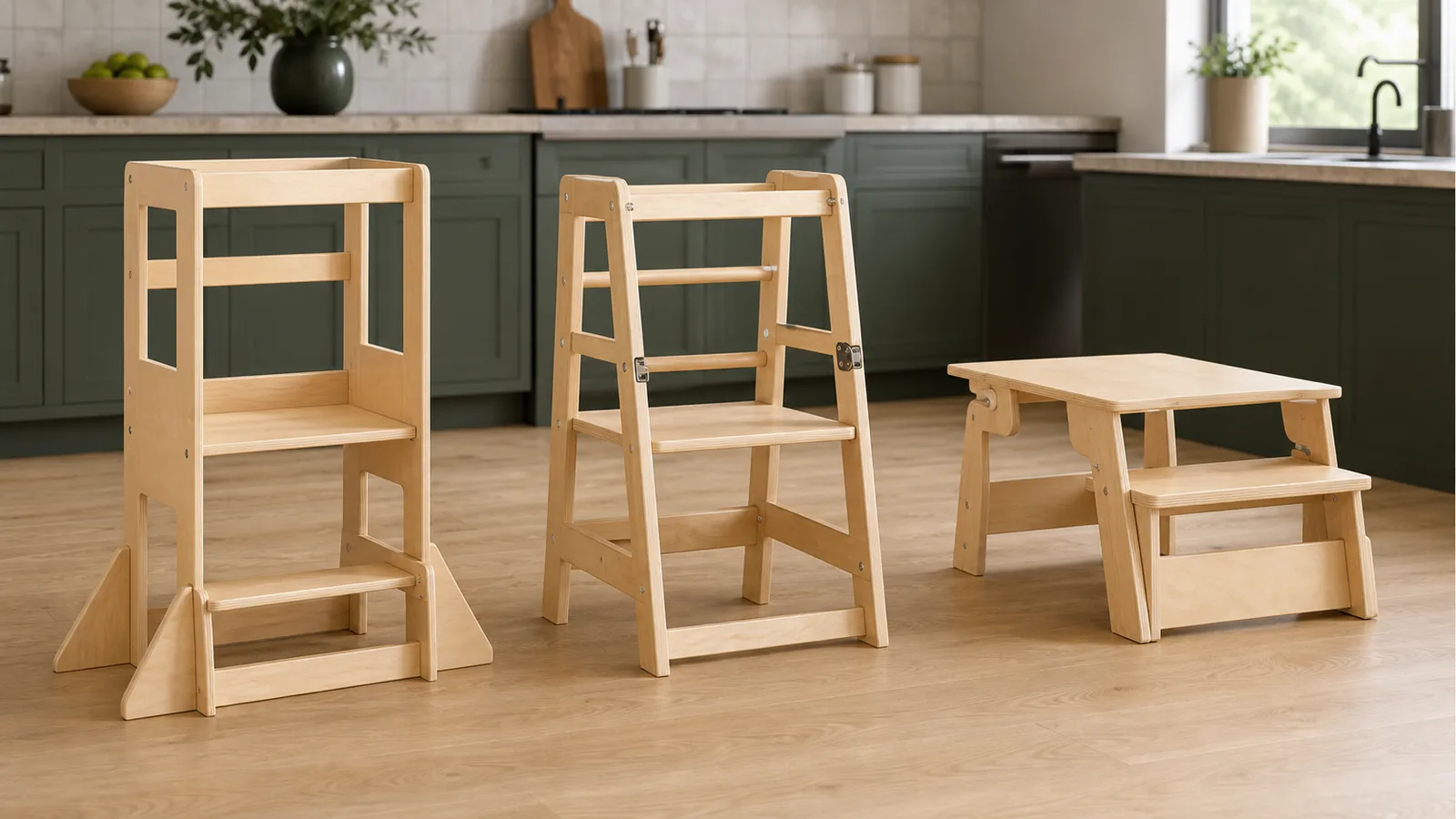
Fixed-frame, foldable, and convertible toddler towers solve different space problems. A fixed frame stays ready beside the counter. A foldable model adds hinges and locks so it can be stored. A convertible model changes into a table, desk, chair, or another play mode. None of those labels tells you whether a specific tower fits your kitchen or has a clear recall record. Start with the job you need the furniture to do, then verify the exact model, platform height, footprint, guard, and mechanism.
Short answer by type
Fixed-frame
Start here when the tower can stay beside the counter. Measure the permanent footprint, platform positions, guard, and required counter placement.
Foldable
Start here when the tower must be stored after use. Require numeric folded dimensions and a lock sequence every caregiver can verify.
Convertible
Start here when a table, desk, chair, or play mode replaces something else you need. Measure and price every required part and configuration.
The type label describes a mechanism, not a verdict
A type label tells you what the furniture does mechanically. It does not tell you whether the base resists tipping, whether the guard openings fit current standards work, whether the fold lock stays engaged, or whether an exact model has been recalled. Those questions belong to the individual product record and physical unit.
The labels also blur at the edges. A fixed-frame tower may have a lower step that folds upward while the main frame stays assembled. A convertible tower may detach from a required chair rather than become a table. A product can be called foldable even when the manufacturer publishes no folded dimensions. Read the mechanism and measurements, not only the category name.
Fixed-frame towers: ready to use, committed to the floor
A fixed-frame tower keeps its main structure assembled. That can make daily use straightforward because there is no full-frame folding sequence to repeat. It also means the open footprint is the storage footprint. If the tower will live beside one counter, tape its width and depth on the floor and check cabinet doors, appliance doors, and the walking path around it.
Fewer moving parts do not remove the need to inspect the exact design. Platform adjustment may still require bolts or screws, a rear rail or strap may need a specific orientation, and some manuals require the tower to stay firmly against a counter or wall. Compare the platform positions and guard geometry with the same care you would give a folding latch.
Foldable towers: the stored shape and lock sequence are the product
A foldable tower makes sense when the furniture really has to leave the kitchen after use. The useful number is not the open footprint alone. You need the folded width, depth, and height, plus enough room to operate the hinges and lift or roll the unit into storage. If a listing says compact but gives no folded dimensions, you still cannot confirm that it fits your gap.
The lock sequence matters just as much. Read the manual and identify every hinge, side lock, platform latch, clip, or safety catch that must engage before your child climbs in. A mechanism that feels obvious to one caregiver may not be obvious to another. If several adults will use the tower, each person should be able to confirm the locked state without guessing.
Convertible towers: evaluate the tower before the bonus modes
Convertible models add another job, often a table, desk, bench, chair, chalkboard, or slide. That can be useful when the second mode replaces furniture you would otherwise buy. It can also add pivots, removable parts, different footprints, and version-specific instructions. Measure the tower mode and every converted mode you expect to use.
Check what is included in the price. Some products convert as one complete frame. Others require a separate chair or accessory, and compatibility may depend on an article number or generation. The complete setup, not the accessory alone, is what needs to fit the counter and the budget.
Choose the type by working through five gates
First, clear the identity gate: brand, model, SKU, revision, lot or date code, and repair state when a recall notice requires them. Second, measure the open footprint and the route around it. Third, compare each published platform position with your actual counter. Fourth, read the guard, placement, and lock instructions. Fifth, price the complete configuration, including any required chair, net, plate, or conversion accessory.
Only then should the type decide the shortlist. Pick fixed-frame when the tower can stay out and the open footprint works. Pick foldable when you have a verified storage space and will use the locking sequence correctly every time. Pick convertible when a second mode solves a real need and its extra footprint, parts, and compatibility rules are acceptable.
Common shortcuts that lead to the wrong comparison
Do not assume foldable means small. Some folding models have broad open bases, and several current records still lack folded measurements. Do not assume fixed means one platform height. Some fixed frames publish more height positions than folding products. Do not assume convertible means better value. A second mode has value only if you use it and the complete setup costs less space or money than the alternative.
Price, weight limit, and a long feature list cannot rescue a poor fit. A high published capacity is not a stability test, and a familiar brand does not clear a model-level recall. When sources disagree, leave the field unresolved and keep that model outside any decision that depends on the missing fact.
Use the database to compare exact models inside each type
Once you know which mechanism suits your home, move from category language to exact products. Our comparison hub groups representative fixed-frame, foldable, and convertible models while keeping the source state beside every value. The tower finder can narrow the full selected set by type, budget, width, and recall state.
These are starting points, not finalists. Real-world stability, assembly quality, cleanability, lock reliability, and child entry still require hands-on testing of the exact unit. Until that work is complete, the site publishes specifications and decision briefs without scores or purchase recommendations.
Fixed, foldable, and convertible at a glance
This compares mechanisms, not safety or quality. The exact model and physical unit still control the decision.
| Type | What changes | Measure first | Evidence gap to watch |
|---|---|---|---|
| Fixed-frame | The main frame stays assembled | Open footprint and platform-to-counter fit | Hardware-set platforms or required wall and counter placement |
| Foldable | Frame, rails, platform, or step folds for storage | Open and folded dimensions plus the storage route | Missing folded size or an unclear locked-state check |
| Convertible | Tower changes into another furniture or play mode | Every mode's footprint and the complete setup | Required accessories, version compatibility, or unpublished tower dimensions |
Compare exact models by mechanism
Questions about toddler tower types
Are fixed-frame toddler towers safer than foldable towers?
Is a foldable toddler tower worth it for a small kitchen?
What should I check on a convertible toddler tower?
Can one toddler tower fit more than one counter height?
Which toddler tower type should I choose?
Method and Sources
How this page is checked
- The three type labels describe the primary mechanism recorded in the validated catalog. They are not industry certification classes or safety ratings.
- Product examples and evidence gaps were checked against the selected model records and their cited manufacturer pages and manuals on July 20, 2026.
- The comparison groups are representative starting points. They are not rankings, finalists, or purchase recommendations.
- Hands-on performance remains unverified until the exact unit completes the published testing protocol.
Sources
- Toddler Home Brief source-backed 25-model comparison
- Little Partners Explore 'N Store product page
- Guidecraft Kitchen Helper FLEX instruction manual
- Piccalio Convertible Toddler Tower product page
- CYBEX Lemo Training Tower product page
- CYBEX Lemo Chair product page
- Avenlur Laurel foldable tower product page
Keep reading
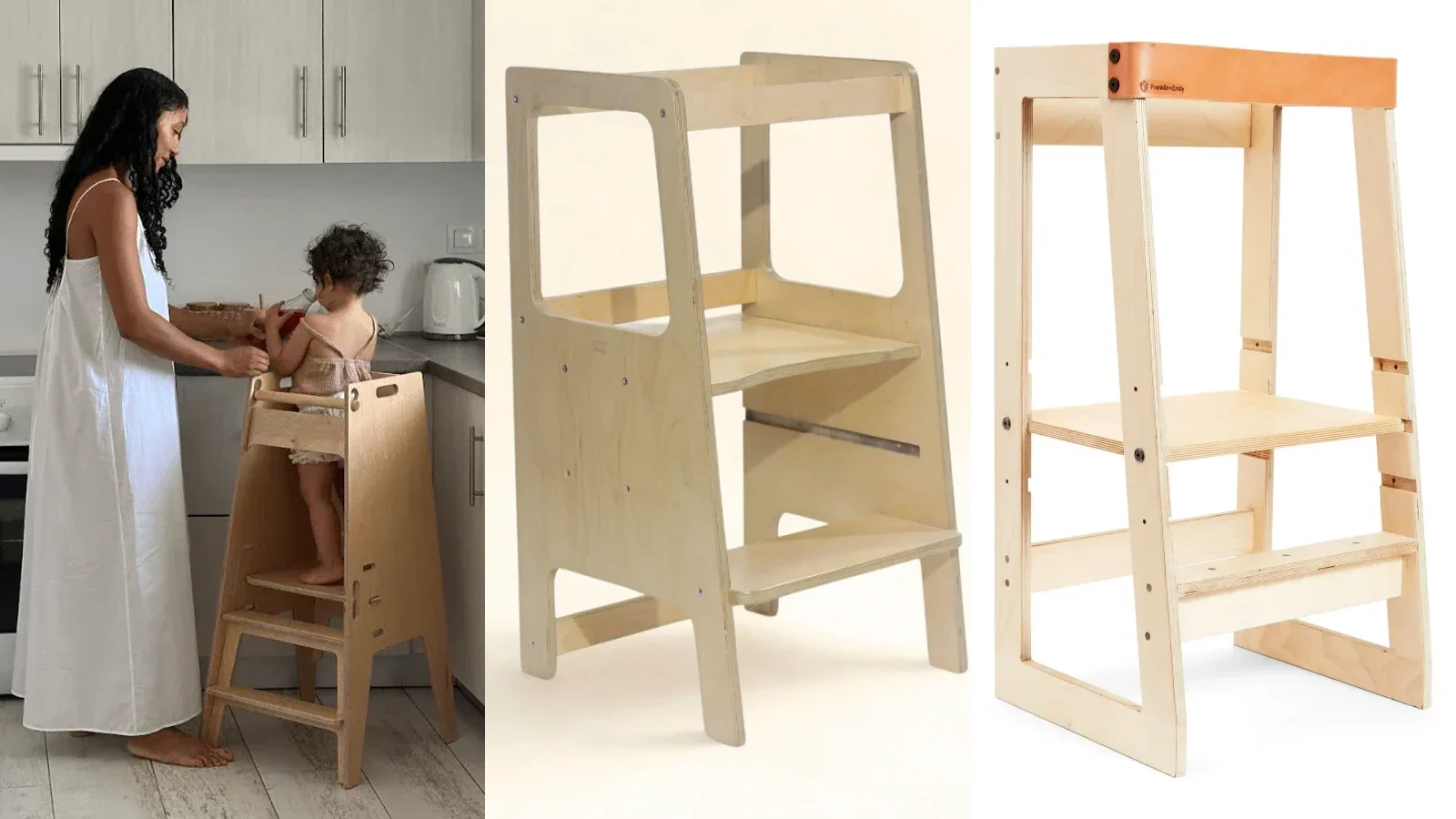
Sprout vs RAD vs Franklin+Emily Toddler Towers
Compare Sprout Sous-Chef R4, RAD Solo, and Franklin+Emily toddler towers by footprint, platform heights, guard design, price, limits, materials, and recall evidence.
Read next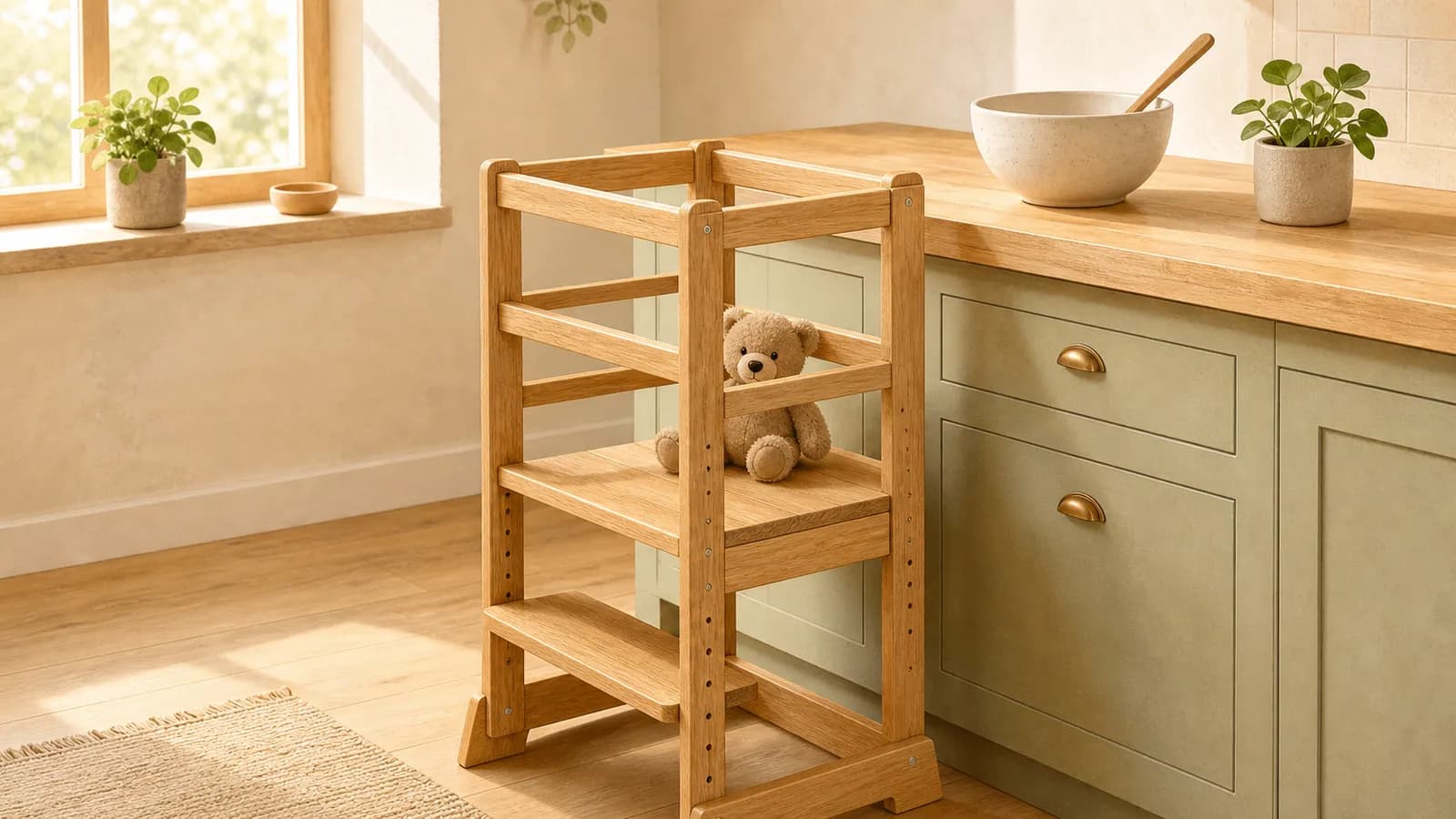
How to Choose a Toddler Tower
A practical, safety-first guide to choosing a toddler tower: how to fit it to your counter height, read guard and stability design against the real recall hazards, judge foldable versus fixed, and run a pre-purchase checklist on any model.
Read next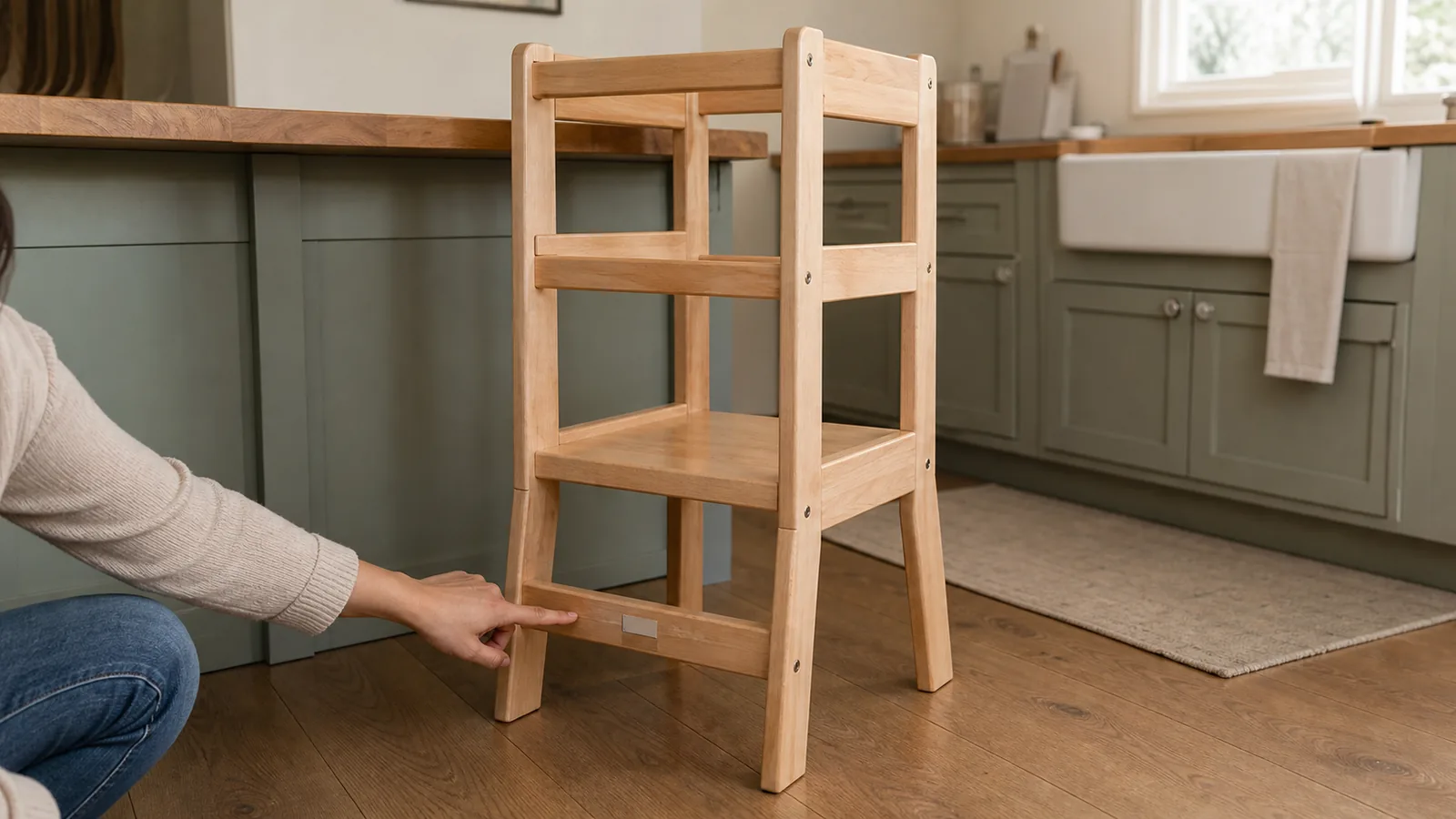
Toddler Tower Safety Standards and Recalls
What safety standards actually exist for toddler towers, every official CPSC tower recall we track, and how to check a specific model before you buy or keep using it.
Read next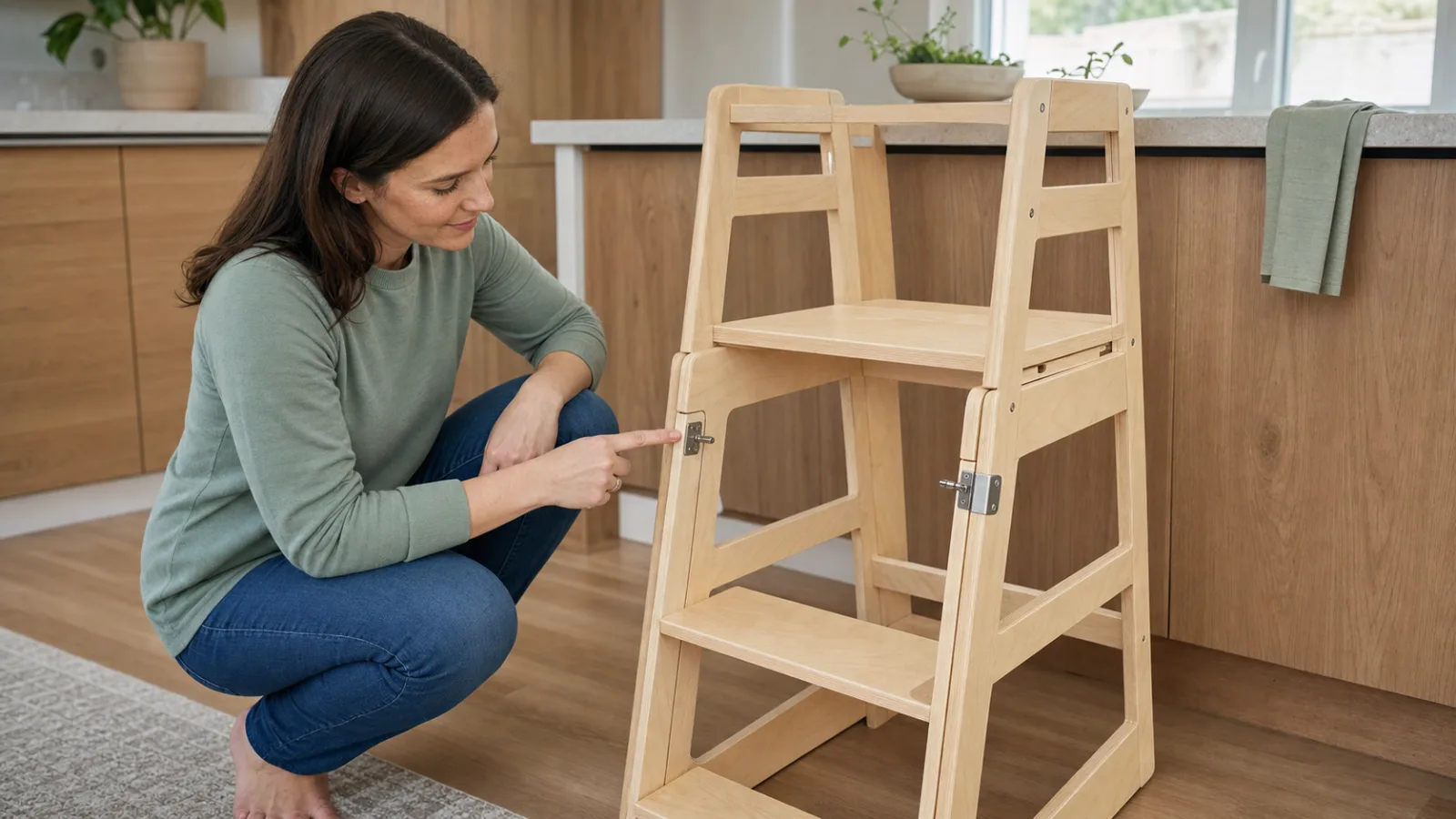
Foldable Toddler Tower Safety: Lock and Setup Checks
How to identify every lock in a foldable toddler tower's manual, check the empty setup before use, recognize stop-use conditions, and interpret folding-related recalls.
Read next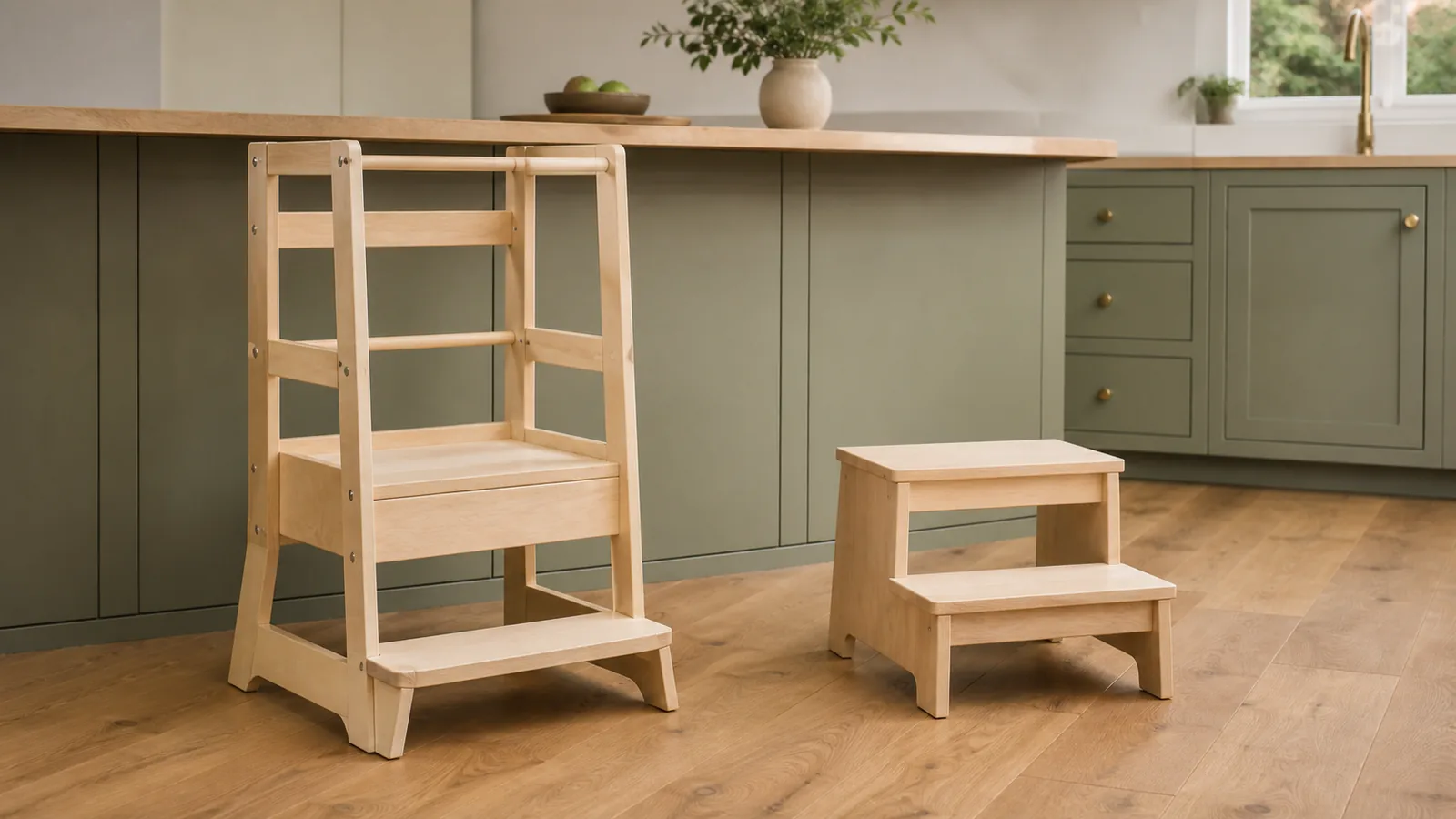
Toddler Tower vs Step Stool
How a guarded toddler tower differs from a low child step stool, and how to choose by readiness, surface height, task, footprint, and exact-product evidence.
Read next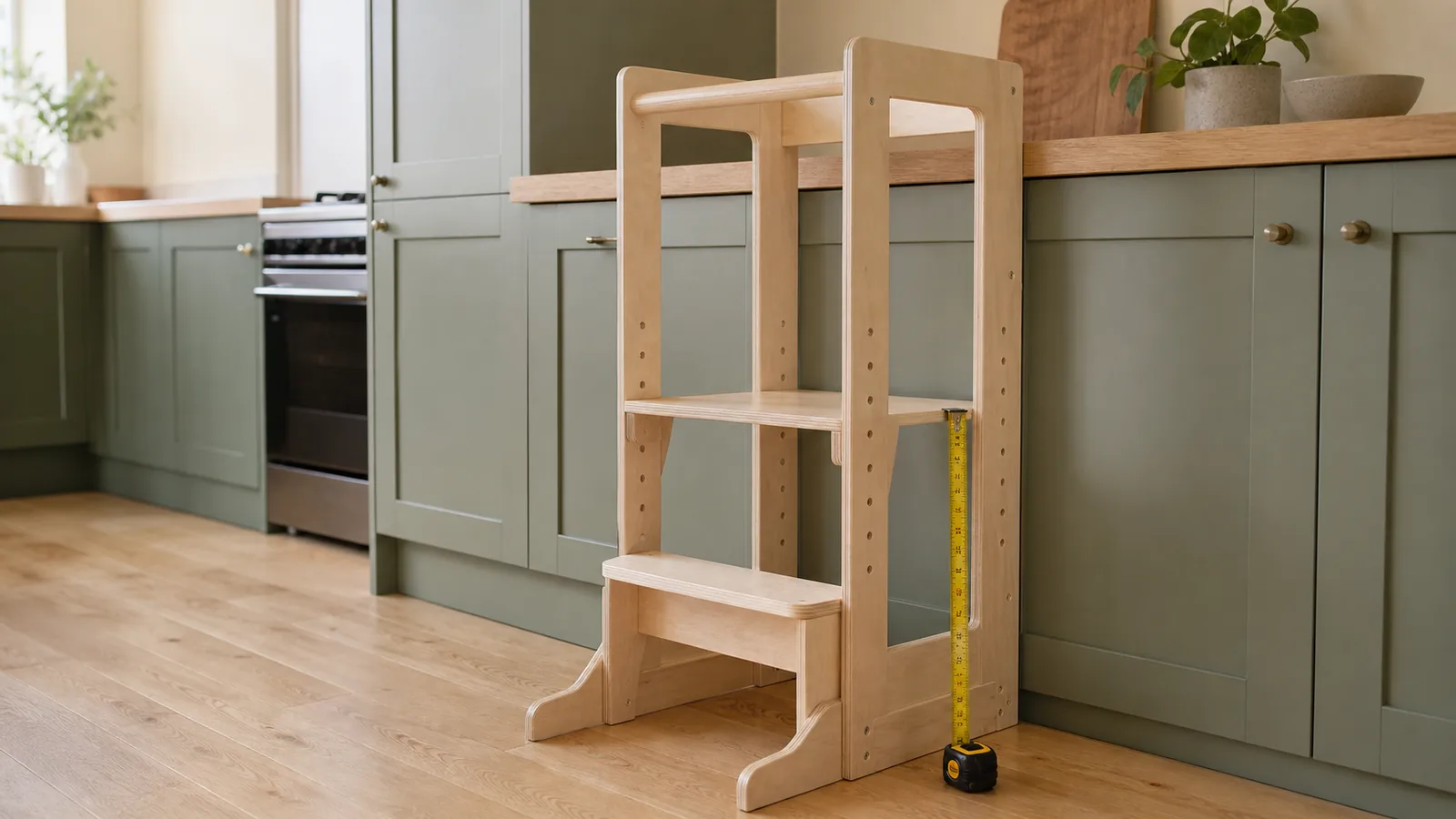
Toddler Tower Height and Counter Fit
Measure your work surface and child, calculate a starting platform height, and compare it with exact published tower positions without mistaking overall height for fit.
Read next