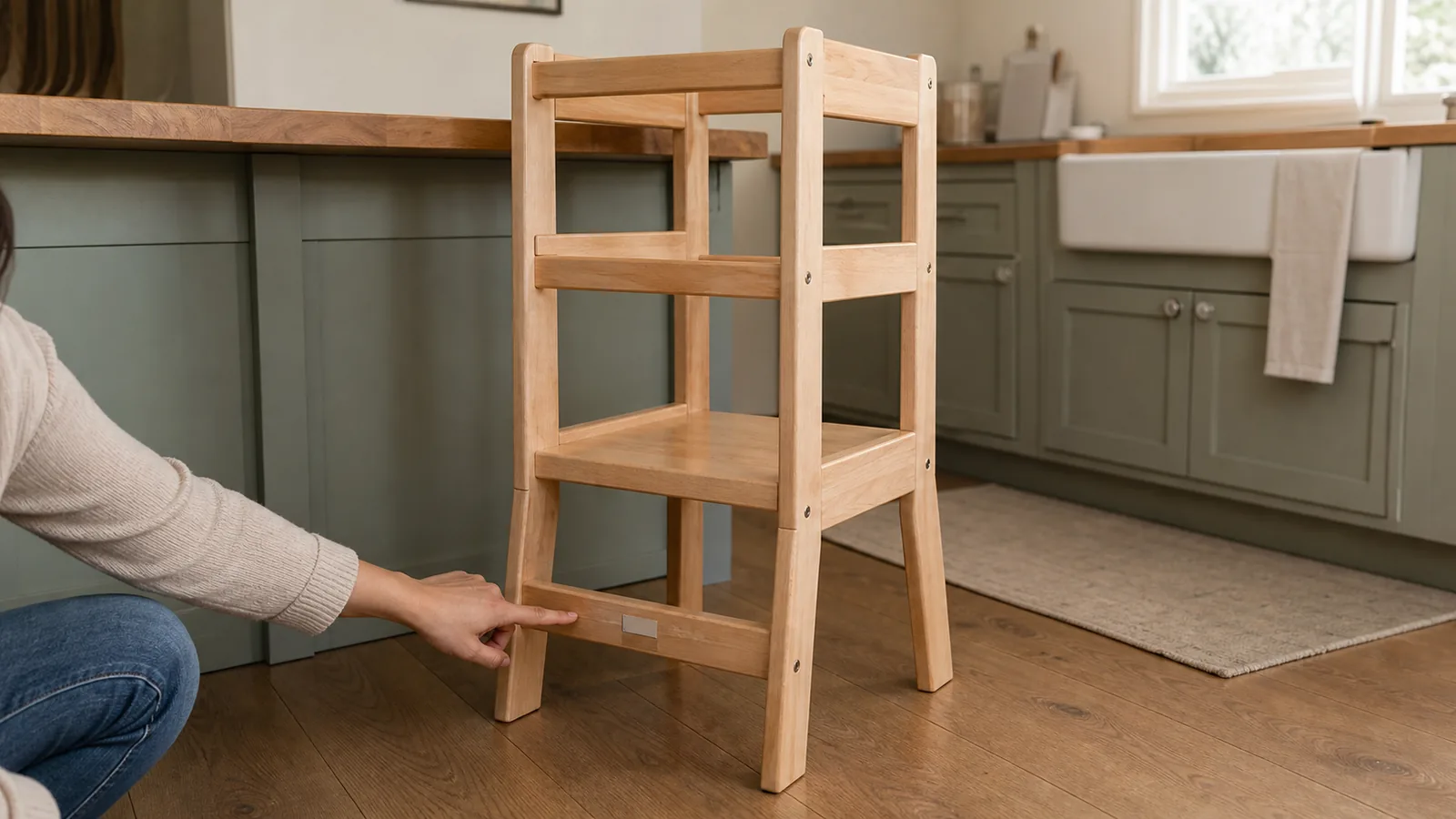
Toddler standing towers put a child at counter height on purpose, which is why the category carries real fall, tip-over, and entrapment risk, and why official recalls keep arriving. This page explains what standards currently govern these products, lists every official recall in our reviewed ledger, and shows how to check an exact model. It does not rank products and it does not certify anything: it is the safety groundwork we require before any recommendation is published on this site.
There is no finished mandatory standard for toddler towers
Toddler towers do not yet have a completed product-specific mandatory federal standard the way cribs or frame child carriers do. The U.S. Consumer Product Safety Commission's FY2025 voluntary-standards report identifies ASTM WK86690 as a new learning-tower specification that is still under development, and a May 2026 ASTM task-group log for F1559 (children's step stools and standing towers) shows continuing work on recall evidence, entrapment, tip-over, protrusions, fasteners, and stability.
The practical consequence: a seller's claim that a tower “meets safety standards” cannot be reduced to a single checkbox, because the tower-specific specification is still being written. Our product records therefore never carry a generic meets-standards field. We record which documents a manufacturer actually provides for the exact model, and we treat entrapment, tip-over, and fall geometry as questions that require measurements, not marketing language.
Why recalls are the center of this page
The official recalls in the ledger below cover both premium and budget towers, from established brands to Amazon-only imports. The hazards repeat: falls, collapses, tip-overs, and head or torso entrapment between rails. Several notices report dozens of incidents before the recall was announced.
Every entry is transcribed from an official CPSC notice, carries the notice link, and is re-checked on a weekly service level by our recall monitor. Counts shown are the numbers stated in each cited notice. We do not estimate, and where a count still needs transcription from the notice page the field is simply empty.
How to check the tower you own or plan to buy
Identify the exact model first: brand, model name, model number or SKU, and the date code or batch if the label has one. Recalls routinely cover specific models and production windows, not entire brands, and a clean brand name does not clear a specific unit.
Then check two places: our recall checker below, which searches this reviewed ledger, and CPSC's own recall listing, which is the authoritative source and always more current than any third-party tool. If your model appears in a notice, stop using it and follow the remedy instructions in the official notice itself.
Finally, register the product with the manufacturer. Registration is how recall remedies actually reach owners, and it costs nothing. If your child has already been injured by any product, report it at SaferProducts.gov. Those reports are part of how the recall system finds hazards.
What a “CPSC certified” claim really means
Sellers sometimes describe a tower as “CPSC certified” or “CPSC approved.” CPSC does not pre-approve products. For children's products, the manufacturer or importer issues its own Children's Product Certificate (CPC) based on testing at a CPSC-accepted laboratory. The certificate is the company's own attestation, a real obligation, but not a government endorsement.
When we evaluate such a claim, we ask for the actual certificate or test report: the rule numbers tested against, the exact SKU and revision tested, the laboratory, and the test date. Until those documents are reviewed, the claim is stored in our records as an attributed statement by the seller, never as a verified safety fact.
Where Pikler triangles and floor beds stand
This site's scope will eventually include other toddler independence furniture, but the evidence bar differs by category. For indoor climbing triangles, CPSC staff reported in a July 2025 letter to ASTM that all ten anonymous samples it tested failed the toddler head-entrapment probe test, with additional findings on collapse, unsecured attachments, small parts, and fall heights up to 33 inches. The tested brands were not identified, so this does not establish that any specific current model fails, but it does establish that a best-of list without model-level measurements would be irresponsible, which is why we do not publish one.
Montessori-style floor beds carry a different subtlety: CPSC's toddler-bed guidance applies to beds using a full-size crib mattress for children of at least 15 months and up to 50 pounds, while larger twin or full floor beds do not automatically share that classification. Our floor-bed records will identify the exact bed and mattress class before any guidance is attached, and the ledger above already tracks the Zipadee Kids floor-bed recall as category evidence.
Official toddler furniture recalls we track
Transcribed from official CPSC notices and re-checked weekly by our recall monitor. Cells marked n/a mean the figure has not yet been transcribed from the notice page, not that the figure is zero.
| Recall | Year | Hazard | Units | Incidents | Injuries | Official notice |
|---|---|---|---|---|---|---|
| AMZCMJ DGDChildren's tower stools imported by AMZCMJ DGD. | 2026 | Entrapment and fall hazards with risk of serious injury and death. | 130 | 7 | 4 | CPSC notice |
| TOETOLChildren's tower stools imported by TOETOL HOME. | 2026 | Entrapment and fall hazards with risk of serious injury and death. | 3,000 | 18 | 11 | CPSC notice |
| CosylandChildren's tower stools imported by Cosyland Official. | 2026 | Entrapment and fall hazards with risk of serious injury and death. | 125,200 | 25 | 8 | CPSC notice |
| GuidecraftGuidecraft children's standing towers. | 2026 | Fall hazard with risk of serious injury. | 25,235 | 11 | 3 | CPSC notice |
| Little PartnersGrow N Stow folding learning towers (children's standing towers). | 2026 | Collapse and fall hazard. | 9,780 | 14 | 1 | CPSC notice |
| SDADISDADI kitchen step stools, models LT01 and LT05, imported by Yiwushi Bihe Trading. | 2026 | The recalled tower stools can collapse or tip over while in use, and a child's torso can fit through the openings on the front and back sides, posing tip-over, fall, and entrapment hazards. | 5,952 | 8 | 4 | CPSC notice |
| BoonBoon PIVOT collapsible toddler tower kitchen step stools, recalled by TOMY. | 2026 | Tip-over and fall hazards with risk of serious injury and death. | 116,908 | 11 | 0 | CPSC notice |
| WiifoChildren's tower stools imported by Wiifo. | 2026 | Entrapment and fall hazards with risk of serious injury and death. | 9,700 | 22 | 6 | CPSC notice |
| OnastiOnasti toddler tower stools sold exclusively on Amazon.com by Blissful Time. | 2025 | Serious fall and injury hazards. | 10,300 | 4 | 2 | CPSC notice |
| Simplay3Simplay3 Toddler Towers model 41807-01 Espresso, 41807-02 Gray, and 41807-03 White with date codes from November 2018 through June 2023. | 2023 | The affected towers can tip over during use, posing fall and injury hazards. | 108,450 | 16 | 10 | CPSC notice |
| Zipadee KidsConvertible house bed frames and Montessori floor beds. | 2023 | Entrapment and strangulation hazards. | 7,450 | n/a | n/a | CPSC notice |
11 official notices in the reviewed ledger. Ledger last verified 2026-07-20. Cells marked n/a mean the figure has not yet been transcribed from the notice page. Always confirm on CPSC.gov.
Check a specific model
Toddler tower safety questions
Is there a mandatory safety standard for toddler towers?
Does “CPSC certified” mean the government approved the tower?
How current is the recall list on this page?
Why doesn't this site recommend a safest toddler tower?
Method and Sources
How this page is checked
- Every recall entry is transcribed from the linked official CPSC notice; counts are never aggregated or estimated by this site.
- The recall ledger is re-checked against the official CPSC recall data API on a weekly service level, and unmatched notices are quarantined for human review before they can appear here.
- Standards-development statements cite the CPSC FY2025 voluntary-standards report and the May 2026 ASTM F1559 task-group log, both linked below.
- This page is educational research, not a certification, a safety guarantee, or medical advice.
Sources
- CPSC FY2025 Voluntary Standards Annual Report (identifies ASTM WK86690)
- ASTM F1559 Children's Step Stools and Standing Towers task-group meeting log, May 2026
- CPSC staff letter to ASTM F15.09 on indoor triangle climbers, July 2025
- CPSC: Children's Product Certificate requirements
- CPSC: Online sellers safety guide FAQs
- CPSC: Toddler bed business guidance
- CPSC recall listing (authoritative)
Keep reading
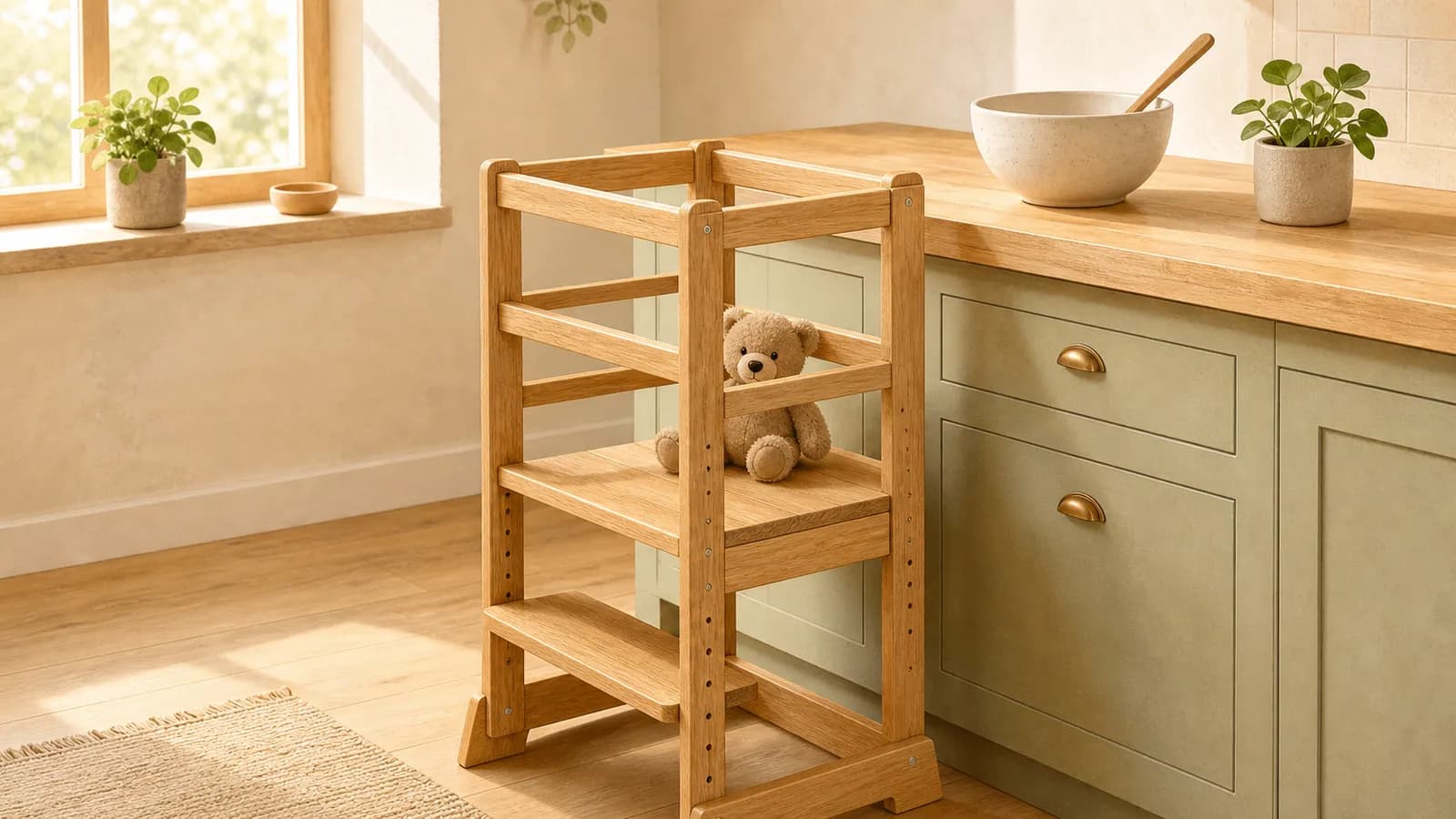
How to Choose a Toddler Tower
A practical, safety-first guide to choosing a toddler tower: how to fit it to your counter height, read guard and stability design against the real recall hazards, judge foldable versus fixed, and run a pre-purchase checklist on any model.
Read next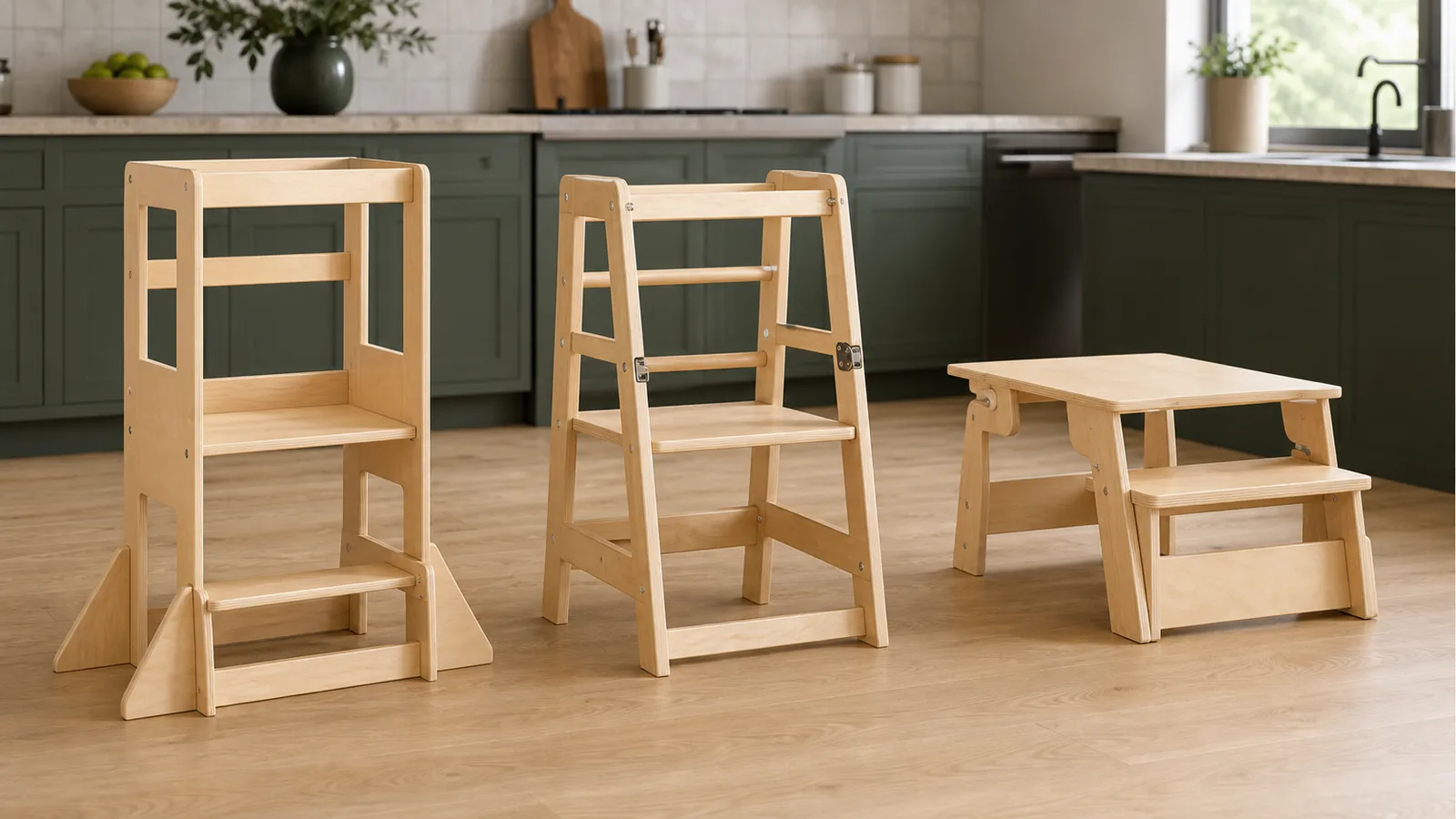
Fixed vs Foldable vs Convertible Toddler Towers
How fixed-frame, foldable, and convertible toddler towers differ in footprint, locks, storage, platform fit, and extra modes, with source-backed examples.
Read next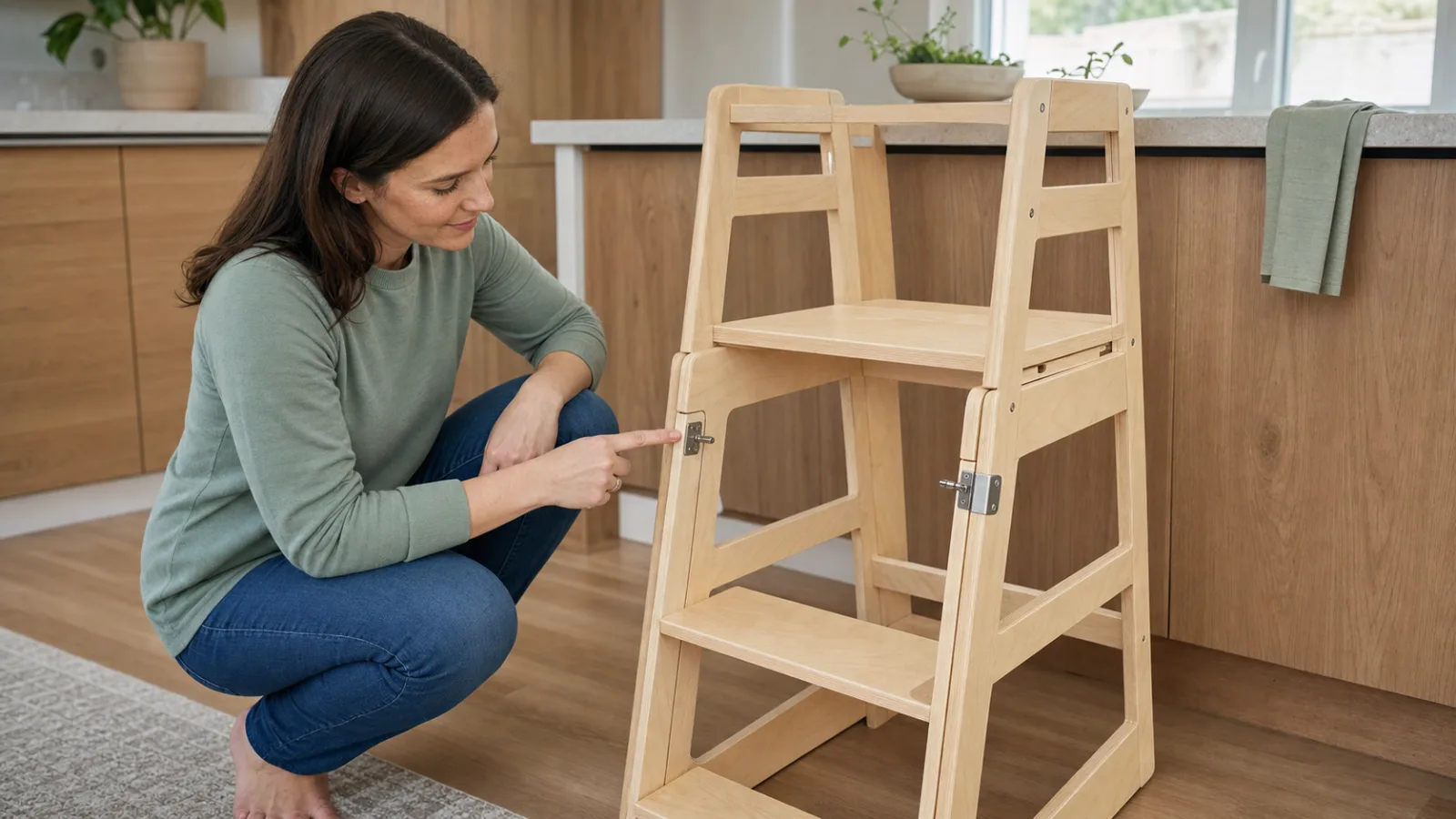
Foldable Toddler Tower Safety: Lock and Setup Checks
How to identify every lock in a foldable toddler tower's manual, check the empty setup before use, recognize stop-use conditions, and interpret folding-related recalls.
Read next