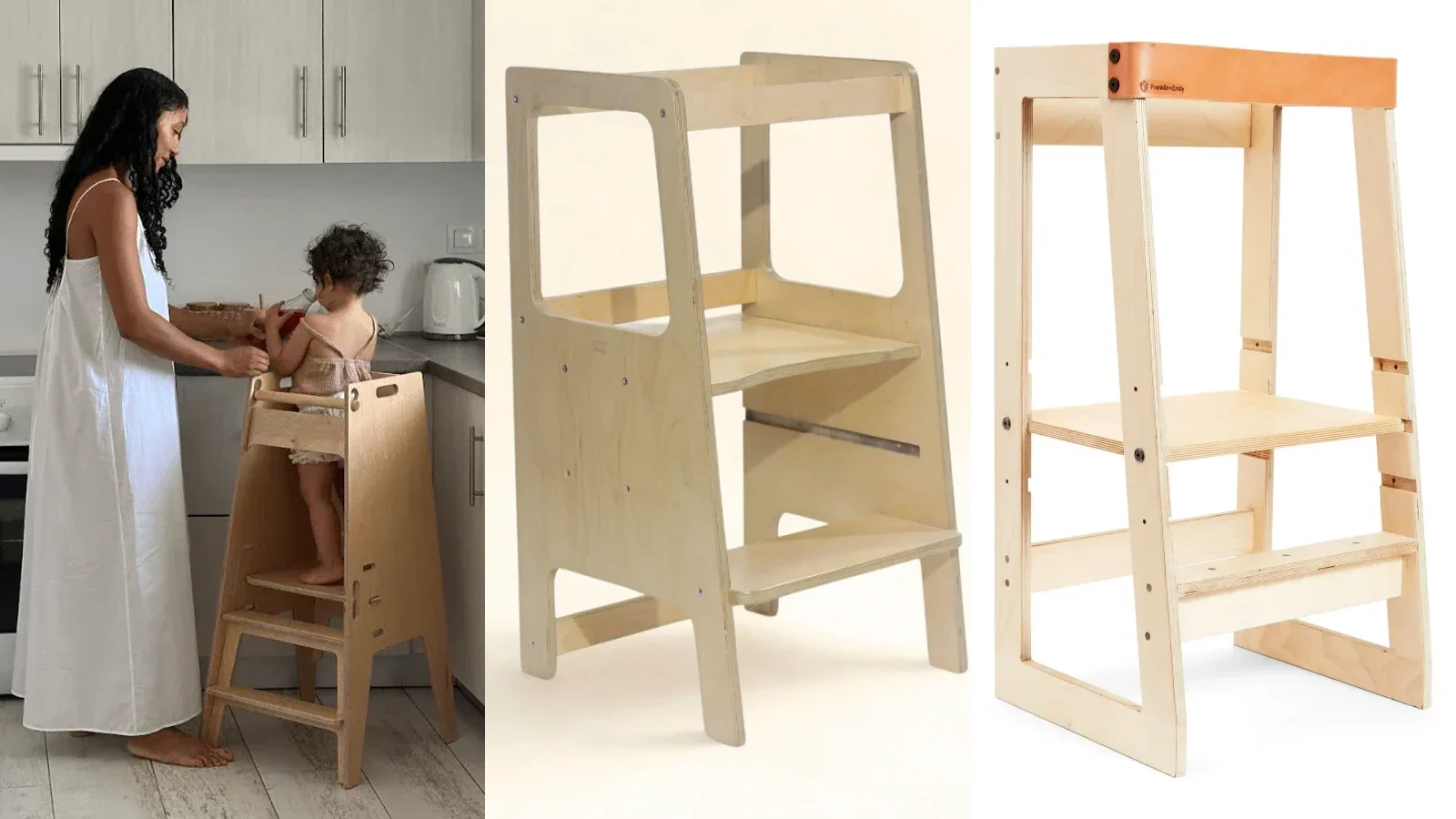
Sprout Sous-Chef R4, RAD Solo TOW-S, and Franklin+Emily all occupy a compact fixed-frame category, but they do not solve the same fit and evidence problems. Sprout uses three platform positions and a child-height-specific guard-plate system while current availability remains unresolved. RAD Solo uses two screw-secured positions and states a 200-pound limit. Franklin+Emily is the shallowest and lightest verified model in the trio, with three screw-secured positions but no published child-weight limit. This page compares the exact current records without filling gaps from a similar birch tower or declaring a universal winner.
Three compact fixed frames, three open gates
Sprout Sous-Chef R4
Three positions, child-height guard plates, a stated 150-pound limit, and an exact R4 identity. Product weight, fixed age range, eligible price, and coherent availability remain unresolved.
RAD Solo TOW-S
Two screw-secured positions, an 18-pound frame, stated 18-month to 6-year range, and a 200-pound limit. The public record does not identify a revision or separate anti-tip part.
Franklin+Emily
A 16-inch depth, 15-pound frame, three four-screw positions, leather rear strap, and stated ages 2 to 6. The child-weight limit and public revision remain unverified.
Sprout, RAD, and Franklin+Emily evidence table
Every cell is generated from the three validated exact-product records. Official images enlarge on selection, unavailable price observations stay excluded, and missing product weight, age, revision, and child-limit evidence remains visible.
Sprout Sous-Chef Toddler TowerStandard tower
RAD Children's Furniture Toddler Tower SoloStandard tower
Franklin+Emily Toddler TowerStandard tower
Sources cited in this comparison
- [1] Sprout Sous-Chef Toddler Tower live commerce data accessed 2026-07-20
- [2] RAD Toddler Tower official US commerce data accessed 2026-07-20
- [3] Franklin+Emily Toddler Tower live commerce data accessed 2026-07-20
- [4] RAD Children's Furniture Toddler Tower accessed 2026-07-20
- [5] Franklin+Emily Toddler Tower accessed 2026-07-20
- [6] Sprout Sous-Chef Toddler Tower accessed 2026-07-20
- [7] RAD Toddler Tower Assembly accessed 2026-07-20
- [8] Franklin+Emily Toddler Tower assembly and care instructions accessed 2026-07-20
- [9] Sprout Sous-Chef Toddler Tower R4 assembly and safety guide accessed 2026-07-20
- [10] CPSC recall search for Sprout Sous-Chef Toddler Tower R4 accessed 2026-07-20
- [11] CPSC recall search for RAD Toddler Tower accessed 2026-07-20
- [12] CPSC recall search for Franklin+Emily Toddler Tower accessed 2026-07-20
Sprout, RAD, and Franklin+Emily evidence table. Details checked July 20, 2026.
The short answer: choose the guard and adjustment routine before the finish
Inspect Sprout first when the R4 child-height guidance, included Guard Plate, optional Full Plate, and 12.5, 15.5, and 18.5-inch settings fit the child. Inspect RAD Solo first when two widely spaced settings, a stated 18-month minimum, and a published 200-pound limit fit the household. Inspect Franklin+Emily first when a 16-inch depth, 15-pound product weight, and three evenly spaced 12, 15, and 18-inch settings matter most.
Those are shortlist routes, not recommendations. Sprout has conflicting official stock signals and no eligible current base price. Franklin+Emily publishes no child-weight limit. RAD has only two platform settings and no public revision identifier. All three remain fixed frames, require exact placement and guard checks, and lack this site's hands-on stability, assembly, and long-term durability results.
The three footprints are close, but Franklin+Emily is the shallowest
Sprout is 17.5 inches square and 34.5 inches high. RAD Solo is 17.5 inches deep, 17.25 inches wide, and 32.5 inches high. Franklin+Emily is 16 inches deep, 17.25 inches wide, and 33.375 inches high. Every base direction stays below 18 inches, but the complete rectangle, rear entry opening, caregiver position, and counter projection still determine whether one fits the room.
None of the three folds for storage. Sprout can be disassembled without tools, but that is not a verified daily folding mechanism or stored envelope. Tape each full base on the floor, then check cabinet and appliance doors, the adult intervention path, and the required counter-facing orientation before treating a small number as proof of a small working footprint.
Platform count does not reveal the adjustment effort
Sprout publishes three stops at 12.5, 15.5, and 18.5 inches. Franklin+Emily publishes three stops at 12, 15, and 18 inches and requires four 4 mm hex screws to secure a change. RAD publishes two stops at 12 and 17.5 inches and requires two screws. The ranges are discrete, so no platform can be parked between the listed settings.
A third position can place the child closer to a measured counter-fit target, while fewer fasteners can reduce adjustment work. Neither fact proves better retention, stability, or convenience. Measure the counter and child, identify the nearest approved setting, perform the empty-product adjustment exactly as the manual directs, and inspect every fastener and platform support before use.
The guard systems create three different inspection routines
Sprout R4 uses enclosed side panels, a removable twist-lock dowel, and an included Guard Plate for children under 32 inches. A larger Full Plate is optional or bundled with specific SKUs, and Sprout directs owners to lower the platform when the child's bellybutton rises above the side panels. The exact SKU, included plate, dowel lock, child height, and platform position therefore work as one setup.
RAD uses fixed side panels and rear rails with a rear climb opening. Franklin+Emily uses upper and lower rear supports plus a vegetable-tanned leather safety strap that must face outward. RAD and Franklin+Emily manuals direct users to keep the tower backed against a counter or solid surface. Do not transfer Sprout's plate rule, RAD's rear-rail geometry, or Franklin+Emily's strap orientation to either of the other products.
Age and weight numbers do not produce a capacity ranking
RAD states use from 18 months through 6 years and a 200-pound child limit. Franklin+Emily states ages 2 through 6 years but publishes no child-weight maximum in the reviewed product page or manual. Sprout states a 150-pound limit and uses independent standing plus a 28- to 44-inch child-height range rather than a fixed age rule.
A higher published limit is not a stability score, and a missing limit cannot be filled from another birch tower. The usable window ends at the first failed age, height, weight, readiness, behavior, guard, platform, condition, placement, or recall gate. Franklin+Emily's missing value remains an unresolved purchasing question rather than an invitation to assume a common industry number.
Weight and materials affect handling, not only appearance
Franklin+Emily states a 15-pound product weight, while RAD Solo states 18 pounds. Sprout publishes a 20-pound box weight but no assembled product weight, so the comparison leaves that cell unverified. If the tower will move regularly, lift and turn the exact empty unit through the intended route instead of substituting shipping weight or estimating from photography.
Sprout describes melamine-finished birch or white melamine with clear water-based finished edges and a maple dowel. RAD describes Baltic or European birch, some hardwood parts, and a zero-VOC UV-cured finish. Franklin+Emily describes Baltic birch plywood, a leather strap, and slip-resistant felt pads. Material and finish claims do not establish joint quality, moisture tolerance, cleanability, or long-term fastener performance without exact care instructions and hands-on inspection.
Current purchase evidence favors RAD and Franklin+Emily
RAD Solo had an eligible current direct observation of $225 and official in-stock evidence. Franklin+Emily had an eligible $240 MSRP observation and official in-stock evidence; its current $199 sale was recorded but excluded from the regular-price range. Sprout's official commerce endpoint marked its variants available while the rendered page showed the selected Finished Birch tower backordered and out of stock, so availability remains conflicting and its $190 to $210 observations are excluded from the eligible base-price range.
That makes Sprout's missing price cell an evidence result, not a claim that the product is free or discontinued. Recheck the exact finish, SKU, included guard plate, live stock, delivery terms, current regular price, and return policy immediately before ordering any of the three.
Exact-model recall searches are clear, not predictive
The current exact-model CPSC searches found no matching notice for Sprout R4 SKU TODT-R4-NAT-S, RAD Solo TOW-S, or Franklin+Emily SKU 850013267415 as of July 20, 2026. None found means the official query returned no match for the recorded identity on that date. It is not certification, proof of correct assembly, or a guarantee against a future notice.
Match the physical label before using the result. Sprout's R4 identity is important because the company documents older designs separately. RAD Solo must not inherit the wider Double TOW-D record. Franklin+Emily has no public revision identifier, so the SKU, current manual, condition, and support response remain the available identity checks.
Use a fail-closed order to make the choice
First match the exact model, SKU, and revision evidence. Second repeat the official recall search. Third measure the complete base, entry side, counter, child, and nearest real platform setting. Fourth verify the complete guard configuration and placement rule. Fifth inspect platform supports, screws, dowel or strap, feet, joints, finish, and every load-bearing edge while the tower is empty. Sixth clear age, height, weight, readiness, condition, and supervision limits. Compare current price and finish only after those gates pass.
If more than one product survives, choose the mechanism and support path that fits the household. Sprout offers the most explicit child-height guard configuration. RAD offers the highest stated limit and a two-screw platform routine. Franklin+Emily offers the shallowest base and lightest verified frame. Those are descriptive tradeoffs until the exact unit completes hands-on evaluation.
Route the shortlist by the first constraint
These routes identify what to inspect first. They do not replace exact fit, current availability, physical condition, or hands-on testing.
| If your first constraint is | Inspect first | Evidence reason | Do not skip |
|---|---|---|---|
| Child-height-specific guard setup | Sprout R4 | It documents a Guard Plate below 32 inches, an optional Full Plate, and a bellybutton-to-side-panel rule | Exact R4 SKU, included parts, dowel lock, platform setting, and current child height |
| The shallowest published base | Franklin+Emily | Its base is 16 by 17.25 inches versus 17.5-inch depth for Sprout and RAD | Rear entry, counter placement, leather-strap orientation, and adult access |
| The lightest verified frame | Franklin+Emily | It states 15 pounds versus 18 pounds for RAD; Sprout's assembled weight is unverified | The real carrying route, grip, condition, and missing child-weight limit |
| The highest published platform | Sprout R4 | Its top stop is 18.5 inches versus 18 for Franklin+Emily and 17.5 for RAD | The nearest real child-counter fit, guard relationship, and complete R4 configuration |
| The fewest platform fasteners | RAD Solo | Its two positions use two screws, while Franklin+Emily documents four screws for three positions | The large 5.5-inch jump between stops and the exact platform retention check |
| A published child-weight limit | Sprout or RAD | Sprout states 150 pounds and RAD states 200 pounds; Franklin+Emily publishes no limit found by this review | Age or height guidance, readiness, guard fit, placement, behavior, and condition |
| A currently eligible direct price | RAD or Franklin+Emily | $225 for RAD and $240 for Franklin+Emily under the regular-price policy | Live stock, exact finish, sale exclusion, delivery terms, and return policy |
Open each exact record and fit check
Sprout, RAD, and Franklin+Emily questions
What is the difference between Sprout, RAD, and Franklin+Emily toddler towers?
Which is smaller, Sprout, RAD, or Franklin+Emily?
Which has the most platform heights?
Which has the highest weight limit?
Which is easiest to move?
Are Sprout, RAD, or Franklin+Emily toddler towers recalled?
Which fixed-frame toddler tower is best?
Method and Sources
How this page is checked
- The comparison table is generated from the same validated product, pricing, source, image, and recall records used by the model briefs and broader comparison hubs.
- The three exact identities remain separate: current Sprout R4 SKUs, RAD Solo TOW-S, and Franklin+Emily SKU and UPC 850013267415. RAD Double TOW-D is not part of this comparison.
- Eligible prices follow the site's regular new-in-box USD policy. Franklin+Emily's current sale and Sprout's observations with conflicting availability are preserved but excluded from the displayed base-price range.
- Sprout's assembled product weight and fixed age range remain unverified. A 20-pound box weight and informal FAQ starting age are not converted into product specifications.
- Franklin+Emily's child-weight limit remains unverified because neither the current page nor linked manual publishes one. Sprout's 150-pound and RAD's 200-pound claims are not transferred.
- Certification language remains attributed. Sprout's GREENGUARD Gold, RAD's FSC and CARB Phase 2, and Franklin+Emily's CARB2 statements are manufacturer claims, not this site's certification findings.
- Exact-model CPSC searches found no matching notice for the three recorded identifiers on July 20, 2026. None found is not certification or a zero-risk guarantee.
- No exact model has completed this site's hands-on stability, platform-retention, assembly, carrying, cleanability, guard-fit, joint-quality, durability, or long-term hardware protocol.
- The hero and table use official manufacturer product images for editorial identification. Sprout, RAD Children's Furniture, and Franklin+Emily retain credit; separate reuse permission is not recorded in the catalog.
Sources
- Sprout Sous-Chef Toddler Tower product page
- Sprout Sous-Chef official commerce data
- Sprout Sous-Chef R4 assembly and safety guide
- CPSC recall search for Sprout Sous-Chef R4
- RAD Children's Furniture Toddler Tower product page
- RAD Toddler Tower official US commerce data
- RAD Toddler Tower assembly manual
- CPSC recall search for RAD Solo TOW-S
- Franklin+Emily Toddler Tower product page
- Franklin+Emily Toddler Tower official commerce data
- Franklin+Emily Toddler Tower assembly and care instructions
- CPSC recall search for Franklin+Emily Toddler Tower
- Franklin+Emily product registration
- Franklin+Emily contact
Keep reading
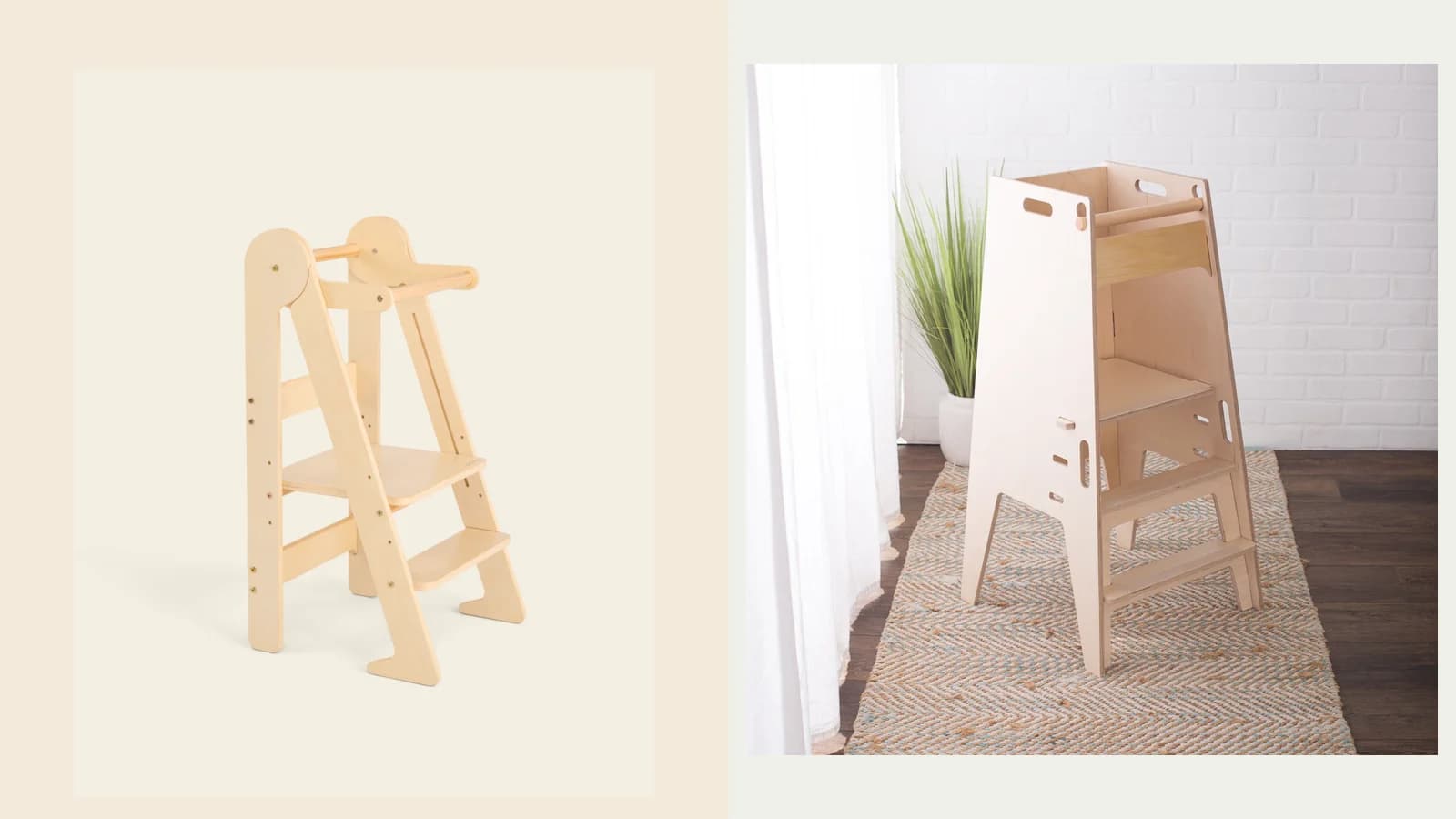
Piccalio Foldable vs Sprout Sous-Chef Toddler Tower
Compare the Piccalio Foldable and Sprout Sous-Chef R4 by footprint, storage, platform range, age guidance, capacity, price evidence, materials, and exact-model recall checks.
Read next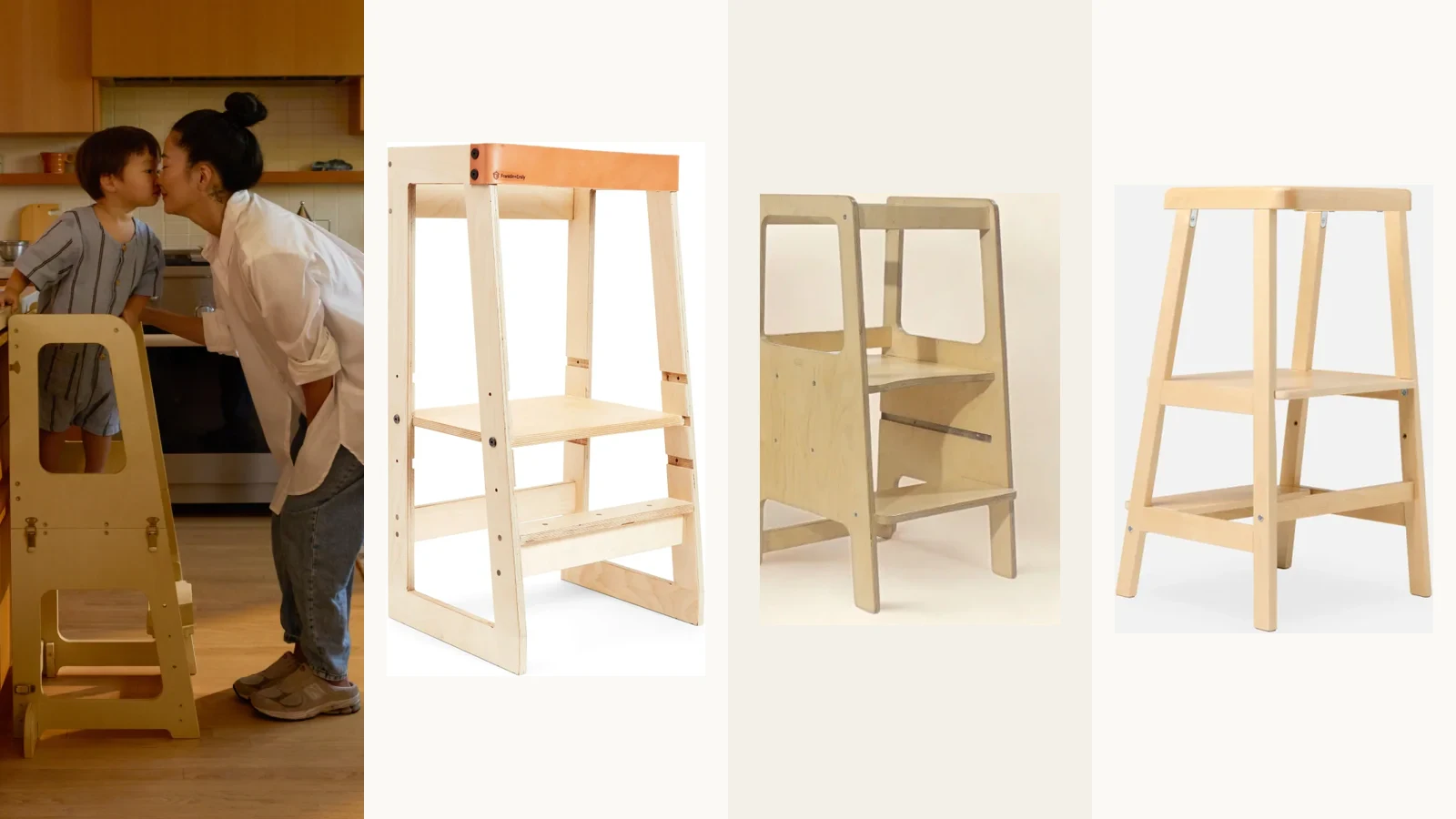
Small-Footprint Toddler Towers Under 19 Inches
Compare eight toddler towers whose two published base directions are each under 19 inches, with open footprint, platform, storage, price, limit, and recall evidence.
Read next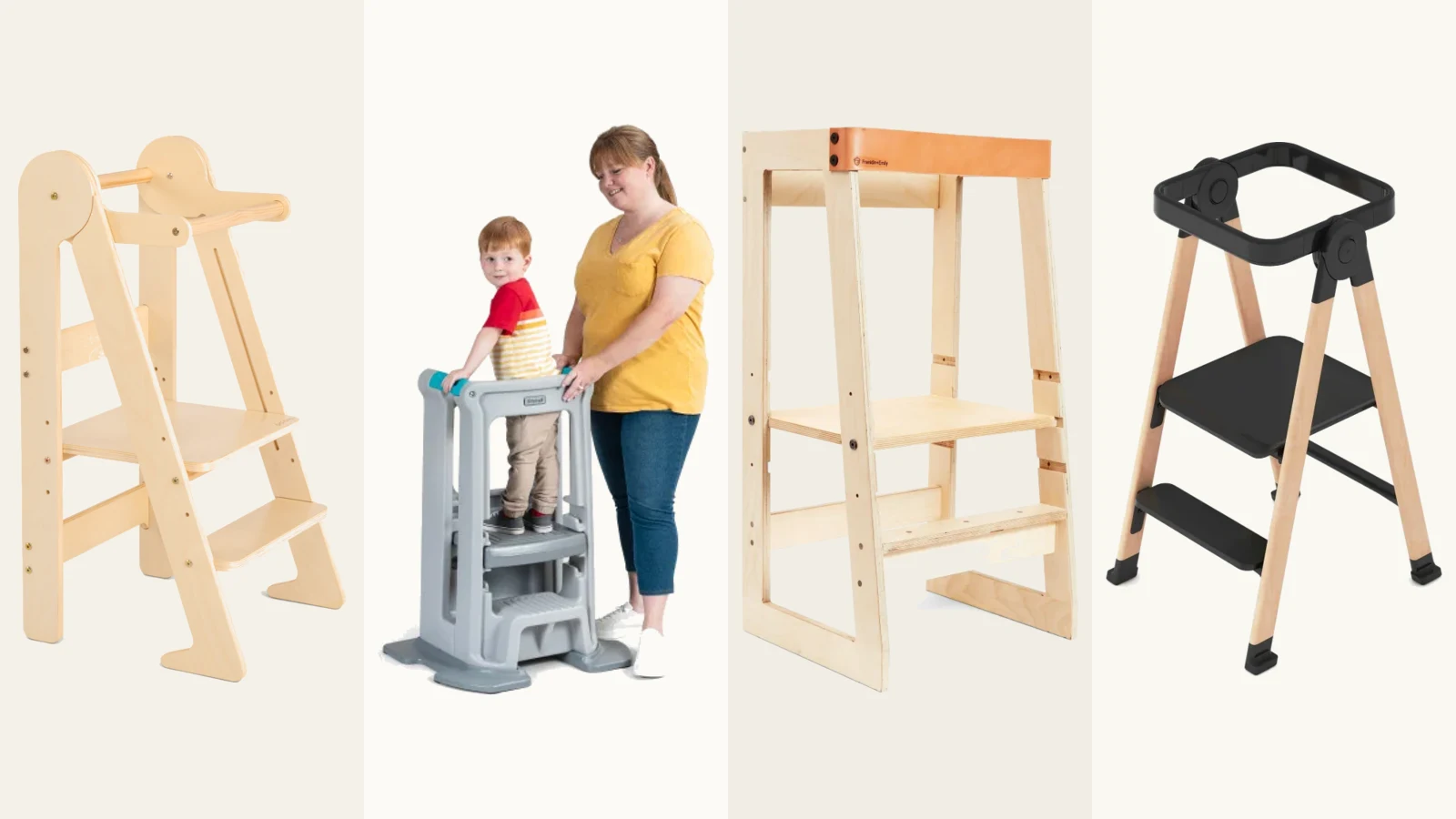
Adjustable Toddler Towers: Platform Heights and Counter Fit
Compare eight adjustable toddler towers by exact platform positions, counter fit, adjustment method, footprint, price, child limits, and recall evidence.
Read next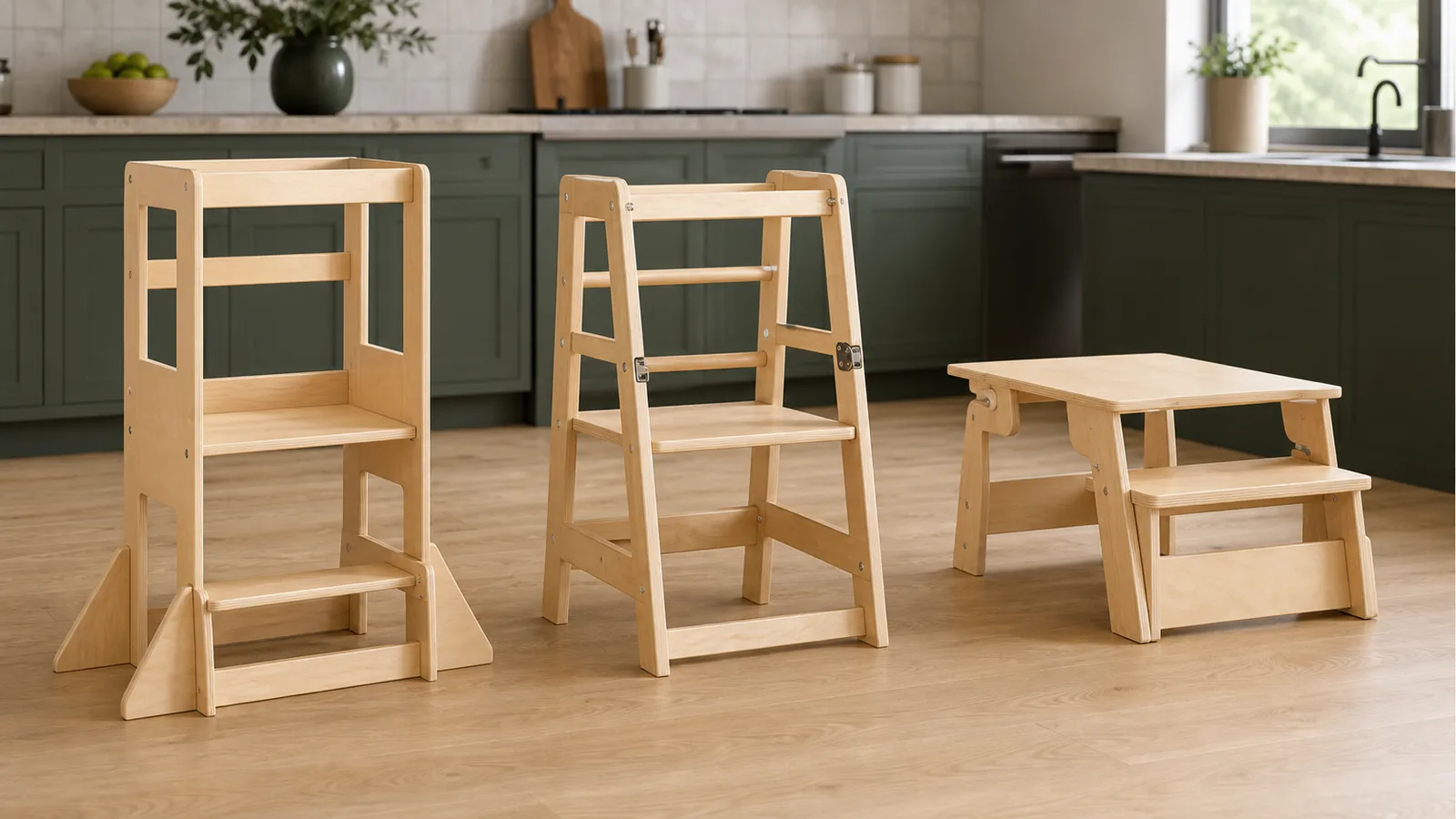
Fixed vs Foldable vs Convertible Toddler Towers
How fixed-frame, foldable, and convertible toddler towers differ in footprint, locks, storage, platform fit, and extra modes, with source-backed examples.
Read next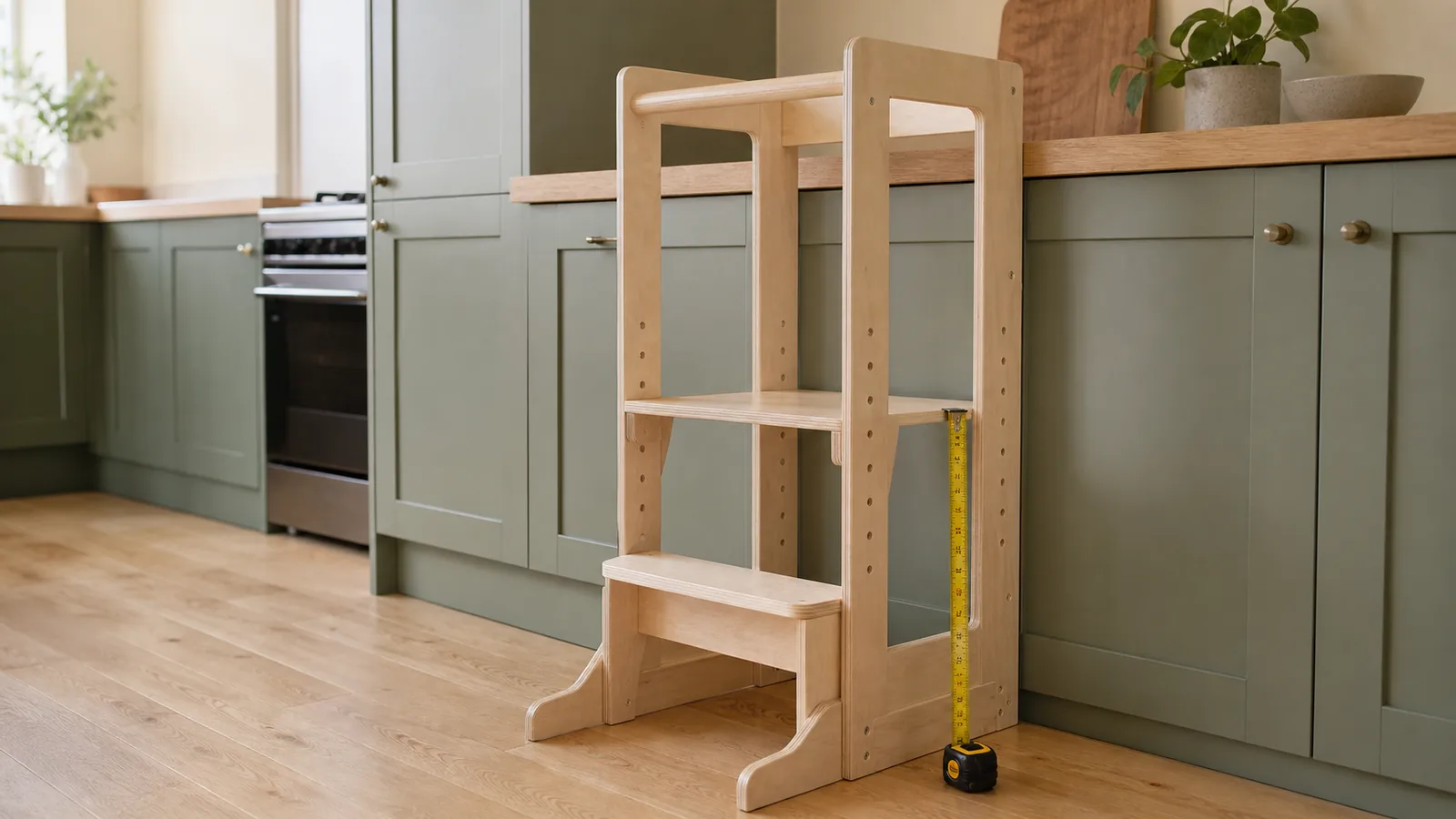
Toddler Tower Height and Counter Fit
Measure your work surface and child, calculate a starting platform height, and compare it with exact published tower positions without mistaking overall height for fit.
Read next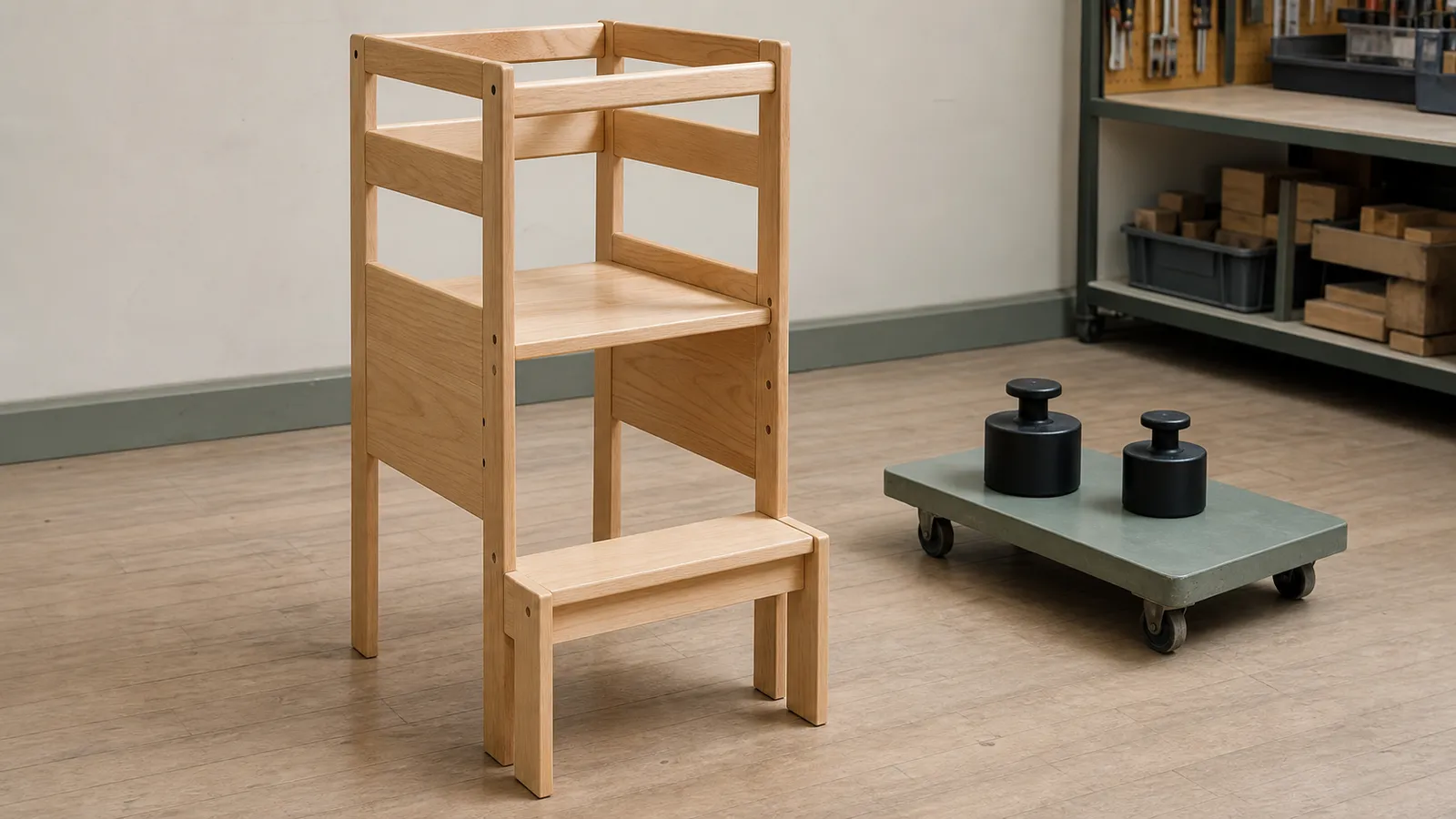
Toddler Tower Weight Limits: What the Number Does and Does Not Prove
Read a toddler tower weight limit as one exact-model ceiling, then check the separate age, height, guard-fit, mode, condition, and recall gates it cannot replace.
Read next