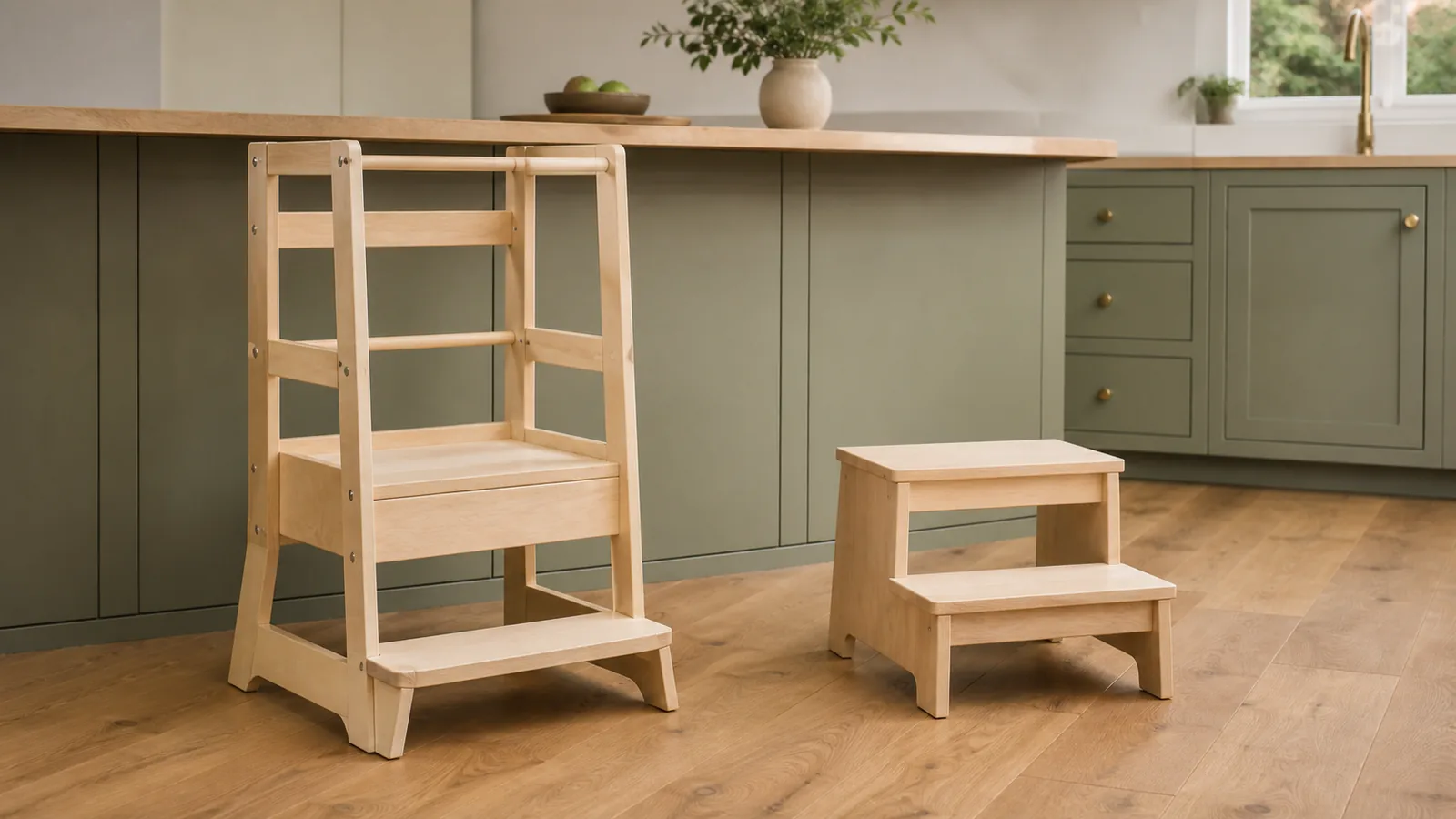
A toddler tower and a child step stool are both ways to give a child a boost, but they are not interchangeable. A tower creates a guarded standing area at counter height for supervised participation. A low step stool leaves the child open on every side and suits a shorter, briefer reach. Start with the structure and the job, not the name on the listing. Then check the exact model, because neither category label proves that a product is stable, correctly assembled, or clear of recalls.
Short answer
Toddler tower
For supervised, sustained participation at counter height when a standing child needs a guarded standing area. Verify platform fit, guard, footprint, placement, and the exact model.
Child step stool
For a steadier child making a shorter, briefer reach without a surrounding guard. Verify step height, open edges, footprint, surface grip, and the exact product.
Neither label decides safety
Names do not prove stability, correct assembly, suitable use, or a clean recall record. Inspect the structure and follow the manual for the exact item.
Define the product by its structure, not its listing name
Seller names blur this comparison. Learning tower, kitchen helper, standing tower, toddler stool, and kitchen step stool can all appear on products with very different geometry. In April 2026, CPSC warned consumers about Bauhini SDADI products sold as kitchen step stools that were actually tall, guarded standing towers. The notice identified entrapment, tip-over, and fall hazards. A familiar label did not explain the product or clear its risks.
For this guide, a toddler tower means a tall piece of furniture with a standing platform and a surrounding guard intended to bring a child to counter height. A child step stool means a low, open one-step or two-step platform that supplies a smaller boost. A household folding stepper with a tall handrail is a third thing. A handle for an adult does not turn an open stepper into a guarded child platform.
Choose by the height and duration of the job
A tower is the relevant category when a standing child needs to participate at a kitchen counter, island, or sink for more than a quick reach and needs a guard around the standing area. Measure the actual work surface and compare it with every published platform position. Overall tower height is not a substitute for the platform measurement.
A low child step stool is the relevant category when a steadier child needs a modest boost for a short task, can step up and down with control, and does not need to stand at full counter height inside an enclosure. Think of reaching a lower sink, a shelf, or a bathroom vanity that already suits the child's height. Readiness and the exact manufacturer's limits matter more than a universal birthday.
A surrounding guard changes the use, but it is not a guarantee
The main structural difference is the guarded standing area. It can reduce the chance of an accidental step straight off the platform during supervised counter work. It does not make climbing, leaning, bouncing, or entering the tower risk-free. Guard openings, rail height, platform position, base geometry, hardware, and counter placement still have to work together on the exact model.
An open step stool asks more of the child's balance and judgment because there is no surrounding barrier. A household product with one bar or handle behind the user still leaves open edges. Do not treat that bar as equivalent to a tower guard, and do not improvise a taller reach by placing a stool on another surface.
Work through five gates before choosing either one
First, identify the exact product: brand, model, SKU, revision, and any lot or date code. Second, check the official recall record. Third, confirm that your child can use the steps and standing surface as the manual requires. Fourth, measure the surface height, required boost, open footprint, and path around the product. Fifth, read the assembly, placement, supervision, and folding-lock instructions before the first use.
These gates prevent the common category shortcut. A tower is not the answer merely because the child is young, and a stool is not the answer merely because it takes less room. If the child needs enclosure at counter height, a low open stool is not a substitute. If a steadier child needs only a brief, small boost, a full tower may be more furniture than the task requires.
Know when the fit has changed
The useful question is not when every child should graduate from a tower. It is whether the current setup still fits. Recheck the manufacturer's height, age, and weight limits; the child's working height relative to the guard; the way they enter and exit; and whether the platform can be lowered. A child leaning over the top rail, climbing the outside, or using the guard as a perch is telling you the configuration no longer matches the job.
Moving to a low step stool is reasonable only when the child can manage its open edges and the required reach is modest. The new product starts a new evidence check. Do not transfer the tower's recall status, limits, or stability assumptions to the stool you choose next.
Bathroom use needs its own measurement
Bathroom vanities are often lower than kitchen counters, so a low step stool may supply enough height for handwashing without bringing a full tower into a tight room. Measure the actual basin and floor space. Keep the stool on a dry, level surface, preserve the walking route, and follow the product's placement and supervision instructions.
A tower can still make sense at a lower surface when its platform adjusts to an appropriate position and its full footprint fits. Do not assume that a product suitable for one kitchen counter automatically fits a vanity, or that a compact bathroom makes an undersized or unstable stool acceptable.
Toddler tower and child step stool at a glance
This table compares the intended job and structure. It does not rate every product in either category.
| Decision point | Toddler tower | Child step stool |
|---|---|---|
| Primary job | Sustained, supervised participation at counter height | A brief, smaller boost to a reachable surface |
| Standing area | Tall platform with a surrounding guard | Low one-step or two-step platform open on every side |
| Child skill demanded | Independent standing and controlled entry within the maker's limits | Balance and judgment around open edges within the maker's limits |
| Measure first | Platform-to-counter fit and full open footprint | Required boost, top-step size, and floor area |
| Mechanism to inspect | Guard, platform attachment, base, and any folding lock | Step attachment, hinges on folding models, feet, and surface grip |
| Not a substitute for | A high chair or unsupervised containment | A guarded standing platform when enclosure is needed |
Make the next check
Toddler tower and step stool questions
When should a child switch from a toddler tower to a step stool?
Can a child use a step stool at a kitchen counter?
Is a safety rail on a household step stool the same as a toddler tower guard?
Which takes less space, a toddler tower or a step stool?
Can both products be used in a bathroom?
Method and Sources
How this page is checked
- This comparison defines each category by structure and intended job because seller names are inconsistent and sometimes place standing towers under step-stool labels.
- Safety-sensitive claims are limited to failure modes and product distinctions supported by official CPSC material. The page does not infer that one category is universally safer.
- Readiness guidance defers to the exact product's instructions and limits rather than publishing a universal transition age.
- No product is ranked or recommended, and real-world stability still requires hands-on testing of the exact unit.
Sources
- ASTM F1559 Children's Step Stools and Standing Towers task-group meeting log, February 2026
- ASTM F1559 Children's Step Stools and Standing Towers task-group meeting log, May 2026
- CPSC warning for Bauhini SDADI kitchen step stools, April 2026
- CPSC recall of Squatty Potty children's toilet step stools, 2018
- CPSC recall listing (authoritative)
- Toddler Home Brief toddler tower safety standards and recalls
Keep reading
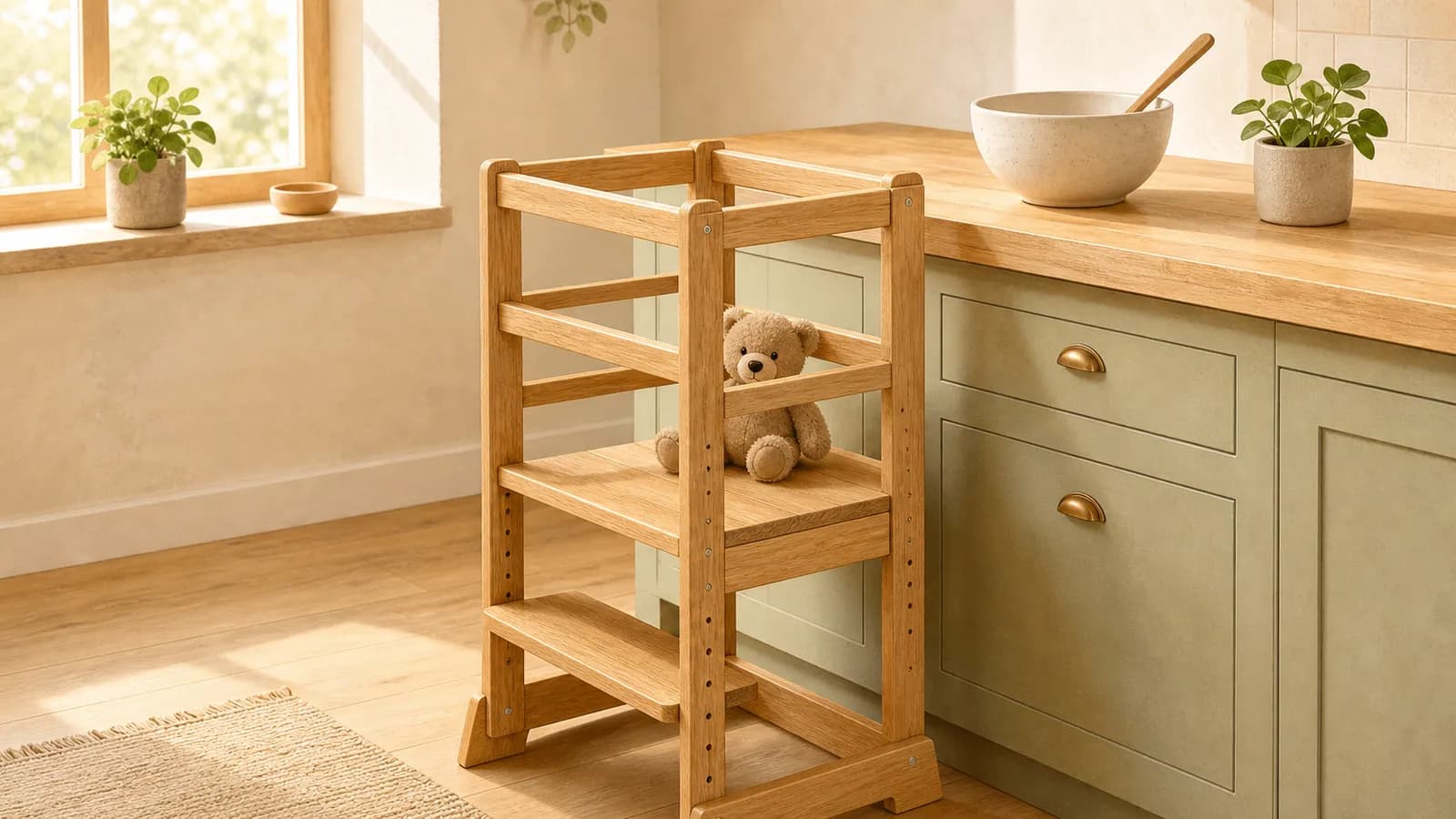
How to Choose a Toddler Tower
A practical, safety-first guide to choosing a toddler tower: how to fit it to your counter height, read guard and stability design against the real recall hazards, judge foldable versus fixed, and run a pre-purchase checklist on any model.
Read next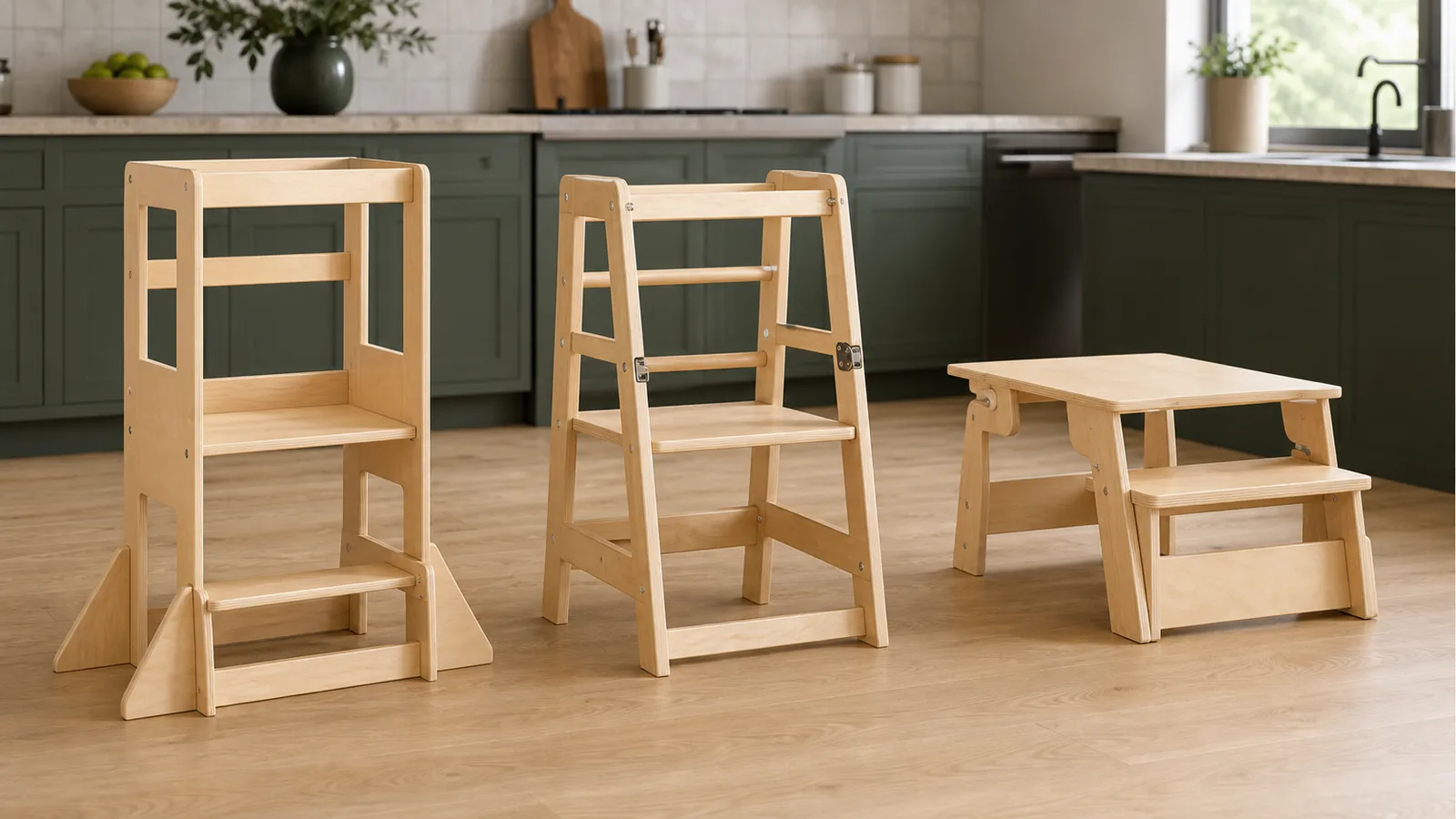
Fixed vs Foldable vs Convertible Toddler Towers
How fixed-frame, foldable, and convertible toddler towers differ in footprint, locks, storage, platform fit, and extra modes, with source-backed examples.
Read next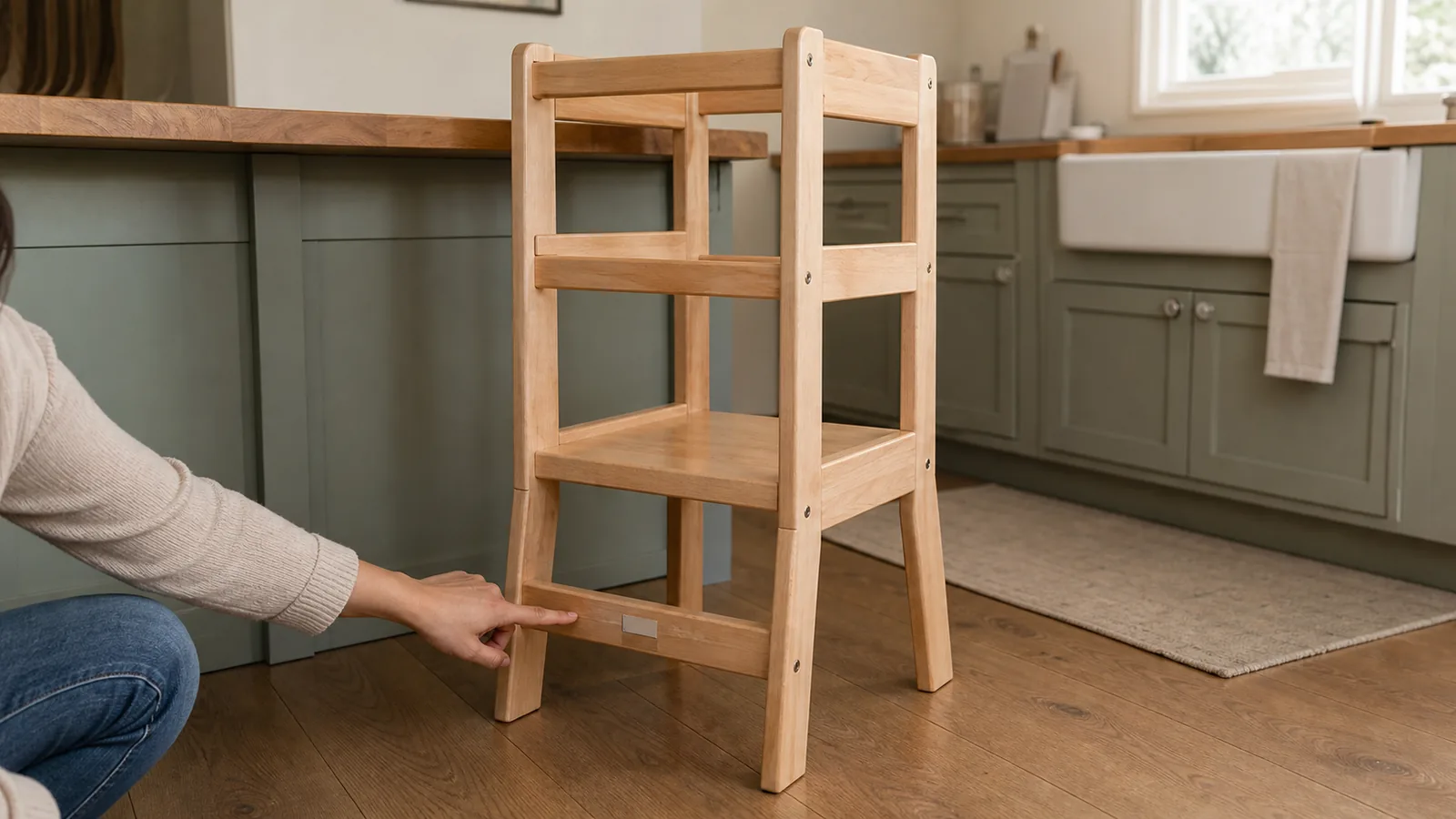
Toddler Tower Safety Standards and Recalls
What safety standards actually exist for toddler towers, every official CPSC tower recall we track, and how to check a specific model before you buy or keep using it.
Read next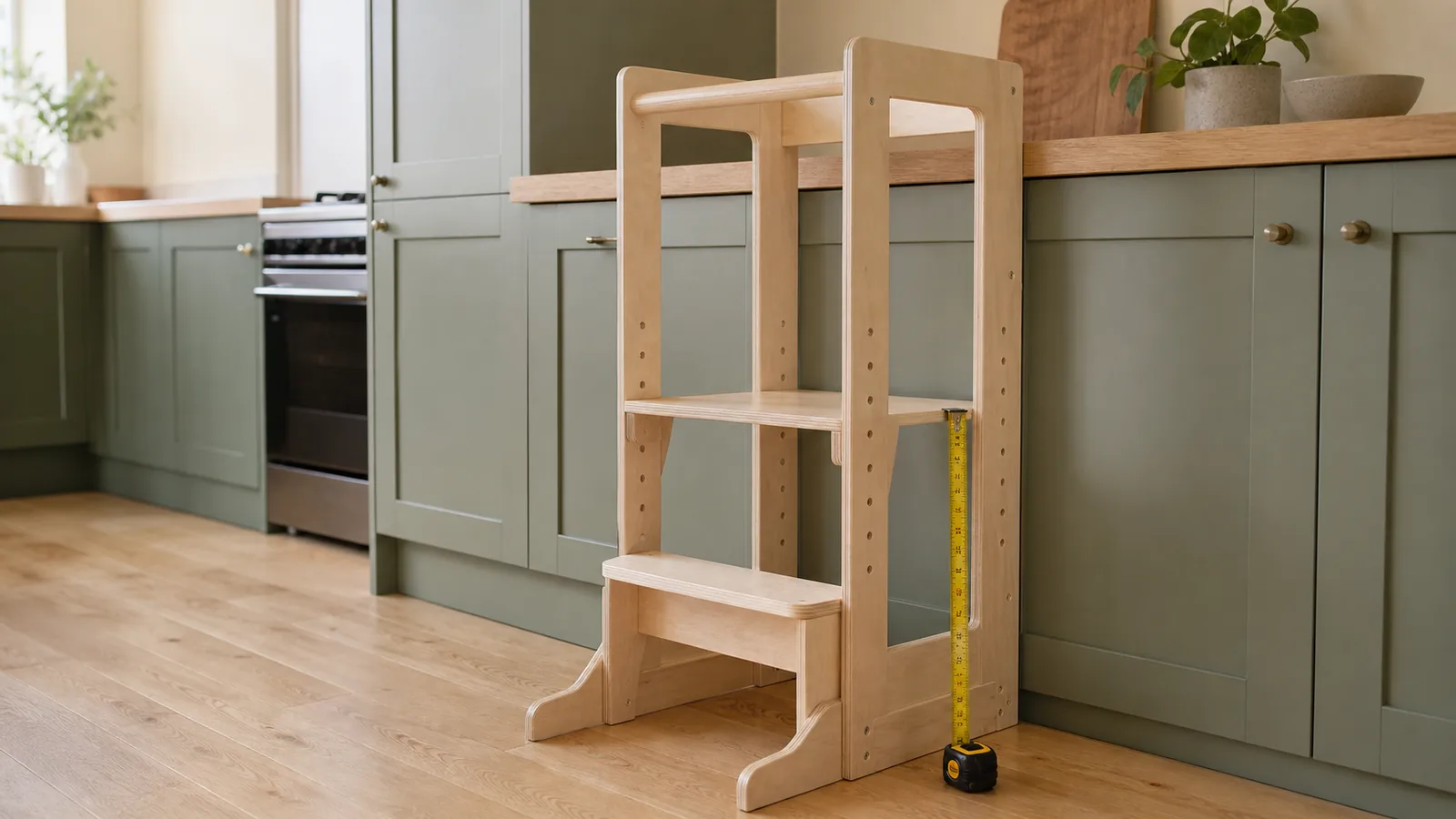
Toddler Tower Height and Counter Fit
Measure your work surface and child, calculate a starting platform height, and compare it with exact published tower positions without mistaking overall height for fit.
Read next