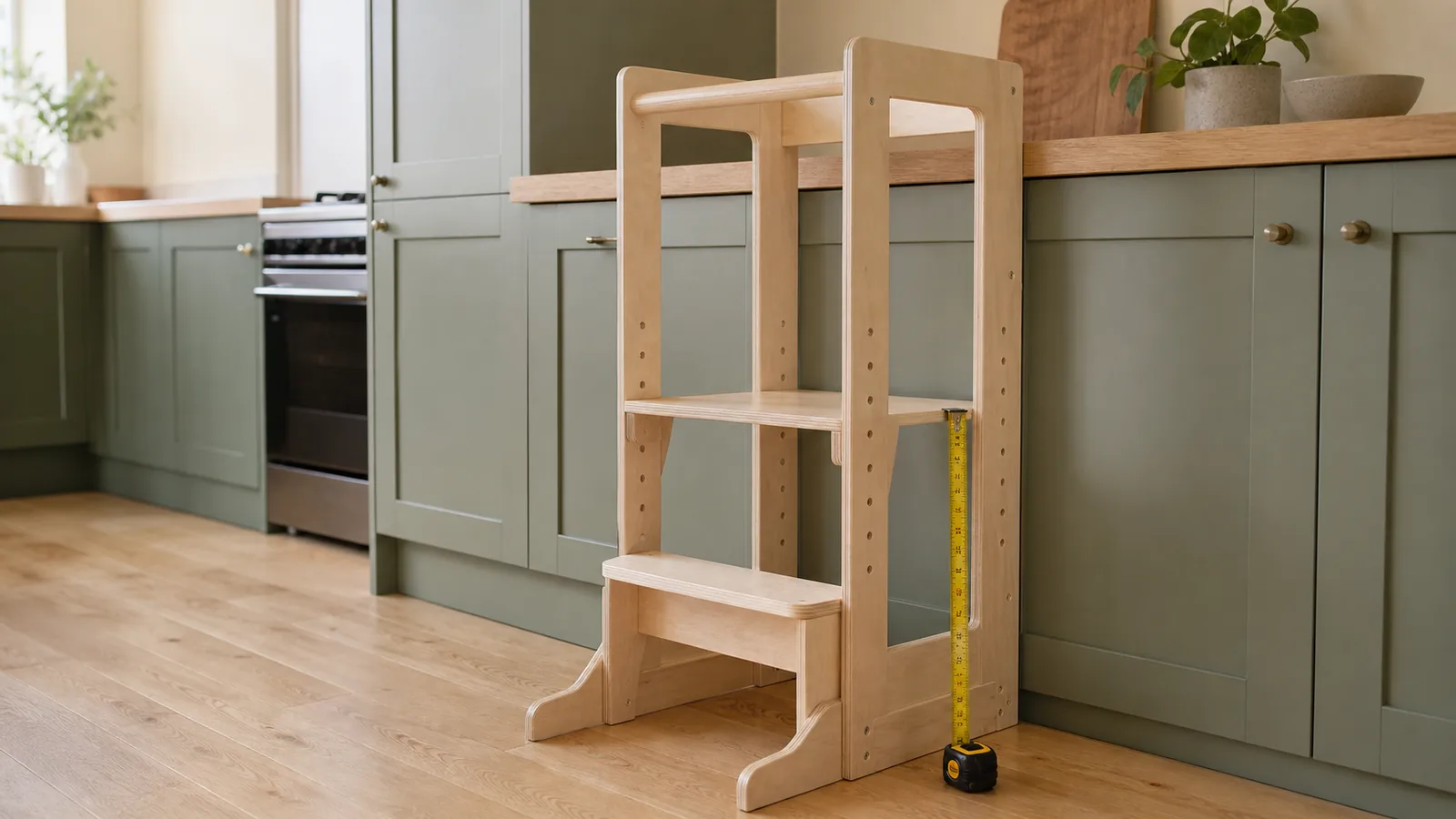
The useful toddler-tower height is the standing platform, not the top of the frame. Measure from the floor to the exact counter or sink your child will use. Then measure from the floor to your child's bent elbow while they stand flat on the floor. Subtract the second number from the first to get a starting platform estimate. That number narrows the positions worth checking, but it does not clear the guard, footprint, limits, assembly, or recall record of any model.
The four measurements that decide fit
Work-surface height
Floor to the top of the exact counter, sink rim, island, or vanity. Measure each surface separately.
Standing elbow height
Floor to your child's bent elbow while they stand flat on the floor in a working posture.
Exact platform positions
Use the real discrete positions from the product page or manual, not only the minimum and maximum range.
Guard at that position
Check where the rail reaches on the child after the platform is installed and secured as directed.
Platform-height starting calculator
Enter two measurements in inches. The result is a transparent subtraction and a database comparison, not a product recommendation or safety clearance.
The result narrows the platform positions worth checking. It does not clear a model's guard, footprint, limits, or recall record.
- Selected records
- 25
- With published platform data
- 15
- Published span across those records
- 10.59–20.5 in
Database check dated July 20, 2026. The span is descriptive, not a continuous set of available positions. Compare the result with the exact positions in each model's cited manual or product page.
Measure the surface your child will actually use
Measure vertically from the finished floor to the top of the counter, island, sink rim, or vanity. Do not borrow a number from a listing, a neighbor's kitchen, or a generic chart. Different surfaces in the same home can be different heights, and accessible or custom work surfaces can differ from a nominal kitchen counter.
The 2010 ADA Standards illustrate that variation rather than supplying a toddler-tower target. They require certain accessible kitchen work surfaces to be no more than 34 inches high and permit an adjustable residential sink from 29 to 36 inches in specified circumstances. Those rules do not size a tower for your child. They show why the first measurement has to come from your own room.
Measure the child, then do one subtraction
Have your child stand flat on the floor in the posture they use for a simple counter task. Bend one elbow to a comfortable working angle and measure from the floor to that elbow. Keep the tape straight and record the number rather than estimating from total height or age.
Subtract the standing elbow height from the work-surface height. A 36-inch surface minus a 20-inch elbow measurement produces a 16-inch starting platform estimate. It is a shortlist number, not a prescribed safe height. Use it to locate nearby published platform positions, then check the child and guard together on the exact assembled product.
Overall tower height does not answer the fit question
Overall height tells you whether the frame clears a shelf or fits a storage route. It does not tell you where the child's feet will stand. Two towers can both be 36 inches tall while placing their platforms at different heights, and one overall dimension can hide several platform positions.
Read the field labeled platform height, standing platform, deck height, or floor-to-platform height. If the product page gives only the overall dimensions, mark platform fit as not yet verified. Do not reverse-engineer the platform from a lifestyle photo or assume it sits at the same height as the first step.
A range is not the same as every height inside it
Adjustable towers usually provide discrete positions. A published range of 12 to 18 inches may mean three positions at 12, 15, and 18 inches, not continuous adjustment to 13.7 or 16 inches. The nearest real position can sit above or below your calculator result, so the exact list matters.
The selected database currently contains 15 models with published platform data. Across those records, the lowest published endpoint is 10.59 inches and the highest is 20.5 inches. That span is descriptive only. It does not mean every height between those endpoints exists, and it does not turn the 15 records into recommendations.
Recheck the guard whenever the platform moves
Raising or lowering the platform changes where the guard reaches on the child's body. A position that lines the elbows up with the counter can still be wrong if the child can lean far over the rail, climb the outside, or use the guard as a perch. Platform fit and guard fit are one physical check, not two independent boxes.
Standing-tower standards work has been considering this relationship. A September 2024 ASTM task-group meeting discussed adjustable platforms, lower guardrails, guardrail loading, child waist height, and locking mechanisms. That meeting log is evidence of active technical work, not a finished product-specific rule or approval for any tower.
Check the horizontal fit after the vertical fit
Once a platform position looks plausible, measure the tower's full open width and depth at the floor. Check cabinet and appliance doors, the walking route, the adult's standing space, and the placement required by the manual. The tower may need to stay firmly against a counter or wall during use, depending on the exact instructions.
A wider base can consume more floor space than the upper frame suggests. Measure the feet, not only the rails. If the tower folds, measure the stored shape separately and make sure every caregiver can complete and verify the lock sequence after moving it back into place.
Growth means lowering, remeasuring, or moving on
Repeat both measurements as your child grows or when the tower moves to another surface. The starting estimate usually falls as the child's elbow height rises. An adjustable platform may let you move down to the next real position, but only the manufacturer's instructions can tell you how the platform must be removed, oriented, and secured.
Stop relying on the original setup when the child exceeds a stated limit, no longer fits the guard, climbs the outside, or cannot use the entry as intended. A platform change is not a way around an age, height, weight, or readiness limit. It is one part of keeping an otherwise suitable product fitted to its current user and location.
What discrete platform positions look like in real records
Manufacturer-stated positions from six selected records, checked July 20, 2026. These examples show why a minimum-to-maximum range is not continuous adjustment.
| Model | Published platform positions | Adjustment evidence |
|---|---|---|
| Little Partners The Learning Tower | 10.59, 13.19, 15.79, 18.39 in | Four tool-free levels on the official product page |
| Little Partners Explore 'N Store | 12.36, 14.33, 16.3, 18.27 in | Four tool-free heights on the official product page |
| Piccalio Foldable Toddler Tower | 12.6, 15, 17.72 in | Three positions on the official product page |
| Sprout Sous-Chef R4 | 12.5, 15.5, 18.5 in | Three positions on the official product page |
| Franklin+Emily Toddler Tower | 12, 15, 18 in | Three positions secured with four 4 mm hex screws in the manual |
| Costway Bamboo Kids Kitchen Step Stool | 14.5, 17.5, 20.5 in | Three positions on the official product page |
Use the number without losing the evidence
Toddler tower height questions
What height should a toddler tower platform be?
Is a 36-inch-tall toddler tower right for a 36-inch counter?
Can one toddler tower fit a kitchen counter and bathroom vanity?
When should I lower an adjustable platform?
Does the calculator tell me which toddler tower is safe?
Method and Sources
How this page is checked
- The calculator subtracts the reader's standing elbow measurement from the reader's work-surface measurement. The result is explicitly a shortlist starting point, not a standard or safety threshold.
- The database receipt is derived at render time from the 25 selected catalog records. Models with unverified platform data stay out of the published span instead of being estimated.
- The example positions are manufacturer-stated and retain their original source state. They have not been independently measured by this site.
- The ASTM task-group meeting log documents standards-development discussion. It is not a completed standard, certification, or model approval.
Sources
- Toddler Home Brief source-backed 25-model comparison
- 2010 ADA Standards for Accessible Design, sections 606.3 and 804.3
- ASTM standing-tower and step-stool performance task-group meeting log, September 2024
- Little Partners The Learning Tower product page
- Little Partners Explore 'N Store product page
- Piccalio Foldable Toddler Tower product page
- Sprout Sous-Chef Toddler Tower product page
- Franklin+Emily Toddler Tower assembly and care instructions
- Costway Bamboo Kids Kitchen Step Stool product page
Keep reading
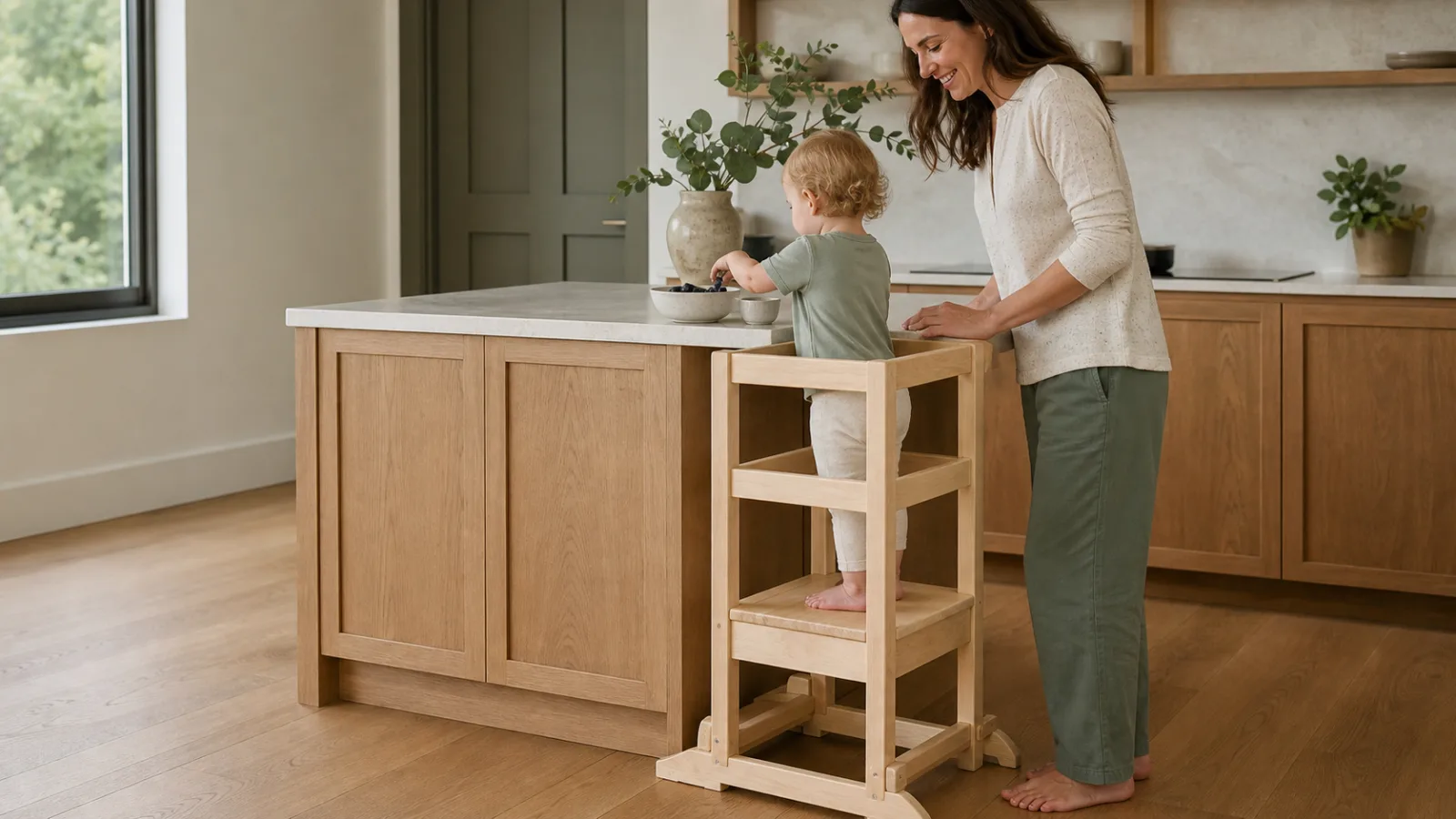
What Age Is a Toddler Tower For?
Use the exact model's age label, the child's observed readiness, physical fit, and recall status to decide when a toddler tower is appropriate and when to stop using it.
Read next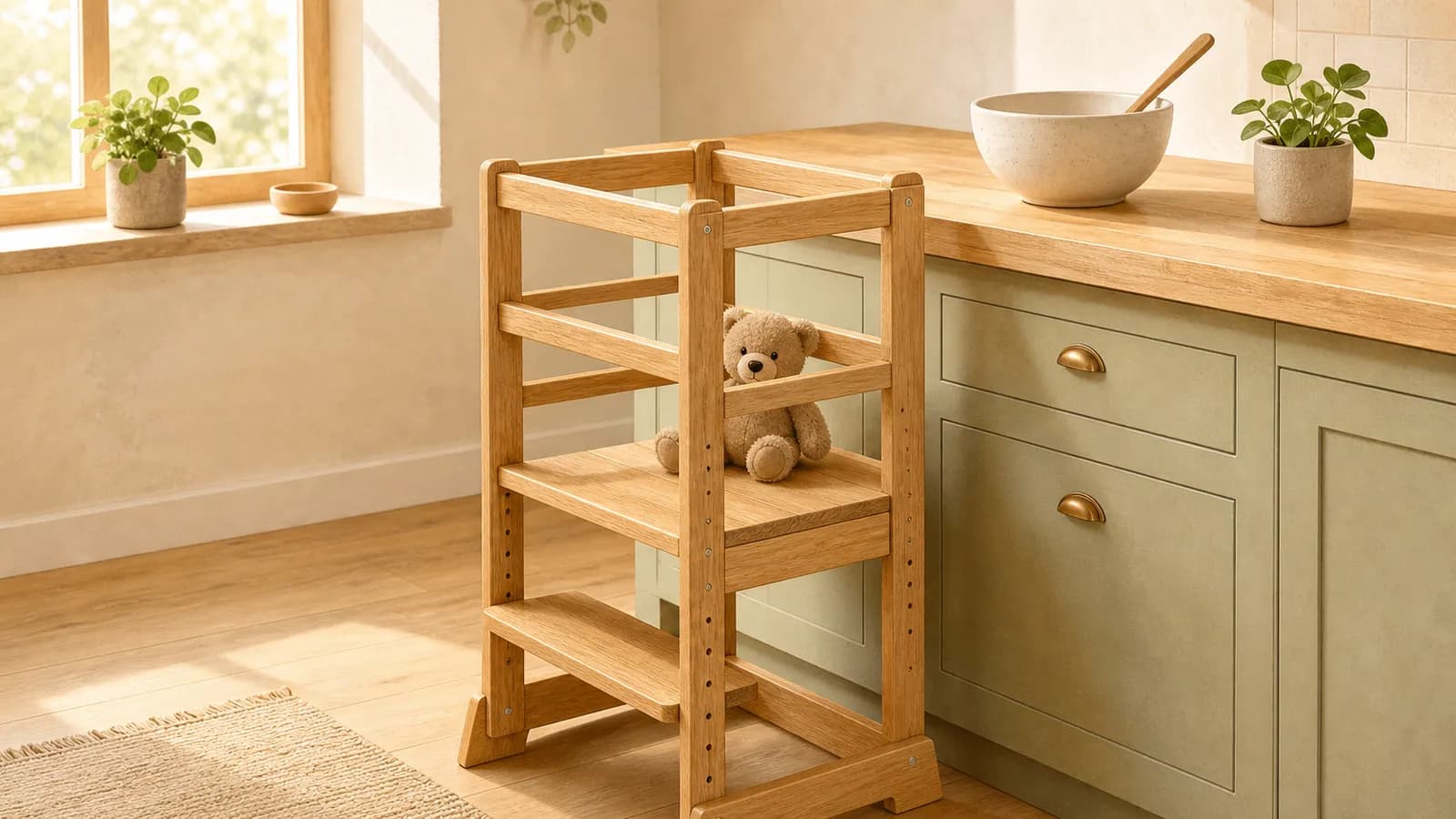
How to Choose a Toddler Tower
A practical, safety-first guide to choosing a toddler tower: how to fit it to your counter height, read guard and stability design against the real recall hazards, judge foldable versus fixed, and run a pre-purchase checklist on any model.
Read next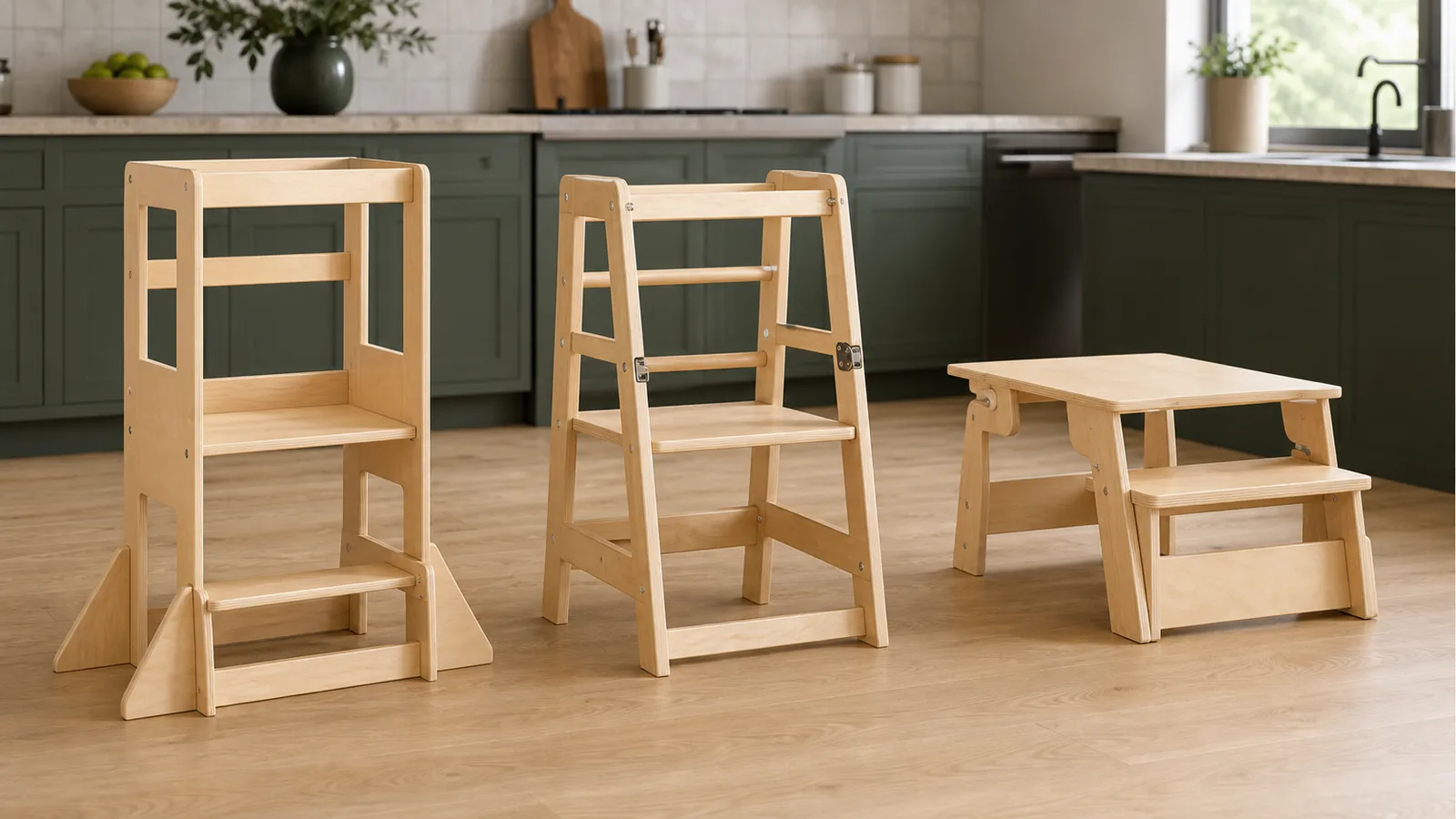
Fixed vs Foldable vs Convertible Toddler Towers
How fixed-frame, foldable, and convertible toddler towers differ in footprint, locks, storage, platform fit, and extra modes, with source-backed examples.
Read next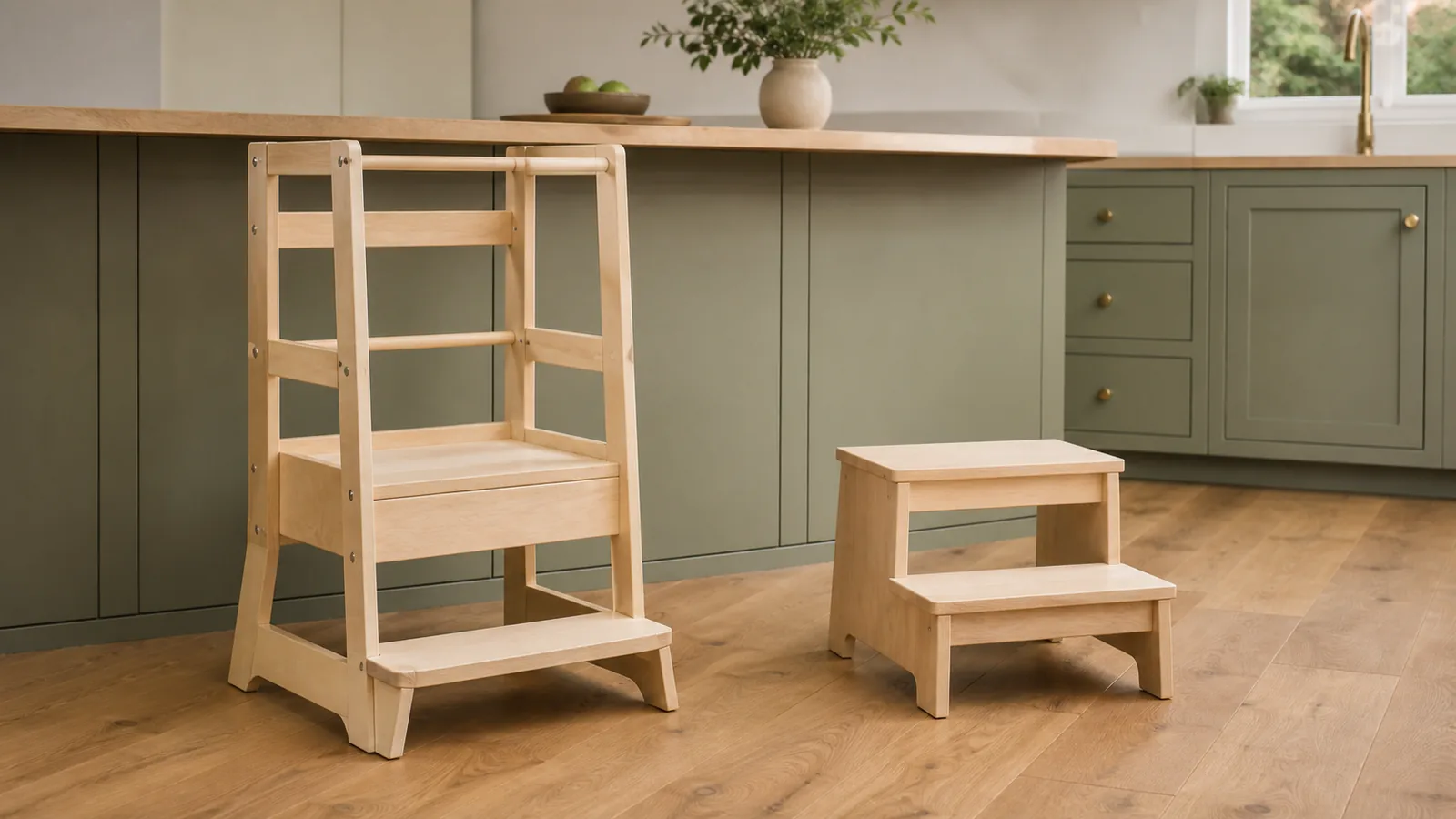
Toddler Tower vs Step Stool
How a guarded toddler tower differs from a low child step stool, and how to choose by readiness, surface height, task, footprint, and exact-product evidence.
Read next