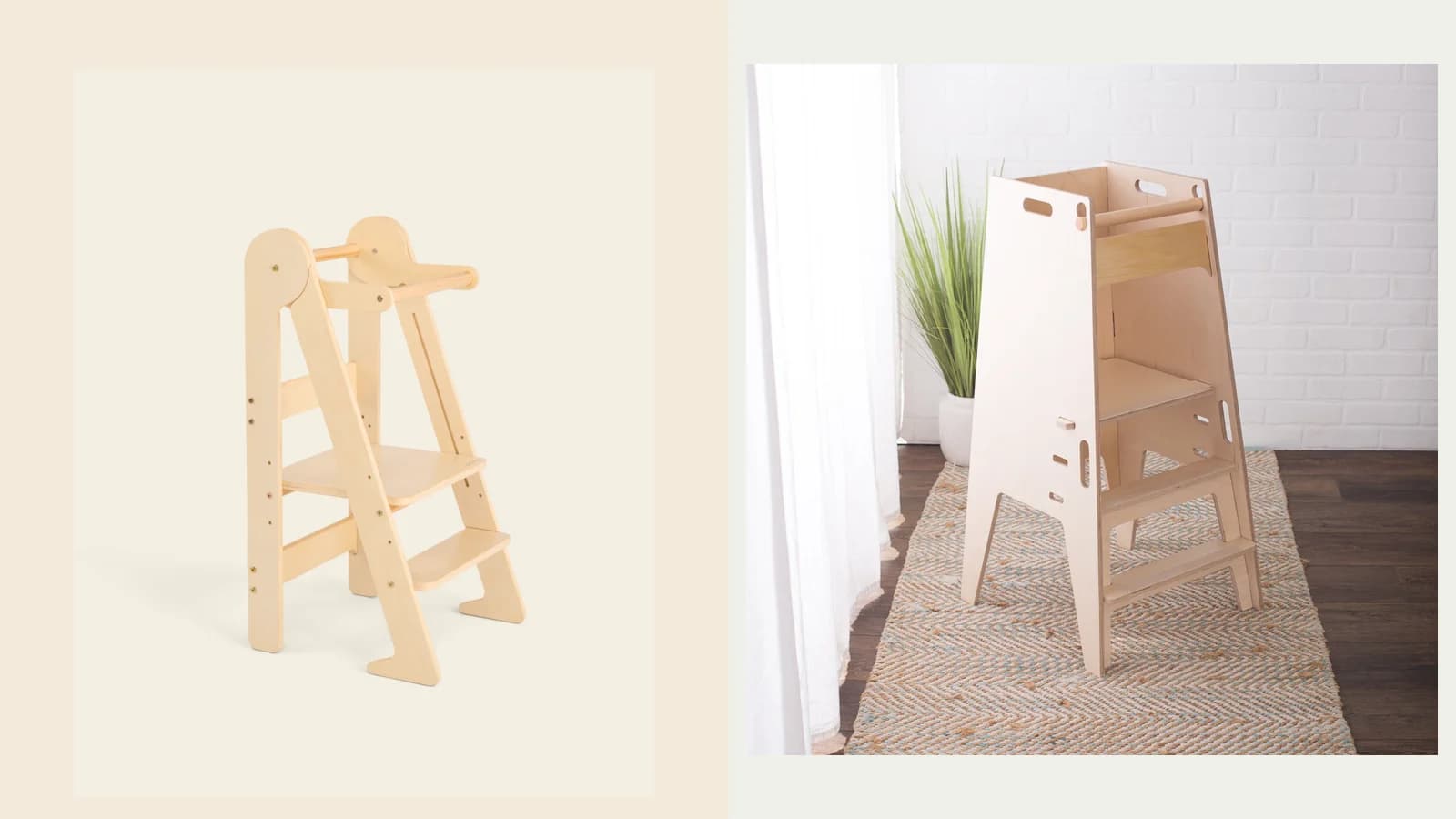
These towers occupy nearly the same open floor space and each publishes three platform positions, but they solve storage and fit differently. Piccalio folds to a documented 6.3-inch depth and has a current eligible price. Sprout is half an inch smaller in both open horizontal dimensions, reaches a slightly higher top platform, and can be disassembled without tools, but its official availability signals conflict. Choose by the constraint you can verify, not by a universal winner.
The decision split
Piccalio's evidence edge
Published 6.3-inch folded depth, 15-pound assembled weight, fixed 18-month-to-6-year guidance, and a current eligible direct price.
Sprout's evidence edge
A slightly smaller open base, an 18.5-inch top platform, enclosed side panels, and a current R4 frame that can be disassembled without tools.
The shared fit profile
Both have three platform positions and open bases within half an inch of each other in width and depth. Measure the room and child rather than choosing from category labels.
What remains unresolved
Sprout's current availability signals and fixed age range are unresolved. Neither model has a hands-on result for stability, durability, cleaning, or long-term wear.
Piccalio Foldable and Sprout Sous-Chef evidence table
Every cell is generated from the current validated catalog. Manufacturer claims stay attributed, conflicting commerce evidence stays unresolved, and both product images open at a larger size.
Piccalio Foldable Toddler TowerFoldable tower
Sprout Sous-Chef Toddler TowerStandard tower
Sources cited in this comparison
- [1] Piccalio Foldable Toddler Tower live commerce data accessed 2026-07-20
- [2] Sprout Sous-Chef Toddler Tower live commerce data accessed 2026-07-20
- [3] Piccalio Foldable Toddler Tower accessed 2026-07-20
- [4] Sprout Sous-Chef Toddler Tower accessed 2026-07-20
- [5] Piccalio Foldable Helper Tower assembly manual accessed 2026-07-20
- [6] Piccalio Toddler Tower Safety Net accessed 2026-07-20
- [7] Sprout Sous-Chef Toddler Tower R4 assembly and safety guide accessed 2026-07-20
- [8] CPSC recall search for Piccalio Foldable Toddler Tower accessed 2026-07-20
- [9] CPSC recall search for Sprout Sous-Chef Toddler Tower R4 accessed 2026-07-20
Piccalio Foldable and Sprout Sous-Chef evidence table. Details checked July 20, 2026.
The short answer: this is a storage decision before it is a size decision
Shortlist Piccalio first when a measured fold-flat storage space, a published assembled weight, a fixed manufacturer age range, and a currently eligible direct price matter most. Shortlist Sprout first when the slightly smaller open base, slightly higher top platform, enclosed side panels, and occasional tool-free disassembly better match the room and routine.
Neither product has completed our hands-on protocol. Published dimensions, mechanisms, limits, and recall searches do not establish real-world stability, platform retention, repeated-fold durability, cleaning effort, or assembly quality. The live evidence table keeps those manufacturer facts and missing fields visible so the shortlist does not become a safety ranking.
Match the current product family before comparing features
The current Piccalio Foldable family uses K-FHT-00-series identifiers across Birch, White, Sage, and Black finishes. The current Sprout family uses R4 identifiers, including TODT-R4-NAT-S for the Finished Birch tower and TODT-R4-MEL-S for the White tower. Match the physical label, finish, revision, listing, and current manual before transferring any field from this page.
Revision matters especially for Sprout because the manufacturer documents multiple historical design changes and a transition from the older Kitchen Helper name to the current Sous-Chef. This comparison is about the current R4 record. A similar-looking older unit should not inherit R4 dimensions, guard details, or recall state without an identity check.
Their open footprints are almost a tie, but their storage behavior is not
Piccalio publishes an 18 by 18-inch open base and a height of 36 inches. Sprout publishes a 17.5 by 17.5-inch base and a height of 34.5 inches. Sprout is half an inch smaller in each horizontal dimension and 1.5 inches shorter, but those small differences should be measured against baseboards, cabinet openings, adult circulation, child entry, and the counter-facing orientation.
Piccalio folds to a published 6.3 by 18 by 36-inch envelope. Sprout does not fold. Its current R4 frame can be disassembled without tools, which may help with an occasional move or longer-term storage, but that is not the same as a daily folding routine. If the tower must leave the kitchen after most uses, Piccalio has the clearer documented storage case.
Sprout reaches higher; Piccalio reaches slightly lower
Both towers publish three standing-platform positions. Piccalio lists 12.6, 15, and 17.72 inches. Sprout lists 12.5, 15.5, and 18.5 inches. The useful difference is not the number of levels but whether one documented position creates an appropriate relationship among the child, guard, work surface, counter thickness, reach, and nearby hazards.
Sprout's top position is 0.78 inch higher, while Piccalio's middle position is half an inch lower. Those differences can matter at the edge of a fit range, but they should not be interpreted in isolation. Measure the exact child and counter with the chosen platform position, then follow the manufacturer's guard and readiness instructions.
The daily mechanism creates different inspection routines
Piccalio's fold is a repeated-use mechanism. Its manual requires the tower to be completely unfolded and fully locked before each use, on a flat level floor and firmly against a wall or counter. Inspect the opening geometry, lock engagement, platform support, hardware, feet, and frame alignment while the product is empty every time it is reopened.
Sprout avoids a daily fold mechanism. Its R4 design uses interlocking panels, a locking ladder, a removable locking dowel, and a guard plate. Inspect the seated panels, ladder engagement, platform slots, dowel lock, guard plate, tapered legs, and panel condition. A fixed frame removes one repeated action but does not remove inspection or supervision.
Age guidance is not directly comparable
Piccalio states 18 months through 6 years after the child can stand independently. Sprout does not publish a fixed current age range in the reviewed sources. It instead uses standing readiness and a 28- to 44-inch child-height guide; its FAQ says many families begin around 12 months but does not set that as a universal minimum.
Do not convert Sprout's height chart into an age range or treat its mention of 12 months as proof that it is suitable earlier for a particular child. For either tower, readiness, controlled entry and exit, guard relationship, behavior, supervision, condition, and every product-specific limit remain separate gates.
Capacity labels and guard designs create different questions
Piccalio states a 175-pound child limit and publishes a 15-pound assembled product weight. Sprout states a 150-pound child limit but does not publish a verified assembled product weight; the 20-pound figure on its page is a box weight and is not substituted. The higher Piccalio capacity is not proof of better stability or suitability for users outside the product's instructions.
Piccalio describes a railing around the child's waist area and sells a compatible safety net separately. Sprout uses enclosed side panels, a removable locking dowel, and an included Guard Plate for children under 32 inches, with a larger Full Plate available separately or in a bundle. Compare the exact included configuration and the child's body relationship rather than counting rails or panels.
Materials and certification claims stay attributed
Piccalio describes FSC-certified birch plywood and solid New Zealand pine with a water-based finish or paint. Sprout describes clear melamine-finished birch or white melamine, water-based finished edges, and a soft-maple dowel. These choices can affect appearance, wipe-down behavior, damage patterns, and repair questions, but the material names do not decide stability or durability.
Piccalio lists several conformity and certification claims, while Sprout claims GREENGUARD Gold and links its variants to a UL SPOT record. The catalog preserves these as manufacturer-stated. Product-specific laboratory reports are not on file for the comparative claims, and Sprout's linked UL record was access-blocked during research. A certification badge is not converted into a hands-on result.
Price evidence currently favors clarity, not necessarily a lower number
Piccalio has an eligible regular direct observation of $239 and was recorded in stock. Sprout's official commerce data exposed $190 for Finished Birch and $210 for White tower-only variants, but the official endpoint and rendered purchase panel disagreed on availability. Those Sprout observations are retained but excluded from the displayed comparison range, so the live table correctly shows no current price on file.
That does not mean Sprout has no price or costs more. It means this site's current-price rule will not present an unavailable or internally conflicting listing as a purchasable baseline. Recheck the exact finish, stock state, included guard plate, optional Full Plate, shipping, return terms, and current guarantee before using price to break the tie.
Use a six-step decision order
First match the exact model and revision. Second clear the current recall search and inspect the physical unit. Third measure the open footprint, working clearance, and storage route. Fourth choose a documented platform position from the child and counter measurements. Fifth decide whether daily folding or occasional disassembly fits every caregiver's routine. Sixth compare guard configuration, materials, support, and current purchasable price.
If both products still fit, keep both on the shortlist until the exact units can be inspected or tested. Real-room directional stability, wobble, platform retention, lock feel, repeated-fold wear, cleaning access, finish durability, and long-term condition cannot be responsibly ranked from the current source set.
Choose by constraint
Use this as a routing guide, then verify the live evidence table and physical product.
| If your main constraint is | Stronger starting point | Why | Still verify |
|---|---|---|---|
| Daily compact storage | Piccalio | It folds to a published 6.3-inch depth | Storage route, opening clearance, and complete lock engagement after reopening |
| The smallest open base | Sprout | Its published base is half an inch smaller in both horizontal dimensions | Working clearance, counter-facing orientation, and real-room stability |
| The highest published platform position | Sprout | Its top position is 18.5 inches versus 17.72 inches | Child, guard, counter, and reach relationship at that position |
| A fixed published age range | Piccalio | It states 18 months through 6 years after independent standing | Readiness, height, guard fit, behavior, and the first failed product limit |
| An eligible current direct price | Piccalio | Its $239 observation passes the site's current-price rules | Live stock, finish, included parts, shipping, and return terms |
| Occasional tool-free breakdown | Sprout | The current R4 can be disassembled without tools | All panels, ladder, platform, dowel, and guard parts after reassembly |
Inspect the exact models and fit
Piccalio versus Sprout questions
Which tower is smaller, Piccalio Foldable or Sprout Sous-Chef?
Which tower has the higher platform?
Does the Sprout Sous-Chef fold?
Which tower is less expensive?
Can a younger child use the Sprout because its FAQ mentions 12 months?
Does Piccalio's higher weight limit make it safer?
Is Piccalio or Sprout safer?
Has either exact model been recalled?
Method and Sources
How this page is checked
- The comparison table is rendered from the same validated product, price, source, image, and recall records used by the 25-model hub. It is not a separately maintained fact sheet.
- Sprout's $190 and $210 observations remain excluded because the official commerce endpoint and rendered purchase panel conflict on availability. No current price on file means no eligible purchasable baseline, not that no price was observed.
- The Sprout age field remains not yet verified because the current manufacturer guidance uses readiness and child height rather than one fixed age range. The page does not translate that evidence into a new age limit.
- Manufacturer-stated fields, stability language, and certification claims preserve their provenance. No hands-on stability, fold-cycle, durability, cleanability, or assembly-quality result is implied.
- The exact-model CPSC result means no matching notice was found for the searched identity on the displayed date. It does not prove certification, zero risk, or immunity from a future recall.
- The hero uses official manufacturer product images for editorial identification. Piccalio and Sprout retain credit for their respective images; separate reuse permission is not recorded in the catalog.
Sources
- Piccalio Foldable Toddler Tower product page
- Piccalio Foldable Toddler Tower official commerce data
- Piccalio Foldable Helper Tower assembly manual
- CPSC recall search for Piccalio Foldable Toddler Tower
- Sprout Sous-Chef Toddler Tower product page
- Sprout Sous-Chef Toddler Tower official commerce data
- Sprout Sous-Chef R4 assembly and safety guide
- Sprout Toddler Tower product updates
- Sprout 5-Year Satisfaction Guarantee
- CPSC recall search for Sprout Sous-Chef R4
Keep reading
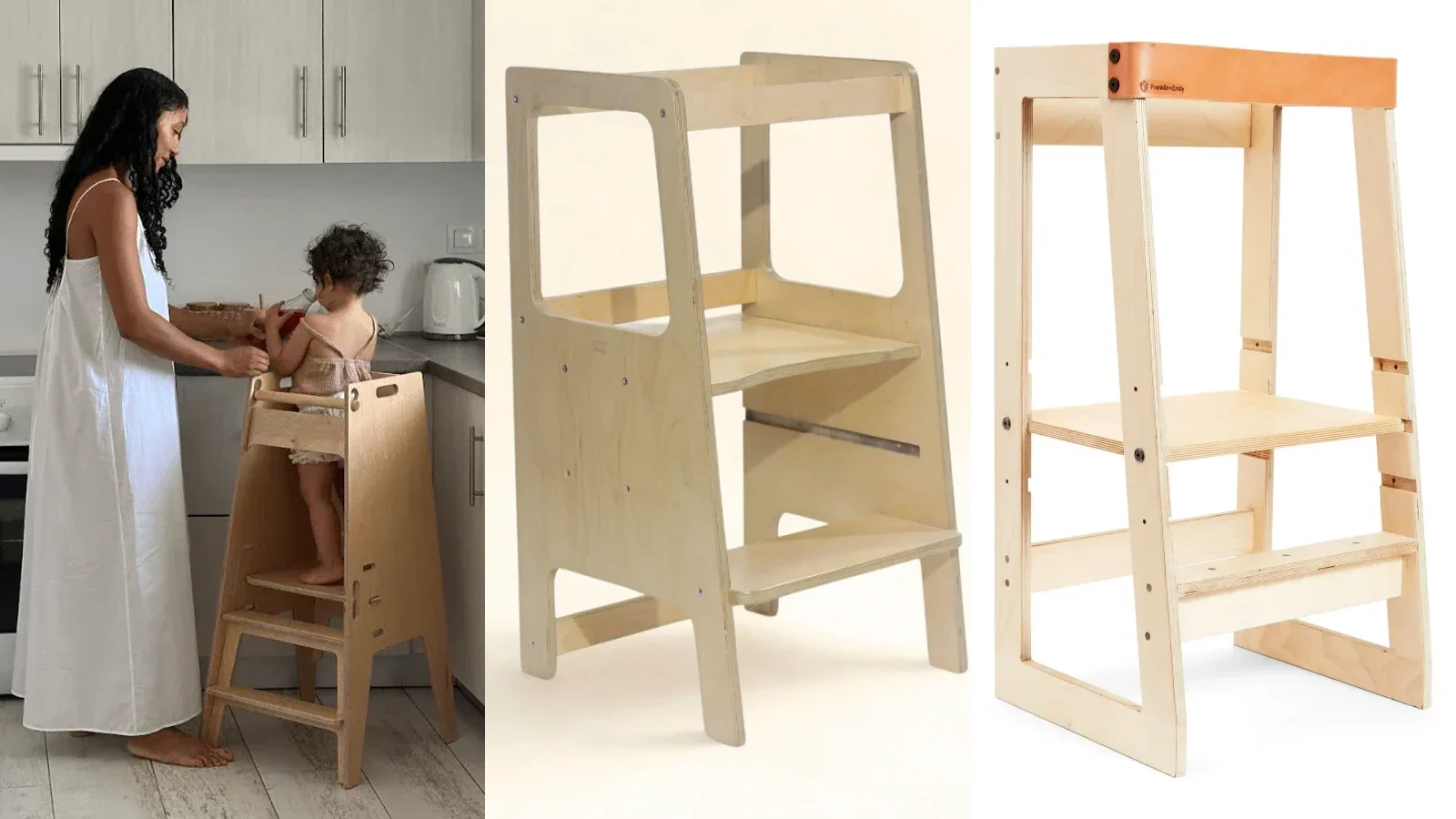
Sprout vs RAD vs Franklin+Emily Toddler Towers
Compare Sprout Sous-Chef R4, RAD Solo, and Franklin+Emily toddler towers by footprint, platform heights, guard design, price, limits, materials, and recall evidence.
Read next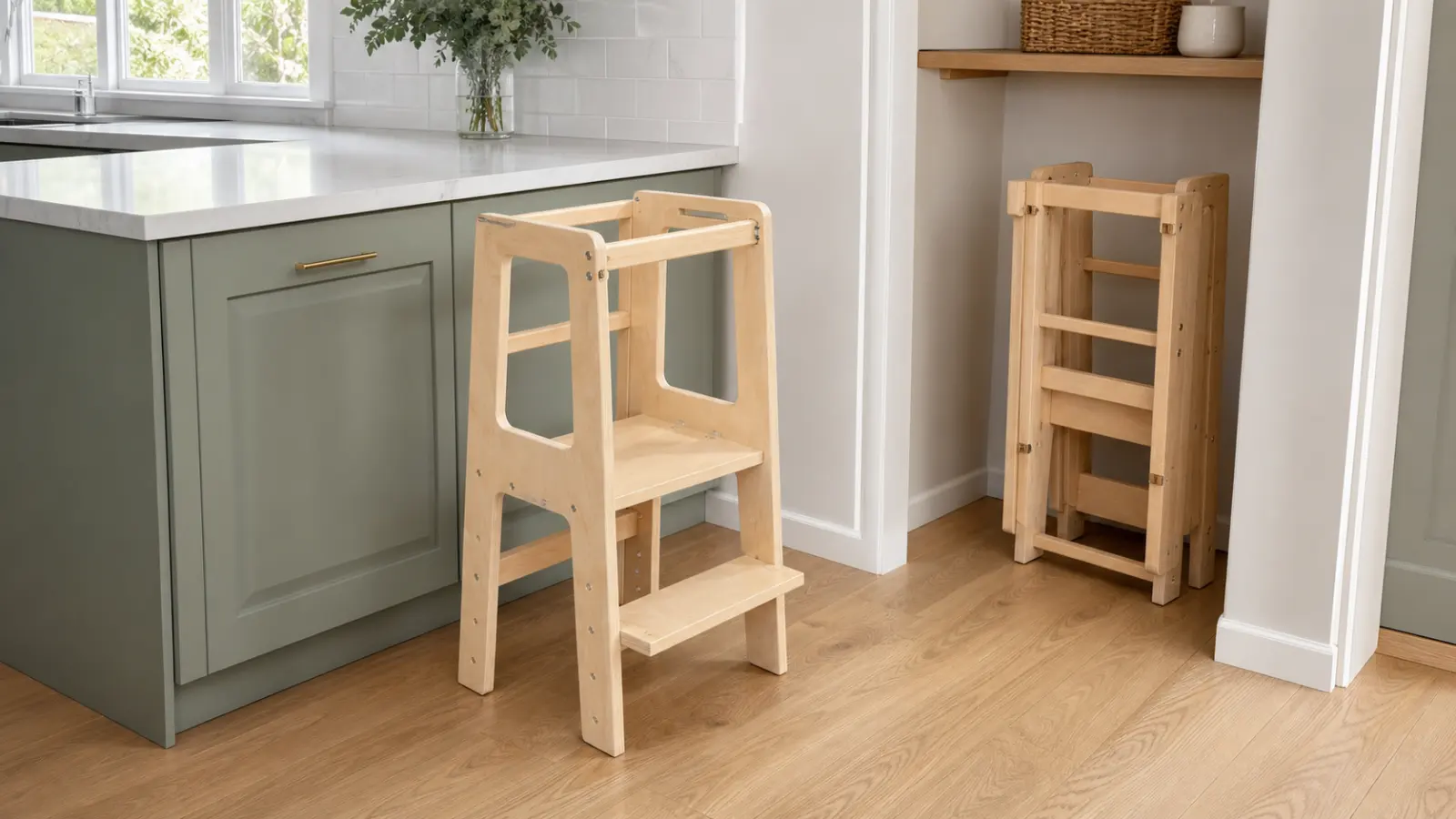
Toddler Tower Dimensions: Plan Kitchen and Storage Space
Measure a toddler tower's open footprint, child and adult routes, folding motion, folded size, and conversion envelope before treating it as compact or easy to store.
Read next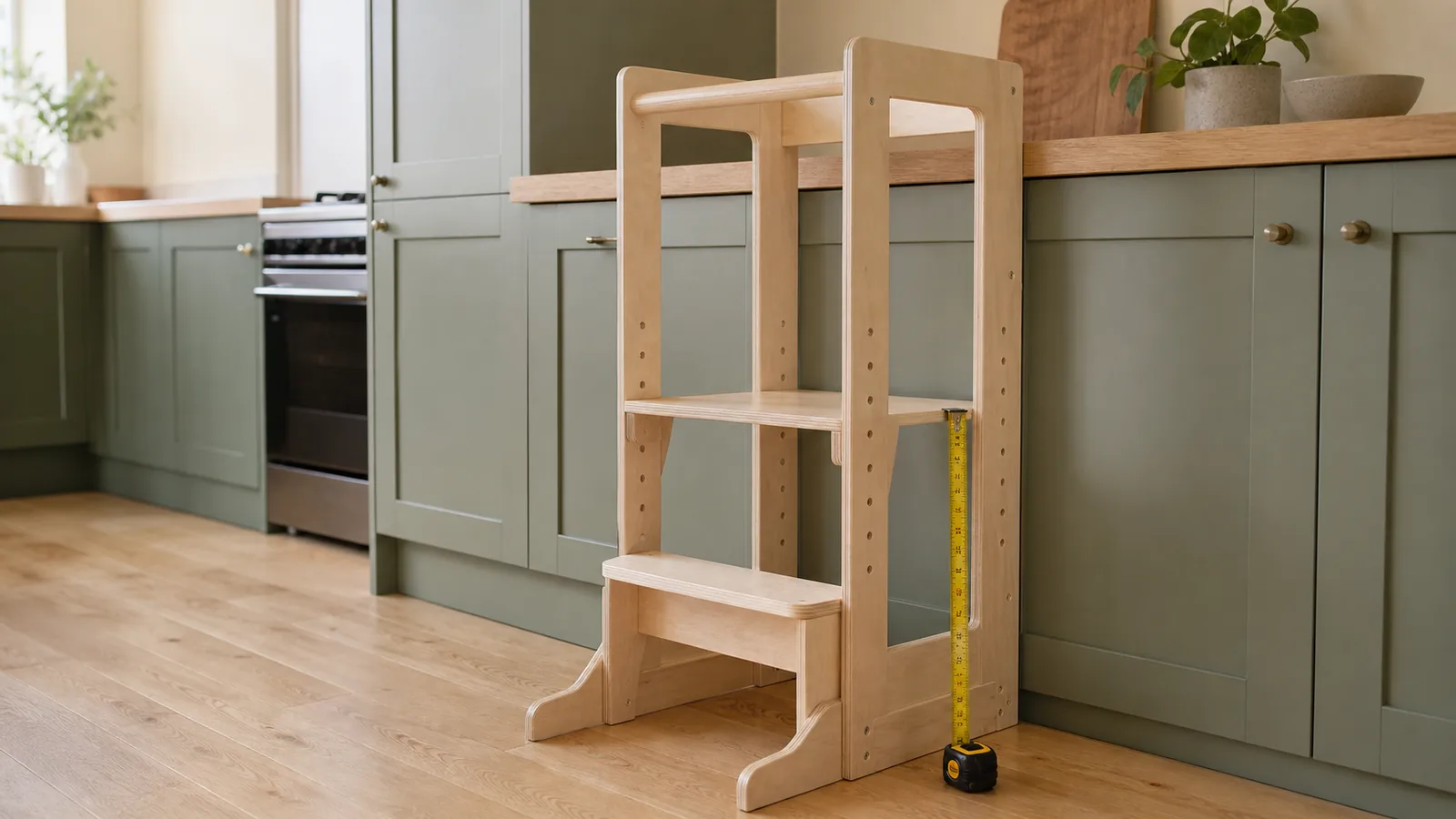
Toddler Tower Height and Counter Fit
Measure your work surface and child, calculate a starting platform height, and compare it with exact published tower positions without mistaking overall height for fit.
Read next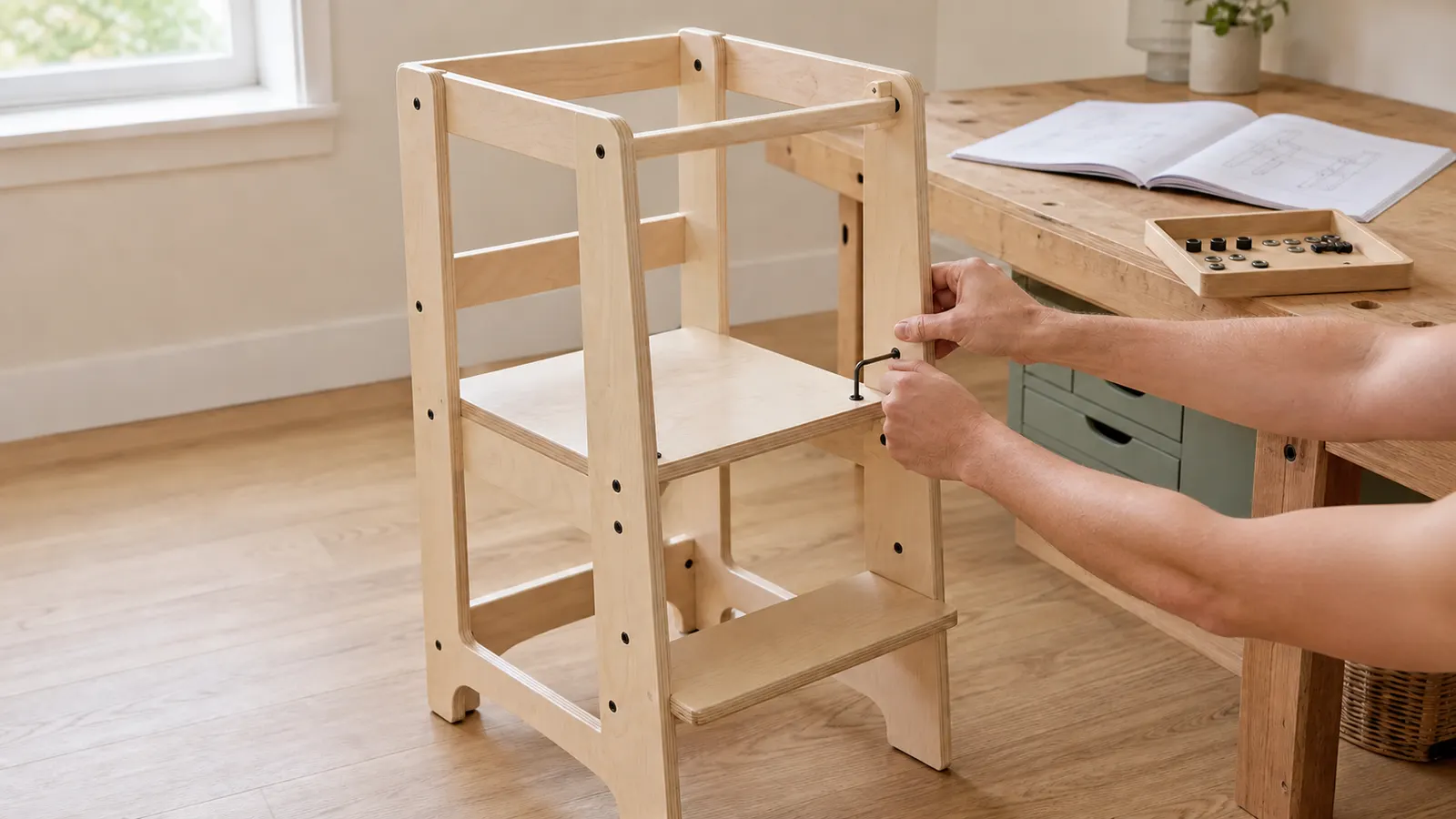
How to Assemble a Toddler Tower: First-Use Checklist
Match the exact toddler tower manual, inventory every part, follow the model-specific sequence, verify guards and locks, and complete an empty-product first-use check.
Read next
How to Choose a Toddler Tower
A practical, safety-first guide to choosing a toddler tower: how to fit it to your counter height, read guard and stability design against the real recall hazards, judge foldable versus fixed, and run a pre-purchase checklist on any model.
Read next