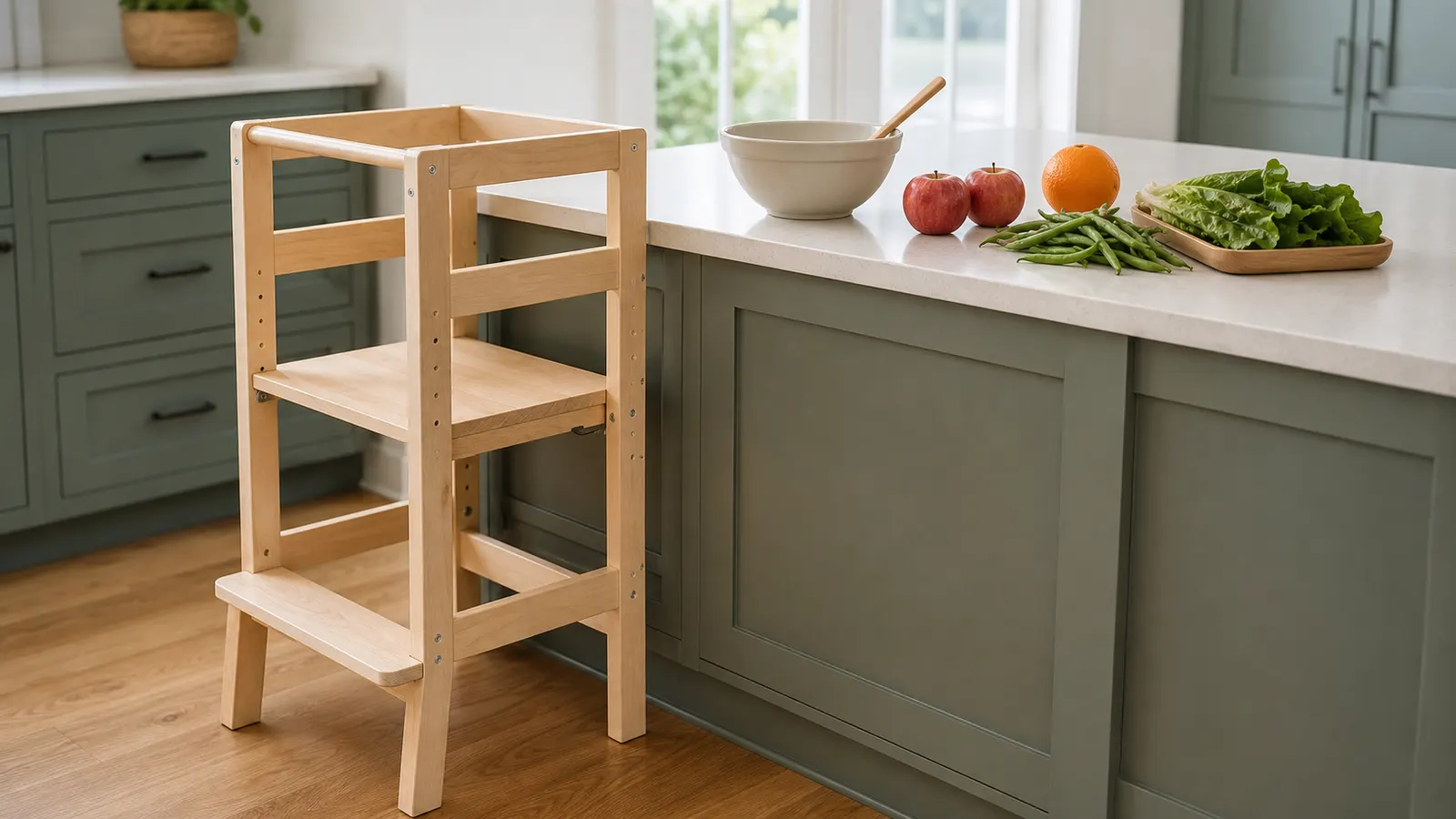
Age can suggest a task, but it does not approve tower use. USDA publishes typical kitchen activities for ages 2 through 5 and notes that children develop these skills at different ages. Before moving any suggestion into a toddler tower, clear six separate gates: the exact tower's age and fit rules, your child's demonstrated behavior, the ingredient, the tool, the room, and direct adult supervision. The first failed gate changes or stops the task.
Every activity needs four permissions
Exact tower
The model, mode, age, height, weight, platform, guard, condition, and recall status all pass.
Demonstrated readiness
The child enters, stands, responds, works, and exits as instructed without rocking, climbing, or unsafe reach.
Controlled task
The ingredient, container, motion, tool, and cleanup remain inside a defined child work zone.
Controlled room
Heat, sharp tools, powered appliances, raw foods, cords, chemicals, breakables, and traffic stay outside reach.
USDA age ideas with tower and food-safety overrides
This source receipt preserves all 24 newly listed USDA tasks across ages 2 through 5, then applies exact-model age coverage, readiness screens, AAP kitchen guidance, FDA raw-flour controls, and FoodSafety.gov protections for children under five.
- USDA age bands
- 4
- Published task examples
- 24
- Risk overrides
- 4
3 selected tower age records remain unresolved.
A suggested age never clears tower fit, behavior, food, tool, or room hazards.
Active heat, sharp tools, powered appliances, and raw-food controls remain separate gates.
USDA examples, then tower screen
8 newly listed tasks at age 2Arrange fruit or vegetable pieces into faces; Wipe tables; Hand child-safe items to an adult; Rinse fruits or vegetables; Snap green beans; Place items in the trash; Tear lettuce or greens; Turn cookbook pages.
- Tower screen:
- Screen only a short cold-zone task such as rinsing whole produce, tearing greens, wiping a child-safe surface, or handing over a child-safe item.
- Readiness gate:
- The child must independently stand, enter, remain centered, respond to the adult, and exit using the exact tower as instructed.
AAP guidance for ages 1 to 2 says active meal preparation is a time to keep the child out of the kitchen when the adult cannot give full attention. A birthday does not override that supervision limit.
USDA examples, then tower screen
8 newly listed tasks at age 3Add ingredients; Talk about cooking; Scoop or mash potatoes; Squeeze citrus fruit; Stir pancake batter; Knead and shape dough; Name and count foods; Help assemble a pizza.
- Tower screen:
- Screen cool, pre-portioned tasks such as counting, squeezing citrus, mashing cooled cooked food, or adding a ready-to-eat ingredient.
- Readiness gate:
- The child must keep hands and tools inside the defined work area without tasting, side reaching, rocking, or moving the tower.
Raw flour, raw dough, batter, and raw eggs add food-safety controls. FDA says flour is raw food and children should not eat or play with raw dough. The adult controls raw ingredients and cleanup.
USDA examples, then tower screen
5 newly listed tasks at age 4Peel cooked eggs or easy-peel fruit; Measure dry ingredients; Make sandwiches or tossed salads; Set the table; Crack eggs.
- Tower screen:
- Screen ready-to-eat tasks such as peeling a banana or orange, assembling a sandwich, tossing a salad, or setting nonbreakable table items.
- Readiness gate:
- The child must manage the exact container and motion without overreaching, spilling into the standing area, or reaching for the adult's tools.
Cracking raw eggs and measuring raw flour create separate contamination gates. For children under five, the caregiver remains responsible for clean, separate, cook, and chill controls.
USDA examples, then tower screen
3 newly listed tasks at age 5Measure liquids; Cut soft fruit with a dull knife; Use an egg beater.
- Tower screen:
- Screen measuring a cool liquid or using a simple hand tool only after the child can keep both feet planted and complete the motion within the near work zone.
- Readiness gate:
- Tool use requires direct adult control of the exact tool, ingredient, posture, reach, and stopping behavior. The age suggestion is not automatic permission.
Keep sharp instruments and powered appliances out of reach. A dull tool still requires a specific cutting plan, and an egg beater is not permission to handle raw egg or taste uncooked batter.
Keep the toddler out of the active cooking zone when direct attention cannot be maintained. Hot food, liquids, cookware, oven doors, and stove controls remain adult-controlled.
American Academy of Pediatrics safety guidance for ages 1 to 2Keep sharp instruments and powered appliances out of reach. Unplug unused appliances and prevent dangling cords.
American Academy of Pediatrics kitchen safety guidanceDo not let children eat or play with raw dough or batter. Flour is a raw food and requires controlled handling and cleanup.
FDA raw flour and dough safety guidanceFor children under five, the caregiver controls clean, separate, cook, and chill steps, especially around raw meat, poultry, seafood, and eggs.
CDC safer food guidance for children under fiveUSDA calls its age examples typical and notes that children may develop skills at different ages. Treat them as task ideas only. The exact tower, the child's demonstrated readiness, the ingredient, the tool, the room, and direct adult supervision all control the decision. Sources checked July 20, 2026.
The short answer: age suggests, readiness and risk decide
Start with a published age-appropriate task list, then reduce the task until every gate passes. A 2-year-old may be able to tear lettuce at a cold work area but should not share the active cooking zone while you handle hot food. A 4-year-old may have the hand skill to crack an egg, but raw egg introduces contamination and cleanup controls. A 5-year-old may be listed for a dull-knife task, but the exact tool, posture, reach, stopping behavior, and adult control still decide whether that task belongs in a tower.
Do not use the tower to make an advanced task feel age-appropriate. The product only raises and surrounds the child. It does not remove heat, sharp edges, electricity, raw-food risk, spills, side reaching, or the need for direct supervision.
Clear the six gates before choosing an activity
First match the physical tower, current mode, manual, age range, child-height or guard-fit rule, weight limit, platform position, condition, and recall status. Second, confirm the child can enter, stand centered, keep both feet planted, respond to a stop instruction, use the intended exit, and avoid rocking or exterior climbing. Third, classify the ingredient. Fourth, classify the tool. Fifth, map the child's reach and the room. Sixth, confirm the adult can stay within reach for the whole task.
Write down the first failed gate. Change the task, move it to a lower surface, wait, or stop tower use. Do not compensate with an accessory, homemade restraint, higher platform, or a promise to watch from across the room.
Age 2 ideas: short, cold, and easy to stop
USDA's age-2 list includes arranging fruit or vegetable pieces, wiping a table, handing items to an adult, rinsing produce, snapping beans, placing items in the trash, tearing greens, and turning cookbook pages. In a tower, screen only the part that fits a cold, controlled work zone. Rinsing a whole apple, tearing lettuce, or wiping a child-safe section of counter may fit when the tower, sink, floor, and supervision all pass.
The stricter context still controls. American Academy of Pediatrics guidance for ages 1 to 2 says active meal preparation is a time to keep the child out of the kitchen when the adult cannot give full attention. Keep hot liquids, cookware, stove and oven access, sharp tools, powered appliances, cleaners, cords, and breakable items outside the child's expanded reach.
Age 3 ideas: pre-portion before the child steps up
USDA adds ingredients, talking about cooking, scooping or mashing potatoes, squeezing citrus, stirring pancake batter, kneading dough, naming and counting food, and assembling pizza at age 3. A lower-risk tower version begins after the adult prepares the station. Count whole ingredients, squeeze citrus into a stable bowl, mash cooled cooked food, or add a ready-to-eat ingredient from a small container.
Raw flour, dough, batter, and eggs change the task. FDA says flour is a raw food and children should not eat or play with raw dough or batter. Flour can spread during pouring and stirring. Keep raw ingredients under adult control, prevent tasting, separate them from ready-to-eat food, and handle the cleanup yourself. If those controls compete with tower supervision, move the child to a different activity.
Age 4 ideas: separate ready-to-eat assembly from raw food
USDA's age-4 additions include peeling cooked eggs or easy-peel fruit, measuring dry ingredients, making sandwiches or tossed salads, setting the table, and cracking eggs. Ready-to-eat assembly can be screened separately from raw-food preparation. Peeling a banana, assembling a sandwich from adult-prepared ingredients, tossing washed greens, or placing nonbreakable table items may fit a controlled tower station.
Cracking a raw egg is not equivalent to peeling a cooked egg. Measuring raw flour is not equivalent to measuring cereal. FoodSafety.gov says children under five are at increased risk from foodborne illness and places clean, separate, cook, and chill responsibilities with the caregiver. Keep raw meat, poultry, seafood, eggs, and flour away from the child's ready-to-eat work zone.
Age 5 ideas: tool skill remains task-specific
USDA adds measuring liquids, cutting soft fruit with a dull knife, and using an egg beater at age 5. These are tool suggestions, not tower permissions. First verify that the child can keep both feet planted, work on the near side of the surface, control the exact container or tool, stop immediately, and avoid reaching for the adult's equipment.
Measure a cool liquid into a stable wide bowl before considering a cutting or beating task. A dull knife still needs a cutting board that cannot slide, a soft food, a controlled hand position, and direct adult reach. A hand egg beater is not permission to handle raw egg or taste uncooked batter. Powered mixers and other electrical appliances remain outside the child's reach.
Use a task ladder, not a birthday jump
Progress one variable at a time. Begin with observing and naming. Then add one-hand transfer, tearing, wiping, or counting. Next consider a stable bowl and a short stirring or mashing motion. Add pouring, measuring, or a simple hand tool only after the child consistently controls the earlier motion without side reaching, rocking, tasting restricted ingredients, or moving the tower.
A child may move backward on the ladder after a growth spurt, platform change, illness, fatigue, new room, new ingredient, or new behavior. That is a task decision, not a judgment about the child's development. Repeat the empty-tower and work-zone check whenever a variable changes.
Keep four hazard groups under adult control
Active heat includes stove and oven access, hot cookware, hot liquids, steam, recently heated microwave food, and anything that can spill or be pulled down. Sharp and powered tools include knives, scissors, peelers, food processors, mixers, appliance cords, and controls. Raw-food hazards include flour, dough, batter, meat, poultry, seafood, and eggs. Cross-contamination includes hands, bowls, utensils, towels, surfaces, and ready-to-eat food touched after raw ingredients.
The tower does not reduce these hazards. It changes the child's access to them. Keep the active hot and raw work on an adult-controlled surface, turn handles away, unplug unused appliances, block controls, and move cords, tools, chemicals, and breakables out of the full reach envelope before the child enters.
Prepare the station before the child enters
Place the empty tower on the real floor and confirm all feet stay planted. Set the documented platform and guard configuration. Put one stable container in the near work zone and pre-portion only the items the child will use. Move the adult's tools and ingredients to a separate zone. Clear the entry, exit, adult stance, and traffic route.
Decide the stop phrase and the end of the task before inviting the child up. The adult should not need to turn away for an ingredient, open an oven, drain boiling water, answer the door, or cross the room while the child remains elevated. If the adult task cannot pause, the tower task should not begin.
Run one motion, then stop and review
A first activity can be one rinse, one transfer, one tear, one wipe, or one short stir. Watch foot placement, posture, reach, speed, tasting, response to direction, product movement, spills, and exit. End before the task adds a new tool, ingredient, surface, or adult distraction.
Stop immediately for jumping, rocking, exterior climbing, sitting or hanging on the rail, moving the tower while elevated, reaching into the adult zone, standing on tiptoe, spilling into the platform, tasting a restricted ingredient, or ignoring the stop instruction. Do not add another activity until the first one is repeatably controlled.
End with cleanup and a fresh condition check
Help the child exit before cleanup changes the floor or supervision. Remove food from the platform, rails, joints, straps, nets, hinges, and locks using the exact care instructions. Dry wet feet and floor surfaces. Wash hands, bowls, tools, and work surfaces according to the ingredient controls. Do not leave raw flour dust, raw egg residue, food, or moisture in the product.
Recheck fasteners, feet, platform seating, guards, locks, material swelling, finish damage, and unexpected movement. Store the tower away from active heat and prevent unsupervised climbing. Record any new behavior, spill, impact, platform change, or condition concern before the next session.
Toddler tower activity risk ladder
Move down the ladder when any gate is uncertain. An older age or longer task history does not erase a new ingredient, tool, room, behavior, or tower-fit problem.
| Task level | Examples | Tower screen | Adult-controlled boundary |
|---|---|---|---|
| Observe and describe | Name colors, count food, turn a cookbook page, choose between two child-safe ingredients | Child remains centered and can stop and exit on direction | All food, tools, heat, and appliance controls remain outside reach |
| Touch and transfer | Tear greens, snap beans, hand over a child-safe item, place an item in a stable bowl | One hand motion in the near work zone with no side reaching | Adult prepares portions and removes choking, raw-food, sharp, hot, or breakable items |
| Rinse and wipe | Rinse whole produce, wipe a child-safe counter section | Water flow, sink reach, container weight, tower feet, platform, and floor stay controlled | Adult controls water temperature, soap, glass, disposal, spills, and floor drying |
| Mash and stir | Mash cooled cooked food or stir a ready-to-eat mixture in a stable wide bowl | Both feet stay planted and the bowl cannot slide or pull the child forward | Adult controls raw flour, raw egg, tasting, bowl placement, and cleanup |
| Assemble ready-to-eat food | Peel banana or orange, make a sandwich, toss washed greens, arrange fruit | Prepared ingredients fit the child's reach and do not require an adult tool | Adult controls cutting, choking preparation, allergens, raw food, refrigeration, and final serving |
| Pour and measure | Add a small ready-to-eat ingredient or measure a cool liquid | Container size, fill level, target, motion, and spill response are tested first | Adult handles heavy containers, raw ingredients, breakables, cleanup, and recipe sequence |
| Simple hand tool | Pastry brush, hand masher, egg beater, or dull knife for one soft food | Exact tool, grip, board, posture, stopping behavior, and adult reach all pass | Sharp tools, powered appliances, raw egg or flour, and unrestricted cutting remain adult-controlled |
| Not a tower task | Stove, oven, hot liquids, draining, frying, powered mixing, raw meat, unrestricted knife work | Move the child out of the active work zone | Adult performs the task and restores a cold controlled zone before participation resumes |
Set the task and tower together
Toddler tower activities FAQ
What activities can a 2-year-old do in a toddler tower?
What can a 3-year-old help with in the kitchen?
Can a child stir pancake batter in a toddler tower?
Can a 5-year-old use a knife in a toddler tower?
Can a toddler use a tower near the stove?
How long should a toddler tower activity last?
Method and Sources
How this page is checked
- The 24 task examples and four age bands come from the USDA Kitchen Activities sheet. The source describes the suggestions as typical and says children may develop skills at different ages.
- Tower screens are editorial applications of the site's exact-model, fit, placement, and behavior framework. They are not manufacturer-approved activity lists or developmental assessments.
- AAP kitchen and cooking guidance, FDA raw-flour guidance, and FoodSafety.gov protections for children under five override a general age suggestion when the task introduces active heat, sharp or powered tools, raw ingredients, tasting, or cross-contamination.
- Selected-model age coverage is generated from the validated 25-model catalog. An unresolved age field remains unresolved and does not become permission to use the product.
Sources
- USDA Kitchen Activities for ages 2 through 5
- American Academy of Pediatrics cooking with children guidance
- American Academy of Pediatrics kitchen safety guidance
- American Academy of Pediatrics safety guidance for ages 1 to 2
- FDA raw flour and dough safety guidance
- CDC safer food guidance for children under five
Keep reading
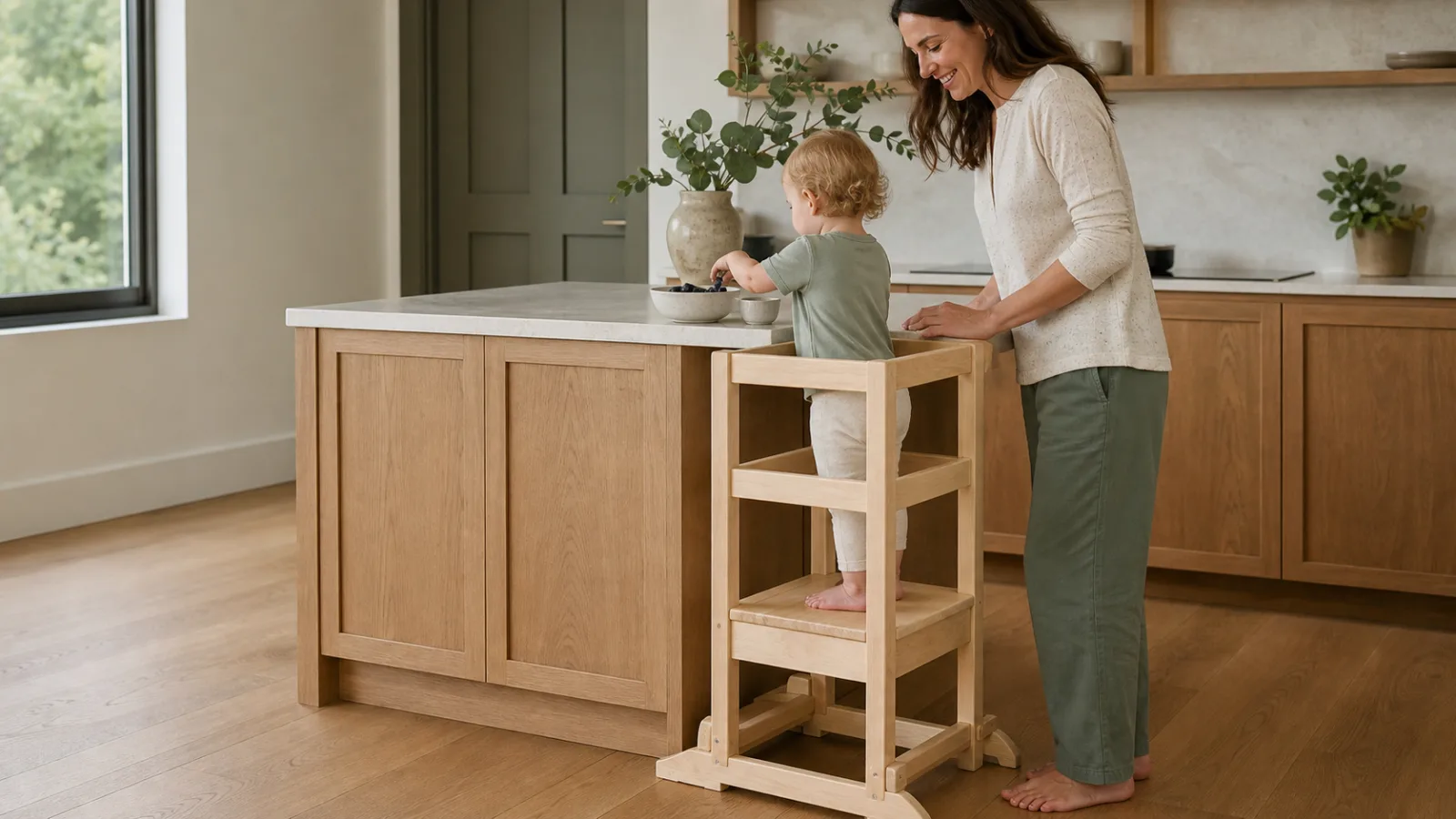
What Age Is a Toddler Tower For?
Use the exact model's age label, the child's observed readiness, physical fit, and recall status to decide when a toddler tower is appropriate and when to stop using it.
Read next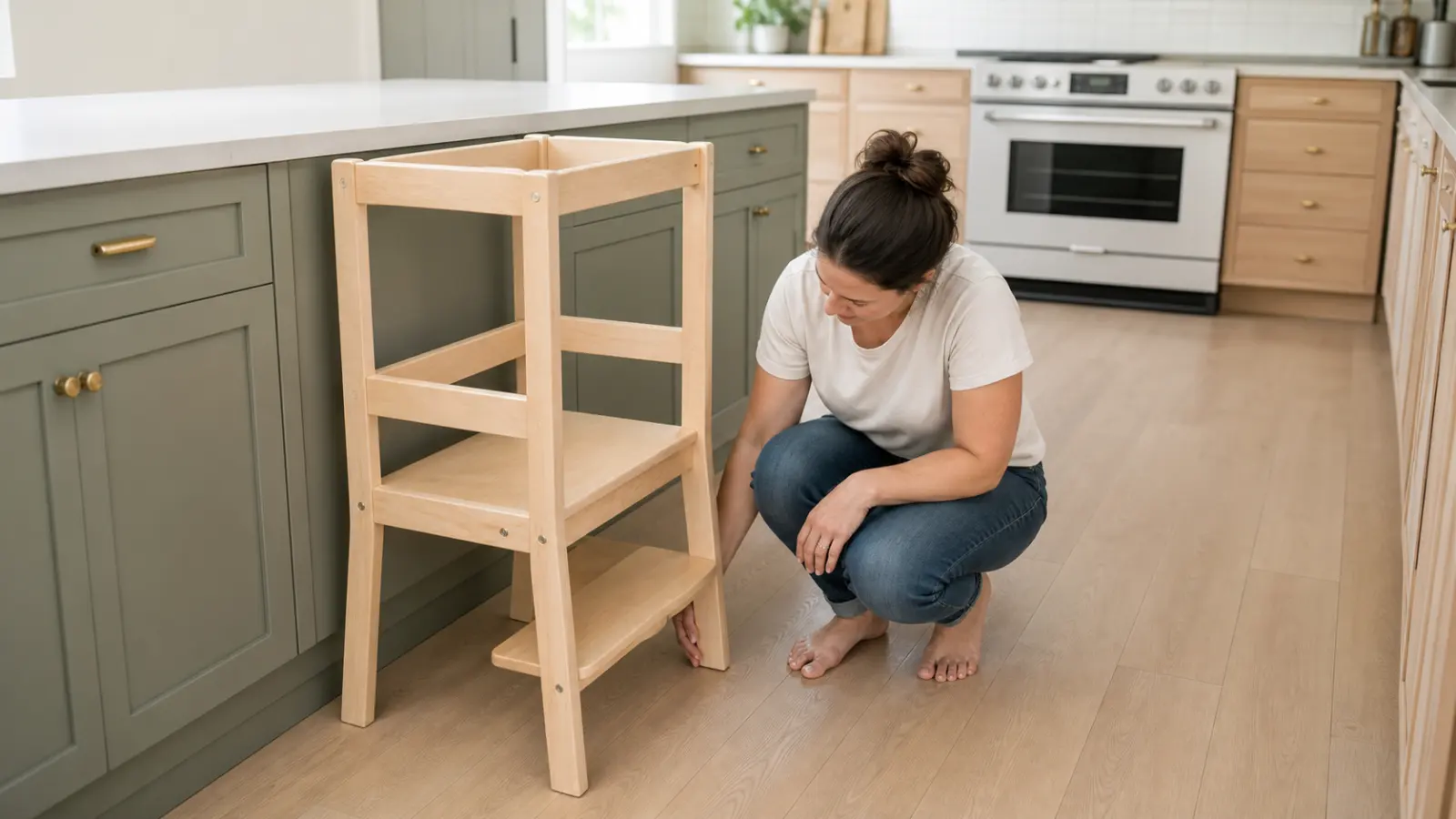
How to Use a Toddler Tower Safely in the Kitchen
A room-first toddler tower safety guide covering exact-manual placement, active supervision, cooking and cord exclusions, entry and exit, wet floors, and stop-use checks.
Read next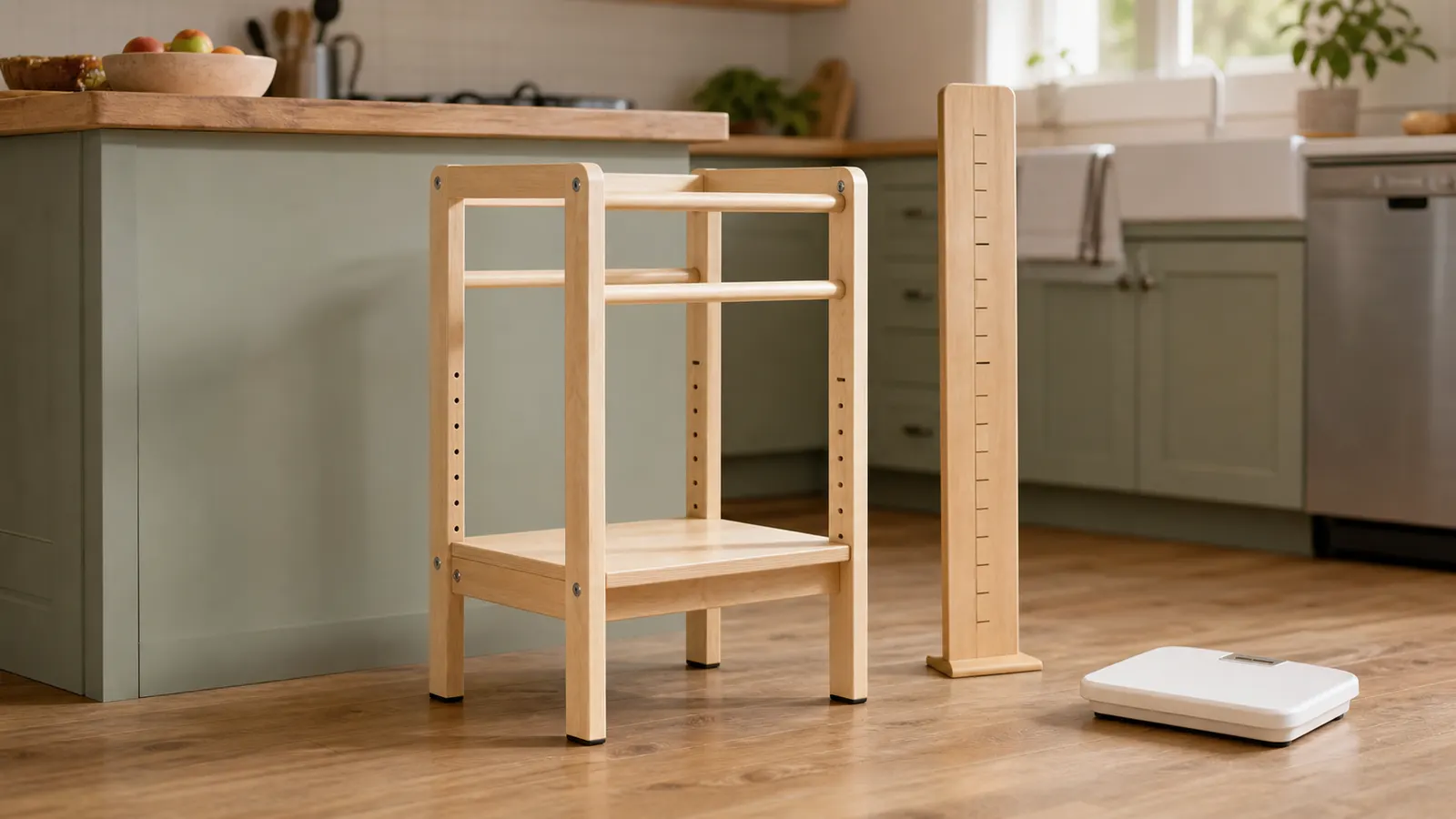
When to Stop Using a Toddler Tower: Outgrowing Checklist
Use the first exact-model age, height, weight, guard-fit, behavior, condition, or recall limit that fails instead of relying on one universal toddler tower cutoff.
Read next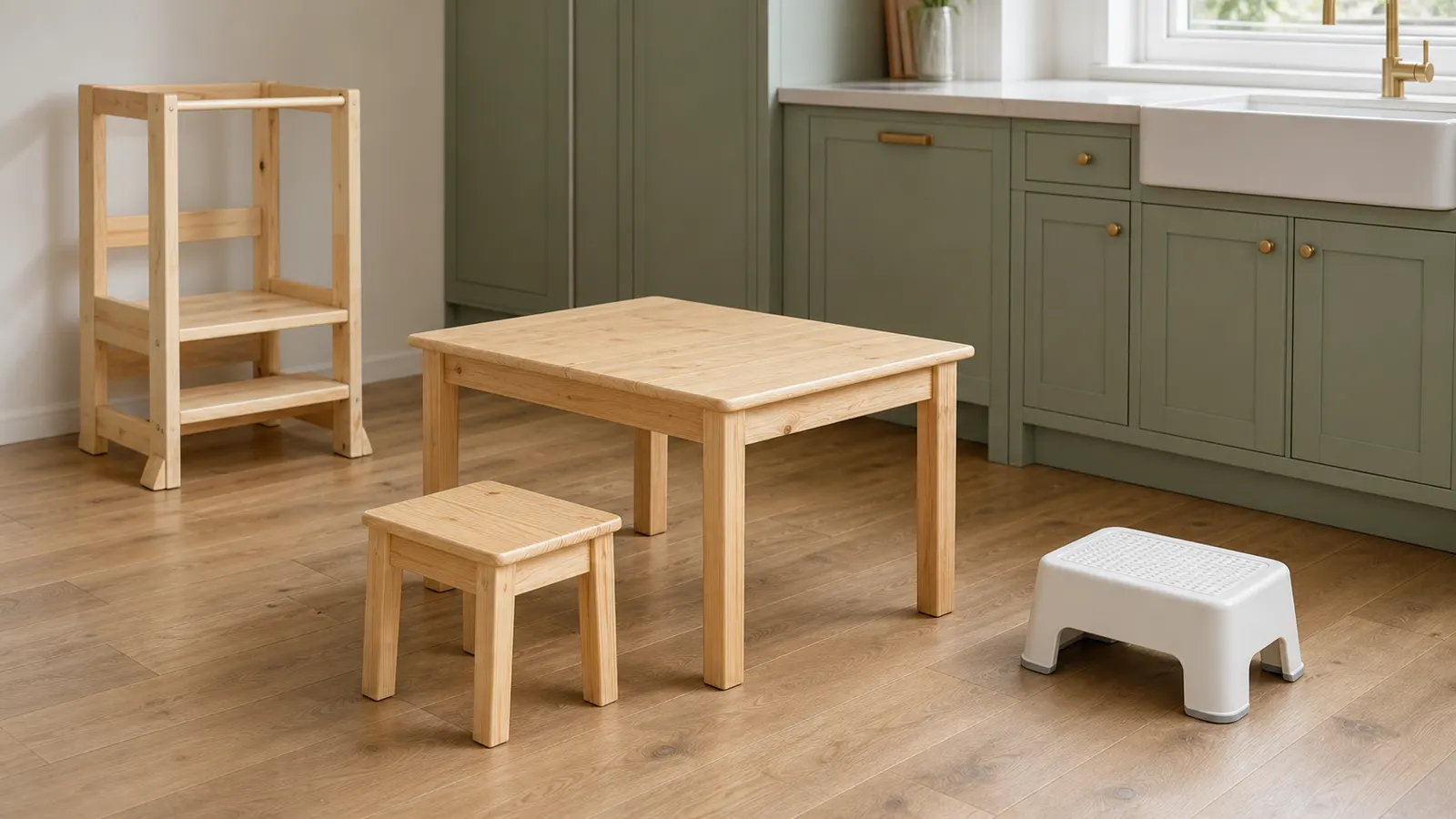
Toddler Tower Alternatives: What to Use After Outgrowing It
Choose a post-tower setup by the task, the reason tower use ended, and the replacement's exact intended use instead of treating every stool as interchangeable.
Read next