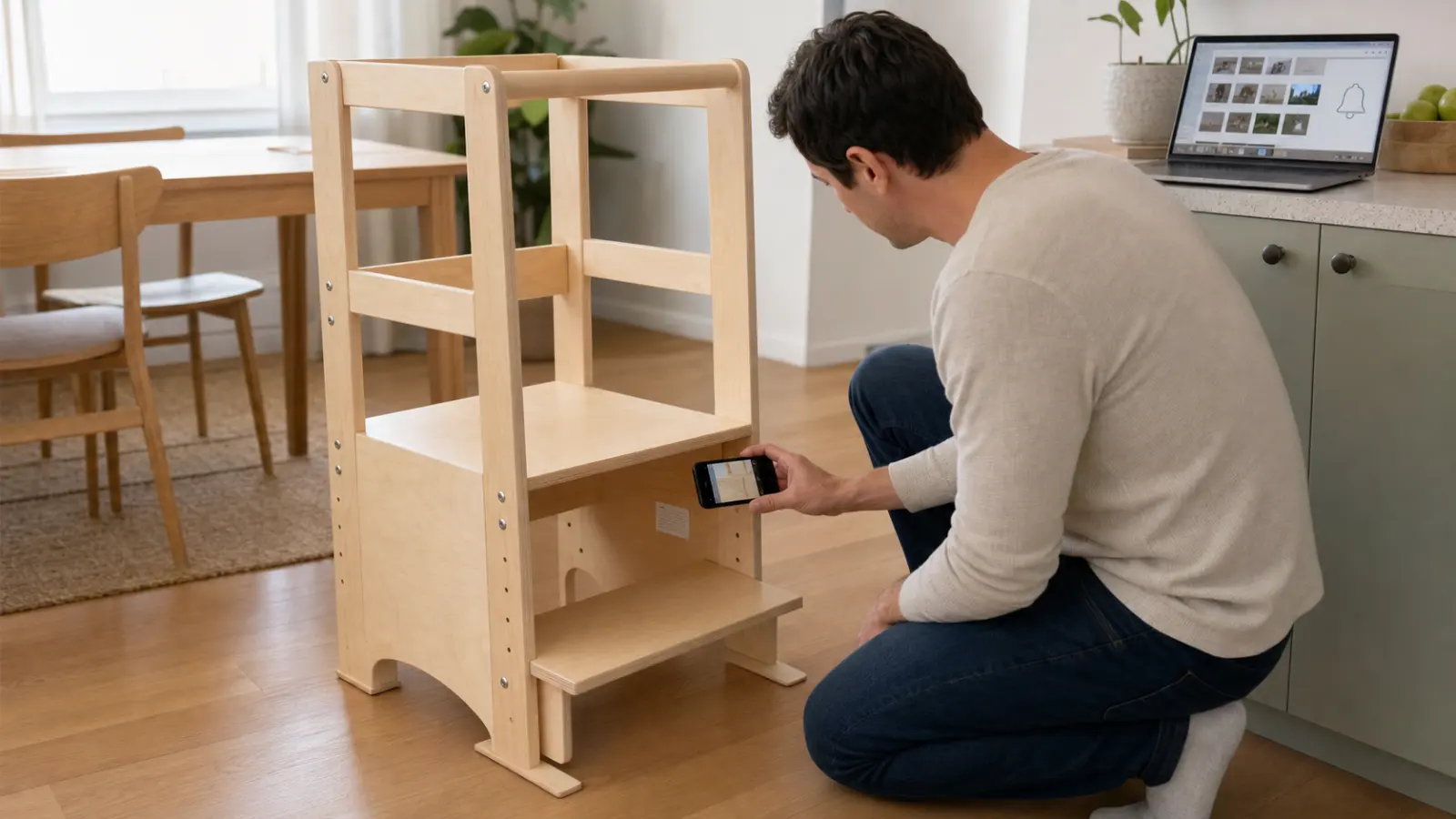
Do not rely on one registration form or one email. Build three layers: save the physical unit's model, revision, lot, date code, receipt, and manual; register the exact product with the manufacturer when an applicable registration route exists; and monitor CPSC recalls independently. Toddler towers are not expressly named in CPSC's current list of product categories covered by the federal durable infant and toddler registration-card rule, although a multifunction product may require product-specific classification. The safest ownership record is therefore one you can use even if no registration card or manufacturer message ever reaches you.
Set up the ownership record once
1. Save the unit
Photograph the model, revision, lot, date code, label location, full tower, receipt, and assembled condition.
2. Register when available
Use the manufacturer's exact regional form, enter physical-unit data, and save a model-specific confirmation.
3. Subscribe independently
Add official CPSC recall emails and repeat exact-model searches instead of waiting for one company message.
4. Preserve every remedy
Keep the official notice, claim, replacement identity, instructions, sticker, refund, and completion proof together.
Why a saved model label changes the answer
This receipt is generated from the validated catalog and official recall ledger. It shows the gap between a broad alert headline and the exact identifiers, lots, dates, and versions needed to decide whether a physical unit is affected.
- Selected model records
- 25
- Official tower notices tracked
- 10
- Recall or version flags
- 6
Grow N Stow folding learning towers (children's standing towers).
Hazard: Collapse and fall hazard.
Guidecraft children's standing towers.
Hazard: Fall hazard with risk of serious injury.
Boon PIVOT collapsible toddler tower kitchen step stools, recalled by TOMY.
Hazard: Tip-over and fall hazards with risk of serious injury and death.
Simplay3 Toddler Towers model 41807-01 Espresso, 41807-02 Gray, and 41807-03 White with date codes from November 2018 through June 2023.
Hazard: The affected towers can tip over during use, posing fall and injury hazards.
All 25 selected records publish an identifier, but only 5 publish a lot or date-code scope. Save the physical label because an alert headline alone may not resolve whether a unit is affected. Official notices checked July 15, 2026.
The short answer: use three notification layers
Layer one is your unit record. Photograph every permanent label and save the exact brand, model or item number, revision, lot or date code, purchase date, seller, receipt, manual, and any repair evidence. Layer two is manufacturer registration when the maker provides a route that accepts your exact product. Layer three is independent monitoring through CPSC recall emails and periodic exact-model searches.
Each layer covers a different failure. A manufacturer cannot match a vague product name to a scoped recall. A registration may use an old email address or may not apply to the product. A CPSC headline may name a family while the notice limits the remedy to certain models and dates. The saved physical identity lets you resolve the alert instead of guessing.
Create the unit record before discarding the packaging
Take one full-product photo and sharp, uncropped photos of every permanent label. Include the field names and their values in the same frame. Check the underside of the platform, lower or rear rails, side panels, frame, and packaging because manufacturers place identifiers in different locations. Preserve warnings and contact information as well as model fields.
Save the order confirmation or receipt, retailer and seller name, purchase date, color or variant, current manual, assembly date, and photos of the assembled product. Keep records of manufacturer-supplied replacement parts, recall remedies, and service conversations. Store a copy somewhere other than the product itself because a label can wear, be painted over, or become inaccessible during storage.
Know what the federal registration-card rule does and does not prove
CPSC requires registration cards, online registration, permanent model and manufacturing marks, and recall-contact recordkeeping for a defined set of durable infant or toddler product categories. Its current list includes products such as high chairs, toddler beds, infant walkers, and children's folding chairs and stools. Toddler towers are not expressly named as their own category on that list.
Do not infer a legal classification from the marketing name. A multifunction product sold as a high chair, folding stool, or another listed product may require product-specific analysis, while a standard tower may not arrive with a federally required card. The absence of a card does not clear the product, and the presence of a registration page does not establish government approval, certification, or recall-free status.
Use the manufacturer's exact registration route when available
Start at the manufacturer's own website rather than a search advertisement or marketplace message. Confirm the country or region, the company identity, and that the form accepts your exact model. Little Partners and Simplay3 currently publish product-registration pages, and CYBEX publishes a US registration route. Availability, covered products, fields, and privacy terms can differ by brand and change over time.
Enter the physical model information, not a retailer's shortened title. Use the manufacture date or date code when requested, preserve the submission confirmation, and record which email and mailing address you supplied. If the form does not list the tower, rejects the identifier, or blends a safety registration with a loyalty club or newsletter, contact the manufacturer's support team and ask how safety notices for that exact product are handled.
Separate safety registration from marketing consent
For products covered by CPSC's mandatory registration-card rule, the manufacturer must use registrant information only for safety alerts or recalls, not marketing. A voluntary product-registration page, store account, loyalty program, warranty form, or newsletter may operate under different terms and may present separate consent choices. Read the labels and privacy notice instead of assuming every checkbox serves the same purpose.
Keep the safety record even if you decline optional marketing. Save the registration confirmation, but do not treat it as proof that the manufacturer has matched the exact model correctly unless the confirmation shows the model or identifier. If you change your email or move, look for an update route or contact the manufacturer with the original registration details and current unit identity.
Subscribe to CPSC alerts and keep checking the exact model
CPSC provides a free recall email subscription. Subscribe directly through the official government page and confirm the subscription message if one is sent. The feed covers far more than toddler furniture, so save a repeatable exact-model check as well. Search the brand, model name, item or SKU, and any identifier format printed on the product.
Our recall checker provides a narrower view of the reviewed toddler-furniture ledger, but CPSC.gov remains the authoritative source and should be the final check. Repeat the unit-level search after ownership changes, before resale or donation, after learning about a related-model recall, and whenever a new notice or manufacturer message resembles your product. A previous none-found result can change.
Read the full notice before deciding whether the unit is affected
A recall headline is an alert, not the complete scope. Open the official notice and compare the description, photos, model numbers, lot or date codes, sale window, importer, and label location with the physical tower. Guidecraft recall 26-490 depends on item and lot combinations. The Grow 'N Stow notice depends on model LP01711 and a date range. Simplay3 recall 23-265 identifies three model variants and production dates.
Follow the official remedy exactly. Stop use when the notice says to stop, keep the product away from children, and contact the named company through the notice. Save the claim number, correspondence, shipment tracking, replacement part identity, installation instructions, required sticker, refund, destruction evidence, or other completion proof. Do not transfer a remedy from a similar model or replace it with a homemade fix.
Secondhand ownership needs a fresh record
A used, gifted, open-box, or inherited tower does not arrive with reliable proof that the previous owner's registration, email, or repair record will follow the product. Rebuild the record from the physical labels, obtain the matching manual, check the official recall history, and submit a new registration or ownership update if the manufacturer supports it.
Ask for original receipts and remedy evidence, but verify each item against the unit and official notice. If the label is missing or unreadable, the manufacturer cannot identify the product, or a repair claim cannot be reconciled, keep the purchase or use decision on hold. A clean-looking tower and a familiar brand do not replace traceable identity.
Report incidents and remedy problems instead of waiting for an alert
If a product caused or could cause an injury, report the incident through SaferProducts.gov with the exact product identity, seller, dates, photos, and a factual description of what happened. Remove the child and preserve the product and records unless official instructions require a different action. Do not wait for other reports or a recall announcement before documenting a dangerous failure.
CPSC also asks consumers to report recalled products offered for sale and problems obtaining a recall remedy. Keep communication factual and retain copies. Manufacturer registration helps a company reach owners, but consumer reports and independent monitoring are separate parts of how hazards are found and addressed.
What to save in a toddler tower ownership record
Keep the record usable without the original packaging, retailer account, or seller. Do not store the only copy on a label that can wear or be covered.
| Record | Why it matters | Minimum useful evidence |
|---|---|---|
| Physical identity | Matches manuals, recalls, parts, and remedies to the unit | Uncropped photos plus typed brand, model, item or SKU, revision, lot, date code, and label location |
| Purchase history | Establishes seller, date, region, variant, and possible recall sale window | Receipt or order confirmation, retailer, marketplace seller, purchase date, and price |
| Manual and assembly | Preserves the instructions for the version actually owned | Downloaded manual, source URL, manual revision, assembly date, and assembled photos |
| Registration | Shows which manufacturer route and contact details were used | Submission date, email or address, model shown in the confirmation, and confirmation number or screenshot |
| Recall search | Makes a none-found result dated and reproducible | Search terms, CPSC URL, search date, result, and next planned check |
| Repair or remedy | Distinguishes an unresolved recalled unit from one with the official remedy applied | Notice, claim number, company messages, exact part, instructions, sticker, shipment, and completion photos |
Build the monitoring layers
Toddler tower registration and recall questions
Are toddler towers required to include product registration cards?
Does registering a toddler tower prove that it is safe or CPSC approved?
What if the manufacturer has no registration page for my tower?
Should I register a used toddler tower?
How often should I search for recalls?
What should I do when a recall alert resembles my tower?
Method and Sources
How this page is checked
- The recall-monitoring receipt is rendered from the validated selected-model catalog and official CPSC recall ledger, not hand-maintained counts.
- Federal registration-card statements cite current CPSC category and registration guidance. Toddler towers are not expressly named in the published category list, and this guide does not make product-specific legal classifications.
- Manufacturer registration examples were checked on official Little Partners, Simplay3, and CYBEX pages on July 20, 2026. Form availability and scope can change.
- Toddler Home Brief does not collect reader registration data, submit manufacturer forms, or promise that any registration or alert service will deliver every notice.
Sources
Keep reading
Toddler Tower Safety Standards and Recalls
What safety standards actually exist for toddler towers, every official CPSC tower recall we track, and how to check a specific model before you buy or keep using it.
Read next
Buying a Used Toddler Tower: Inspection Checklist
How to verify a secondhand toddler tower's model, recall and repair status, hardware, frame, platform, locks, and manual before deciding whether to buy it.
Read next
How to Clean and Maintain a Toddler Tower
A model-specific routine for cleaning toddler tower surfaces, drying spills, checking hardware and locks, and recognizing damage that should stop use.
Read next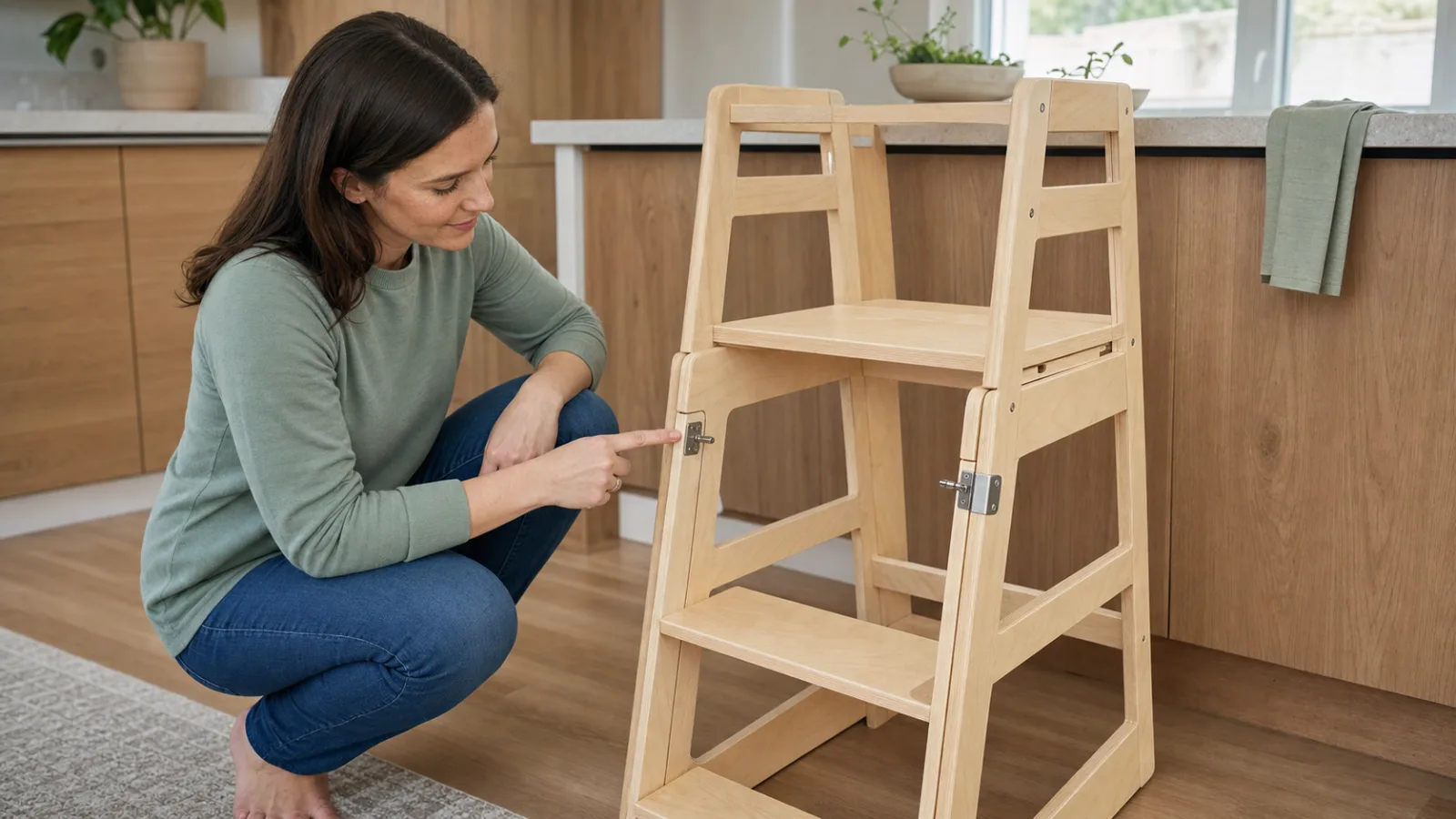
Foldable Toddler Tower Safety: Lock and Setup Checks
How to identify every lock in a foldable toddler tower's manual, check the empty setup before use, recognize stop-use conditions, and interpret folding-related recalls.
Read next