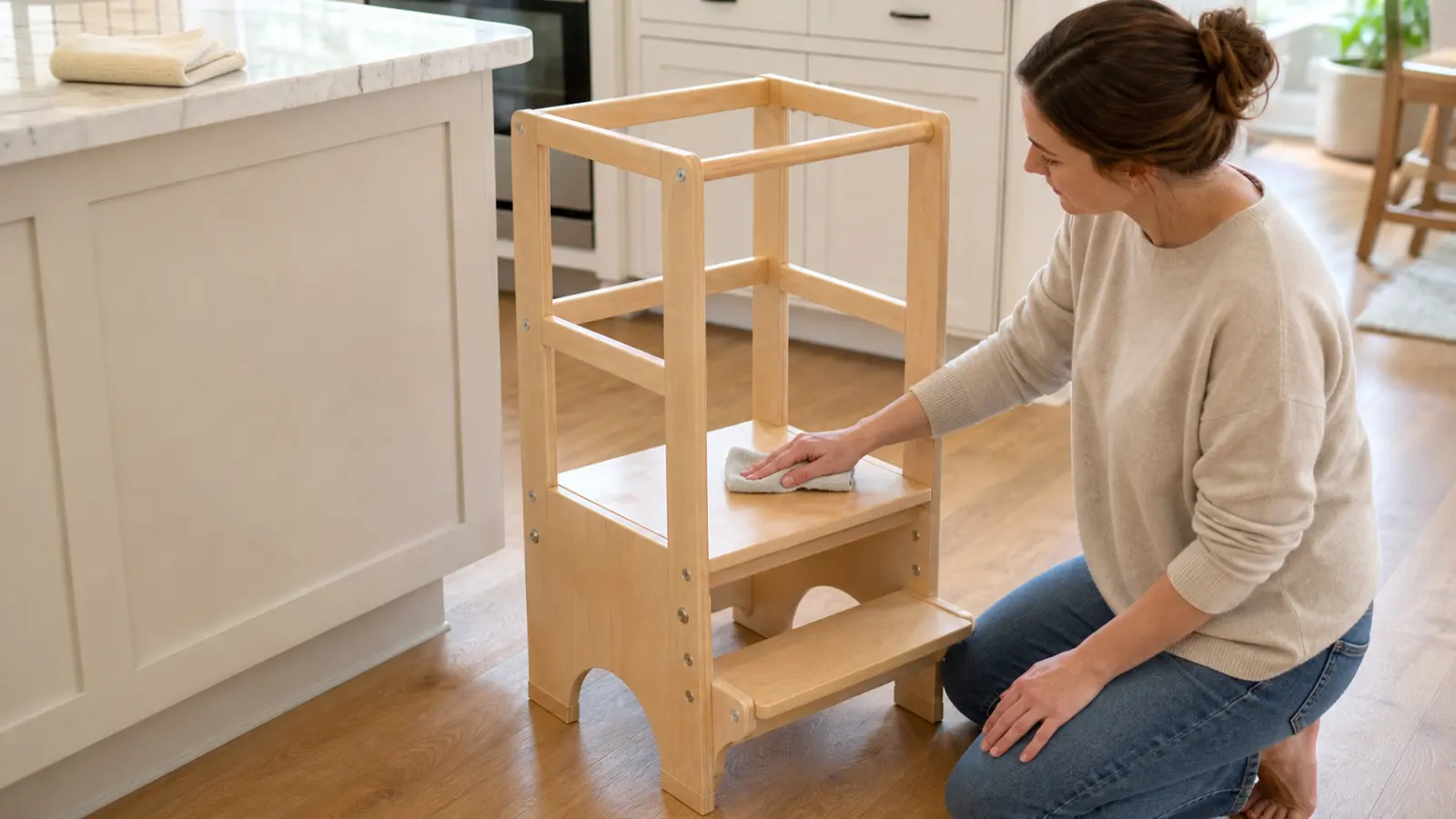
Clean a toddler tower according to the exact model's manual and materials, not a universal furniture hack. Remove loose debris first, use only the cleaner and moisture level the manufacturer permits, keep liquids out of joints and hardware, and dry the product as directed. Turn each cleaning session into an empty-tower inspection of the platform, guard, steps, feet, fasteners, and any folding controls. Cleaning can preserve a finish and reveal damage. It cannot repair a crack, clear a recall, replace missing hardware, or prove that a loose structure is safe.
The clean, inspect, and return sequence
1. Match the manual
Use the permanent model and revision label to find the care instructions for the physical unit and its materials.
2. Clean by component
Remove dry debris, use only permitted products and moisture, and keep liquids out of joints and hardware.
3. Inspect while empty
Check the platform, guard, frame, step, feet, fasteners, hinges, and locks while every surface is visible.
4. Dry before use
Return the tower only after permitted components are dry, correctly assembled, locked, and free of damage.
What current manuals actually say about care
This receipt combines material coverage from the validated 25-model dataset with six exact-model care protocols reviewed in current manufacturer manuals. It keeps model-specific cleaners, drying, hardware, and replacement-part instructions separate.
- Selected model records
- 25
- Published material records
- 20
- Reviewed care protocols
- 6
Layered birch and poplar with child-safe, non-toxic paints and materials; manufacturer claims EPA TSCA Title VI compliance.
The manual directs adults to check screws at least weekly, stop if the tower stays loose or wobbly, and clean with mild liquid dish soap on a damp cloth after testing the underside finish first.
Reinforced steel frame, beech wood, and plastic platform, step, and guard rail.
The manual specifies mild soap and water on a damp cloth, excludes window cleaners and abrasives, and calls for periodic hardware checks and tightening when needed.
FSC-certified birch plywood and solid New Zealand pine with a non-toxic, zero-VOC water-based finish or paint.
The manual keeps the tower indoors and away from heat and wet surroundings, then directs a damp-cloth wipe followed by drying with a soft clean cloth.
Baltic birch plywood, manufacturer-described environmentally and child-friendly finishes, vegetable-tanned leather, and non-marking slip-resistant felt foot pads.
The care page specifies a mild wood cleaner for the frame, says the finish is water-resistant rather than waterproof, and treats the leather strap separately with a damp cloth.
Manufacturer composition: 50 percent metal, 48 percent plastic, and 2 percent fabric.
The manual uses a soft clean cloth and mild soap for the main assemblies, calls for air-drying the mesh pocket, and says to examine the product frequently for damaged, missing, or loose parts.
Material composition not yet verified
The guide specifies a damp cloth with mild detergent and thorough drying, excludes abrasives and ethanol-based cleaners, and provides a recurring screw inspection and tightening schedule.
Five selected records still lack verified material composition. Cleaning and hardware instructions apply only to the exact named model and manual, not to every tower made from a similar-looking material. Sources checked July 20, 2026.
The short answer: the manual decides the cleaning method
Find the model label and matching manual before choosing a cleaner. The selected records include birch and poplar, plywood, pine, hardwood, bamboo, steel, several plastics, fabric, leather, melamine, painted surfaces, and water-based finishes. Two towers that both look like wood can have different coatings, edge treatments, adhesives, straps, feet, and hardware. One recipe cannot safely stand in for every construction.
Current manuals do share a cautious pattern: use limited moisture, mild cleaning products, and a soft cloth when those methods are permitted, then dry the product. The important differences sit around that pattern. Franklin+Emily separates wood and leather care. CYBEX excludes abrasives and ethanol-based products. Guidecraft warns that abrasives and window cleaners can damage the coating. Follow the narrowest instruction for each part.
Start dry and keep the tower empty
Remove the child and place the tower where every side is visible. Brush or vacuum loose crumbs from the platform, step, guard, corners, hinge areas, and the seams around fasteners before adding moisture. Dragging grit under a cloth can scratch a finish, while wet crumbs pushed into a joint become harder to remove and can hide the material underneath.
Do not clean a tower while a child is standing inside it. Do not fold or convert it around the child to reach a surface. If the manual permits removing a platform, mat, strap, pocket, or accessory for cleaning, complete that empty-product procedure exactly and keep its hardware assigned to the same part and model.
Use a damp cloth, not an uncontrolled soak
Damp should mean that the cloth holds enough moisture to wipe but does not drip into plywood edges, screw holes, seams, hinges, fabric pockets, or the gap under a platform. Apply the permitted mild soap, detergent, or wood cleaner to the cloth according to the manual, rather than pouring or spraying it directly onto the tower. Work in small sections and keep a clean dry cloth nearby.
When a manual recommends a finish test, use an inconspicuous underside area first. Little Partners specifically suggests cleaning the underside first to make sure its finish is not damaged. Stop if color transfers, the surface becomes tacky, the sheen changes, a painted layer softens, or an edge swells. Ask the manufacturer before trying a stronger product.
Drying is part of cleaning
Wipe away remaining moisture promptly and let every permitted washable component dry as its manual directs before reassembly or use. Piccalio says to follow the damp cloth with a soft clean cloth. CYBEX directs thorough drying and immediate removal of water or other liquids. Ingenuity directs air-drying for its mesh pocket. These are component-specific instructions, not interchangeable shortcuts.
Do not assume direct sun, a heater, hair dryer, dishwasher, pressure washer, or outdoor drying is harmless. Heat and concentrated sunlight can affect finishes, wood moisture, plastic, leather, adhesives, and fit. CYBEX specifically says not to use direct sunlight for drying, while Piccalio describes its foldable tower as indoor-use furniture kept away from heat and wet surroundings.
Clean mixed materials separately
A single tower may combine coated wood, exposed plywood edges, plastic, powder-coated or plated metal, fabric, leather, felt feet, anti-slip mats, and printed labels. Keep the model label legible and avoid soaking its edges. Clean straps, pockets, mats, and panels only by the method documented for those pieces. If the manual gives no method for a removable component, ask the manufacturer rather than guessing that it is machine washable or submersible.
Finish claims do not make a tower waterproof. Franklin+Emily describes its wood finish as water-resistant, not waterproof, and says to keep surfaces dry most of the time. A zero-VOC, non-toxic, child-safe, or water-based finish claim also does not tell you which cleaner it tolerates. Those phrases describe other properties and do not replace care instructions.
Inspect the structure while every surface is visible
Cleaning is a useful moment to inspect the empty product. Look along the platform edges and supports, both side frames, crossbars, guard, steps, feet, fastener holes, hinges, latches, pins, and clips. Check for cracks, delamination, swelling, corrosion, bent parts, enlarged holes, missing hardware, loose joints, a platform that moves, or controls that no longer reach their documented positions.
Several reviewed manuals explicitly pair care with structural checks. Piccalio calls for frequent checks of hardware, joints, bolts, missing parts, and sharp edges. Ingenuity says to examine frequently for damaged, missing, or loose parts and never substitute components. CYBEX calls for regular assembly inspection and original replacement parts. Stop using a product with an unresolved structural problem rather than cleaning around it.
Tighten only what the exact manual tells you to tighten
A loose fastener does not authorize maximum force. Use the documented tool, fastener, position, sequence, and tightness cue for the exact model. Some manuals say snug, flush, or tighten if necessary. Franklin+Emily warns against overtightening its platform bolts. Excess torque can strip threads, crush wood fibers, crack plastic, deform a bracket, or enlarge a hole.
Maintenance intervals also differ. The Little Partners Original manual tells adults to check screws at least weekly and stop if tightening does not restore a sturdy product. CYBEX recommends retightening after the chair has been assembled for one or two weeks and then checking regularly, with monthly as its example. Guidecraft uses a periodic instruction. Follow the schedule for your unit and add an inspection after impact, transport, platform adjustment, unusual movement, or a change in how a lock feels.
Handle spills as an inspection event
Remove the child, blot the spill, and follow the manual's permitted cleaning method. Pay attention to liquid that may have entered plywood edges, screw holes, seams, fabric, mats, or the space beneath a platform. Dry accessible surfaces and leave the tower out of use until permitted components are fully dry and the structure, grip surfaces, and locks can be rechecked.
Stop use for swelling, raised layers, soft material, new cracks, lifting finish, persistent odor, corrosion, a loose joint, a slippery mat, or a changed fit between components. Surface cleaning cannot establish what happened inside a laminated panel or covered joint. Send the manufacturer the exact model, label photos, spill details, and damage photos when the condition is uncertain.
Store the tower clean, dry, and complete
Before storage, let every component dry by its documented method. Keep the tower indoors or in the environment its manual permits, away from uncontrolled moisture and heat. If the product is disassembled, retain all exact hardware and the manual together. Protect the permanent label and do not place weight on a guard, platform, hinge, or latch that the instructions do not identify as a storage support.
After storage, transport, or reassembly, repeat the empty-product identity, recall, hardware, structure, platform, and lock checks before use. A clean appearance is not a return-to-service test. If parts are missing, damaged, substituted, or no longer align, contact the manufacturer and keep the child away from the product.
Choose the care method by component and manual
These are conservative starting questions, not universal cleaning instructions. The exact manual remains the authority for the physical model.
| Component | Confirm before cleaning | Stop and ask the manufacturer when |
|---|---|---|
| Finished wood or plywood | Permitted cleaner, moisture level, finish test, edge treatment, and drying method | The finish softens, color transfers, layers lift, edges swell, or a crack appears |
| Solid wood or bamboo | Finish type, permitted soap or wood cleaner, and exposure limits | Material splits, twists, softens, stains deeply, or a joint changes fit |
| Plastic | Permitted soap or detergent and excluded solvents or abrasives | The surface cracks, crazes, becomes sticky, discolors, or changes shape |
| Metal and hardware | Whether wiping is permitted and the exact inspection and tightening procedure | Corrosion, bending, stripped threads, looseness, or seized controls appear |
| Fabric, mesh, leather, felt, or mats | Whether the part is removable, wipe-only, air-dry, or governed by separate care instructions | The part tears, stretches, stays wet, loses grip, or no cleaning method is published |
| Permanent label | A method that preserves every model, lot, date-code, and warning field | The label lifts, smears, becomes unreadable, or no longer matches the tower |
Continue the ownership checks
Toddler tower cleaning and maintenance questions
Can I use disinfecting wipes on a toddler tower?
Can I hose down or pressure-wash a toddler tower?
How often should I tighten toddler tower screws?
What should I do if the tower is still wobbly after tightening?
Can I repaint or refinish a learning tower?
When can my child use the tower after cleaning?
Method and Sources
How this page is checked
- Material coverage is derived at render time from the reviewed 25-model comparison dataset. Unverified composition stays visible rather than being inferred from appearance.
- The six care protocols are paraphrased from current manufacturer manuals reviewed on July 20, 2026. They apply only to the named model and manual version.
- This guide does not prescribe a universal cleaner, disinfectant, torque value, or maintenance interval. The exact manufacturer instructions control those decisions.
- Cleaning and visual inspection do not certify a product or replace a manufacturer evaluation, official recall remedy, or hands-on structural test.
Sources
- Little Partners Original Learning Tower R3 assembly and maintenance manual
- Guidecraft Kitchen Helper FLEX instruction manual
- Piccalio Foldable Helper Tower assembly manual
- Franklin+Emily Toddler Tower assembly and care instructions
- Ingenuity Table-to-Tower 2-in-1 Step Stool owner's manual
- CYBEX Lemo Training Tower Set user guide
Keep reading
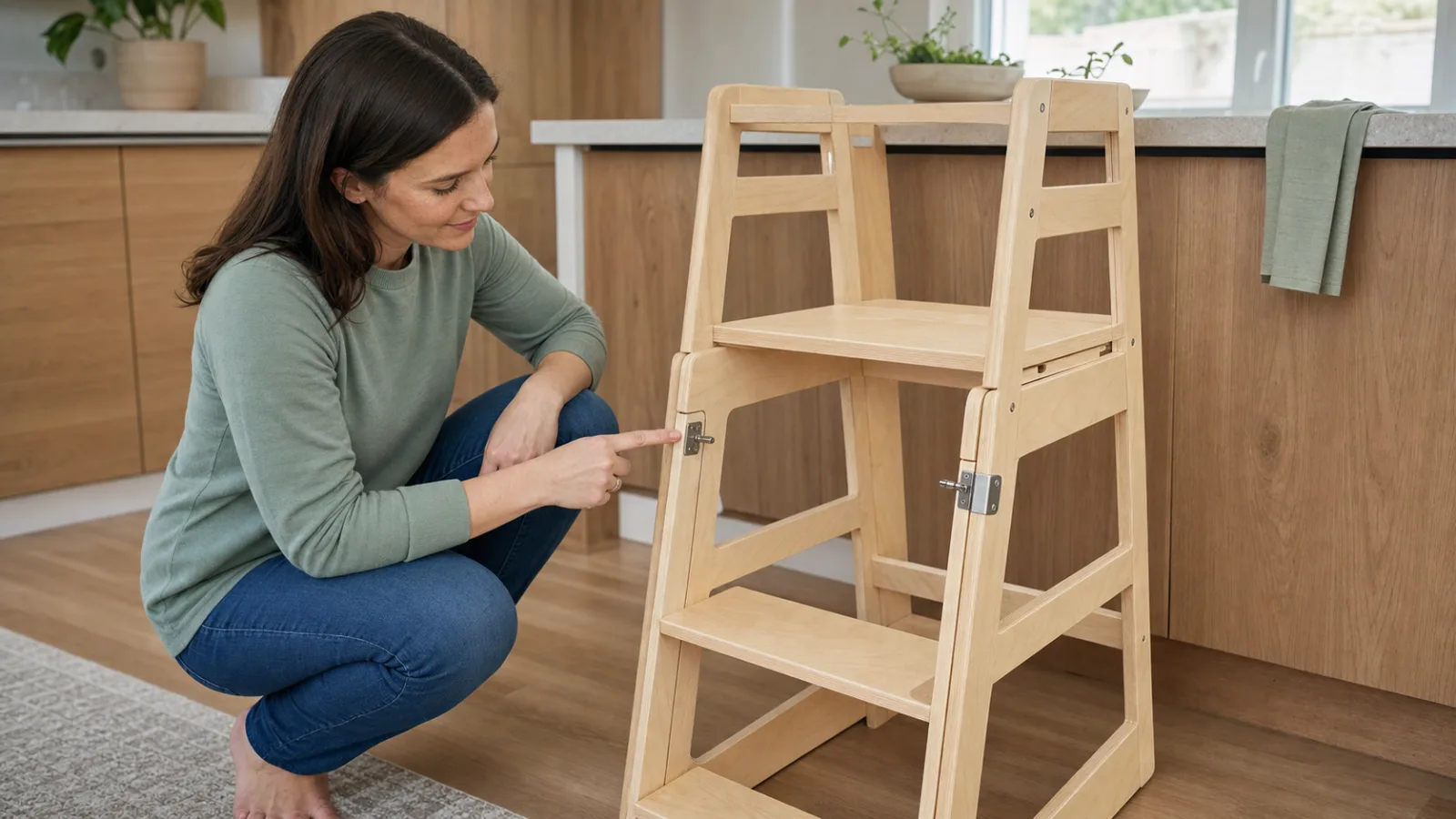
Foldable Toddler Tower Safety: Lock and Setup Checks
How to identify every lock in a foldable toddler tower's manual, check the empty setup before use, recognize stop-use conditions, and interpret folding-related recalls.
Read next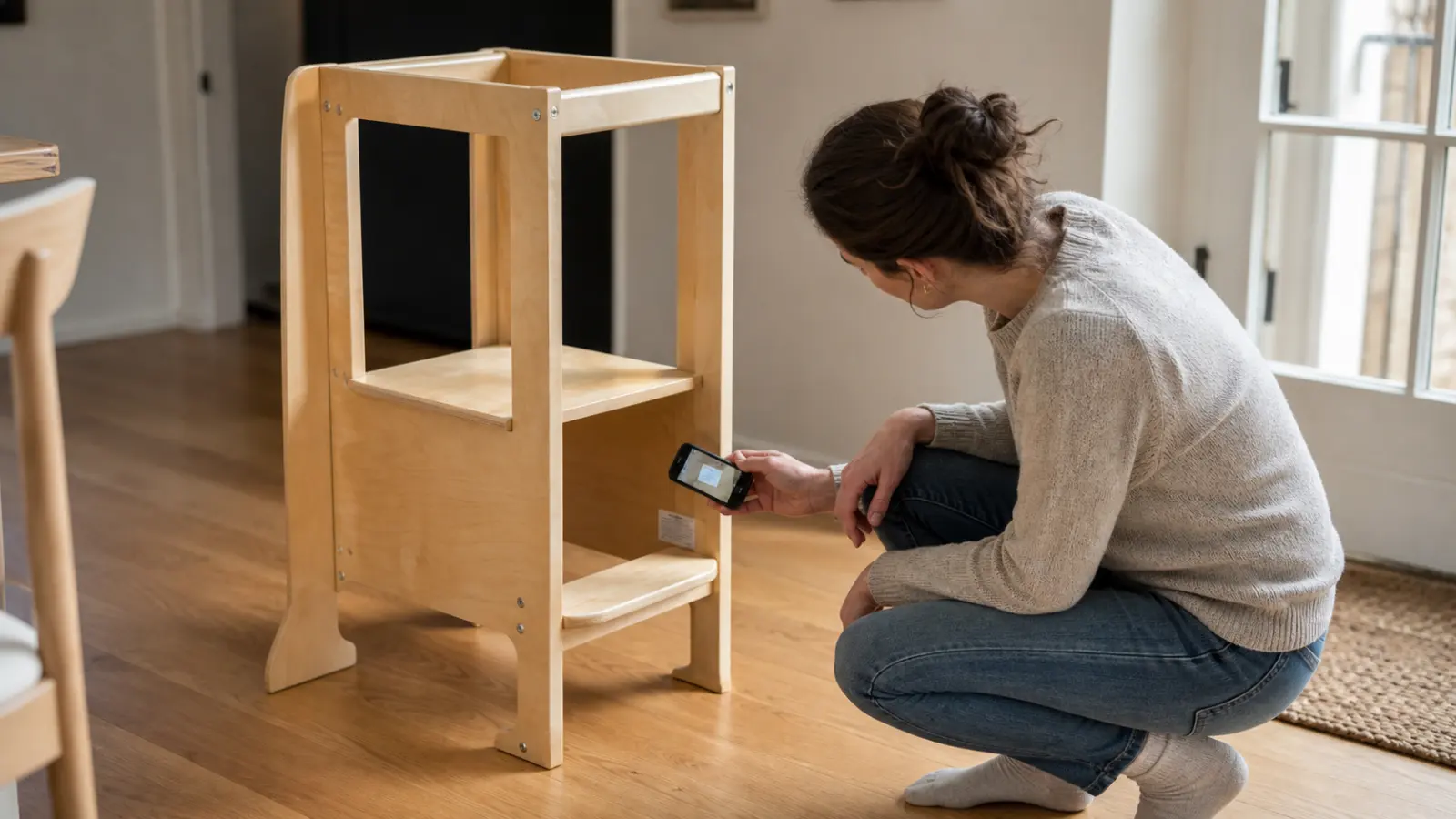
Buying a Used Toddler Tower: Inspection Checklist
How to verify a secondhand toddler tower's model, recall and repair status, hardware, frame, platform, locks, and manual before deciding whether to buy it.
Read next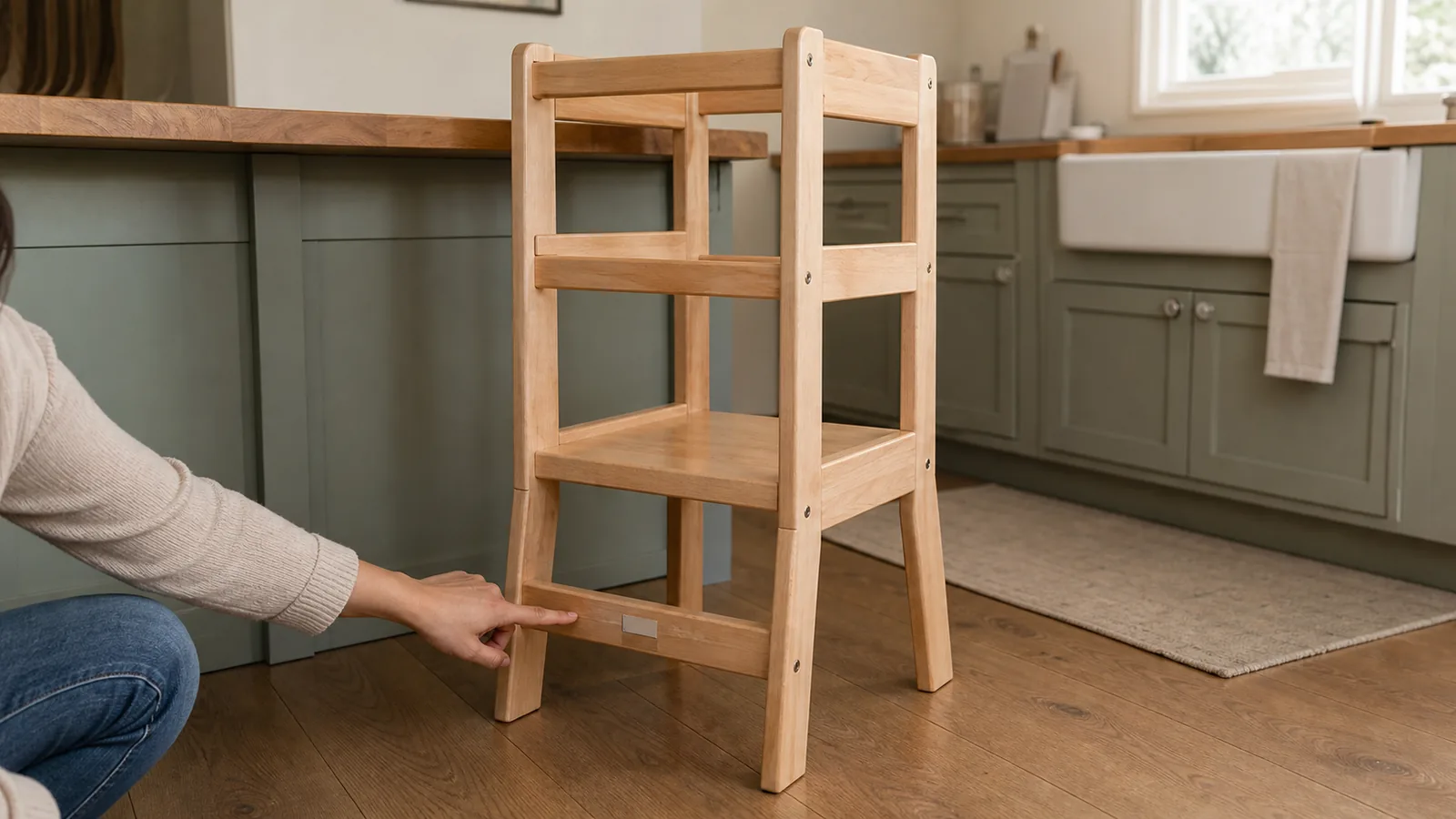
Toddler Tower Safety Standards and Recalls
What safety standards actually exist for toddler towers, every official CPSC tower recall we track, and how to check a specific model before you buy or keep using it.
Read next
How to Choose a Toddler Tower
A practical, safety-first guide to choosing a toddler tower: how to fit it to your counter height, read guard and stability design against the real recall hazards, judge foldable versus fixed, and run a pre-purchase checklist on any model.
Read next